
Hair Health Progress Tracker
How Consistent Are You With Hair Recovery?
Track your progress based on the article's recommendations for healthier hair.
Your Hair Recovery Progress
Estimated TimelineKey Recommendations
Thinning hair isn’t just about losing strands-it’s about losing confidence. If you’ve noticed your hair isn’t as full as it used to be, you’re not alone. Millions of people experience this, especially after stress, hormonal shifts, or years of harsh treatments. The good news? Your hair can bounce back. Not with magic potions or expensive salon treatments, but by working with your body’s natural rhythm. You don’t need to buy a dozen new products. You need to stop the damage and start supporting what your scalp already knows how to do.
Stop the habits that thin your hair
You might be unknowingly making your hair thinner. Tight ponytails, daily heat styling, and chemical treatments like bleach or relaxers are the usual suspects. But there are quieter killers too: sleeping on cotton pillowcases that tug at strands, skipping scalp massages, or washing too often with sulfate shampoos that strip natural oils. A study from the Journal of Clinical and Aesthetic Dermatology found that 73% of women with thinning hair were using shampoos with sodium lauryl sulfate-ingredients that dry out the scalp and weaken follicles over time.
Start simple: switch to a sulfate-free cleanser. Use a silk or satin pillowcase. Let your hair air-dry twice a week. Don’t brush it when it’s wet-it’s at its most fragile state. These aren’t glamorous fixes, but they’re the foundation. You can’t grow thicker hair if you’re constantly breaking it off.
Scalp health is hair health
Your scalp isn’t just a base for your hair-it’s the soil. If it’s clogged, inflamed, or dry, your follicles can’t thrive. Think of it like a garden: no matter how good the seed, it won’t grow in compacted dirt. Many people ignore their scalp until it itches or flakes. But healthy follicles need circulation, oxygen, and balance.
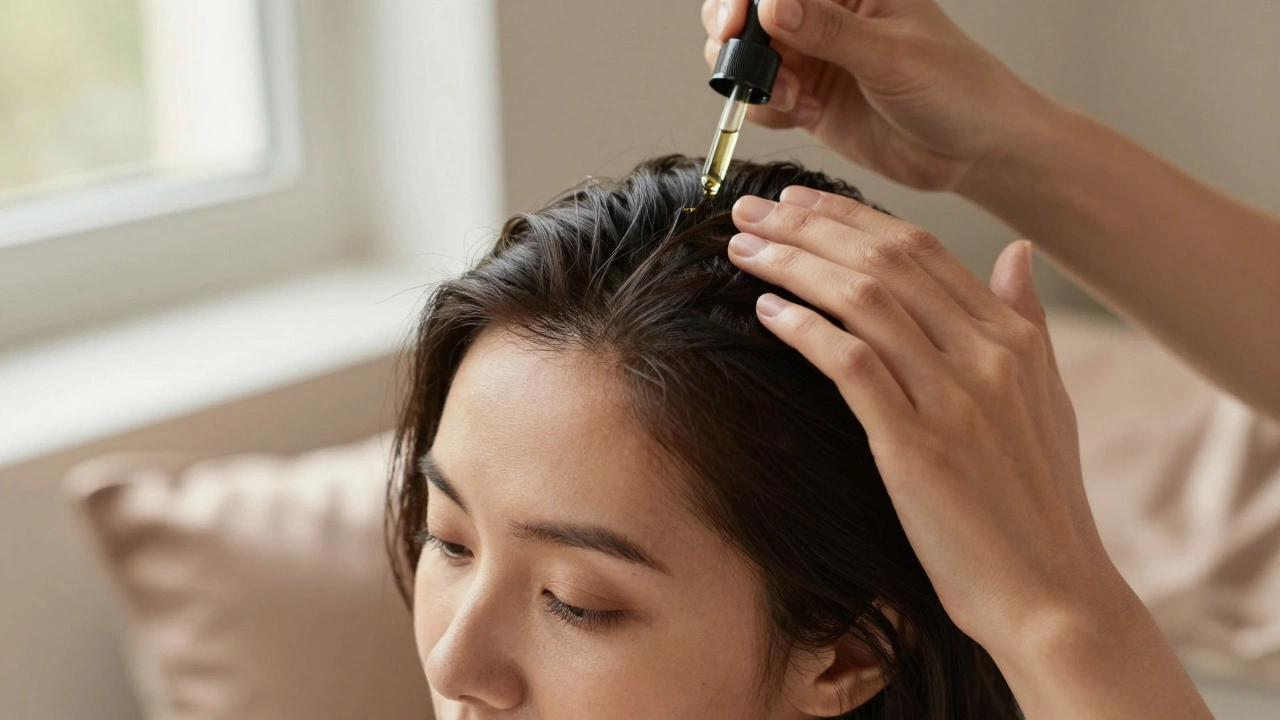
Try this: twice a week, massage your scalp for five minutes with your fingertips (not nails). Use a few drops of rosemary or peppermint oil mixed with a carrier oil like jojoba. A 2015 trial published in Skinmed showed that rosemary oil improved hair density as effectively as minoxidil 2%-without the side effects. You don’t need to spend $100 on a scalp device. Just use your hands. The pressure boosts blood flow, which delivers nutrients to follicles. Do this for six weeks, and you’ll feel a difference.
Nutrition you can’t ignore
Your hair grows from what you eat. It’s not a myth. Hair is made of keratin, a protein. If you’re not getting enough protein, iron, or biotin, your strands will thin out. You can’t fix this with a supplement alone-though they help-but with real food.
Focus on these:
- Eggs - packed with biotin and protein
- Spinach - high in iron and folate
- Salmon - omega-3s nourish follicles
- Almonds - vitamin E protects against oxidative stress
- Legumes - zinc and iron for follicle repair
Also, stay hydrated. Hair is 25% water. Dehydration makes strands brittle and prone to breakage. Aim for at least 1.5 liters of water a day-not just coffee or tea. And if you’re cutting carbs or doing extreme diets? That’s a red flag. Your body pulls nutrients from your hair when it’s under stress.

Give it time-no shortcuts
Hair grows about half an inch a month. That’s slow. But if you stop the damage and support your scalp and diet, you’ll see regrowth in 3-6 months. Don’t expect overnight results. That’s when people give up. They try a serum, see no change in two weeks, and switch to something else. The cycle repeats.
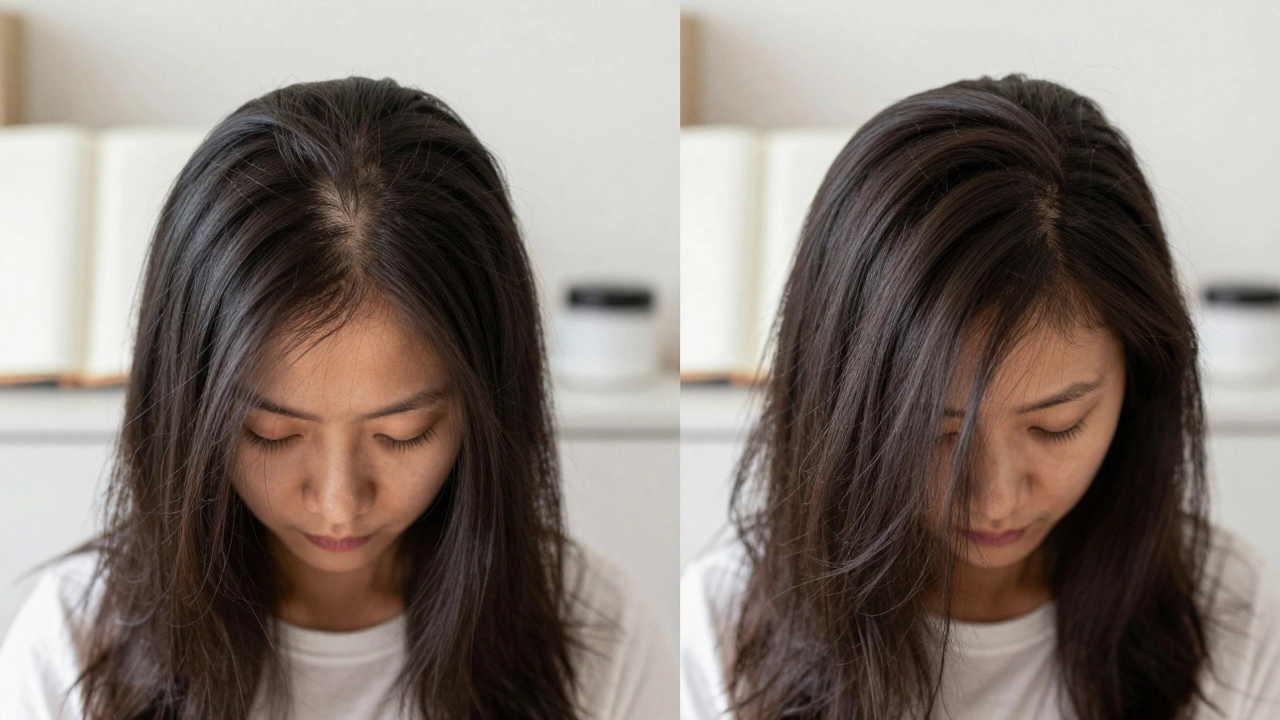
Take a photo of your part every month. You won’t notice small changes day-to-day, but in three months, you’ll see a difference. I’ve seen clients in Brighton go from barely-there density to noticeable volume just by sticking to these basics. No gimmicks. No expensive treatments. Just consistency.
What to avoid
There are so many products claiming to "restore thickness"-but most are just fancy moisturizers. Avoid anything with:
- Alcohol denat (dries out scalp)
- Parabens (hormone disruptors)
- Artificial fragrances (can irritate follicles)
- Heavy silicones (coat the scalp, block nutrients)
Also, skip the "hair thickening" sprays that only make strands look fuller temporarily. They don’t grow hair-they just glue it together. When you wash it out, you’re back to square one.
When to see a professional
If after six months of consistent care, you’re still losing more than 100 strands a day, or your scalp is red, scaly, or painful, see a trichologist. That’s not a stylist-it’s a hair and scalp specialist. In the UK, many NHS dermatologists refer to private trichologists who can test for hormonal imbalances, thyroid issues, or nutrient deficiencies. Blood tests for ferritin (stored iron), vitamin D, and TSH (thyroid) are often the missing pieces.
Don’t wait for hair loss to become severe. Early intervention makes recovery faster and more complete.
Realistic expectations
You won’t get your 20-year-old thickness back overnight. But you can get closer than you think. Most people regain 60-80% of their original density with the right approach. It’s not about volume like a celebrity’s blowout-it’s about healthy, strong strands that grow naturally and hold their shape.
Think of it like rebuilding muscle. You don’t lift weights once and get big. You train, rest, eat, and repeat. Hair is the same. Be patient. Be consistent. And stop chasing quick fixes.
Can hair thickness return after menopause?
Yes. Hormonal changes during menopause often lead to thinner hair because estrogen drops and androgens become more dominant. But with scalp care, nutrition, and stress management, many women regain noticeable thickness. It takes longer-usually 8 to 12 months-but it’s possible. Focus on iron, vitamin D, and omega-3s. Avoid harsh styling. Consistency matters more than speed.
Does biotin really help hair grow thicker?
Only if you’re deficient. Most people get enough biotin from food-eggs, nuts, sweet potatoes. Taking extra biotin won’t help unless your blood test shows low levels. In fact, too much can interfere with thyroid tests. Don’t take it just because it’s popular. Test first, supplement only if needed.
Can stress cause permanent hair thinning?
No-not if you act quickly. Stress triggers a condition called telogen effluvium, where hair shifts into a resting phase and falls out weeks later. It’s temporary. Once stress is managed, hair usually regrows within 6-9 months. But if stress continues for years without relief, follicles can weaken permanently. That’s why managing stress isn’t optional-it’s part of hair care.
How often should I wash my hair if it’s thinning?
Every 2-3 days is ideal. Washing too often strips natural oils that protect the scalp. Washing too little lets buildup clog follicles. Use a gentle, sulfate-free shampoo. Rinse with cool water-it seals the cuticle and reduces breakage. If your scalp gets oily fast, try a dry shampoo made with arrowroot powder instead of talc.
Are hair thickening shampoos worth it?
Most are marketing. They use polymers or silicones to coat strands and make them look thicker temporarily. They don’t stimulate growth or improve follicle health. If you want real results, skip them. Focus on scalp massage, clean ingredients, and nutrition. Those work from the inside out.