
Natural Skincare Ingredient Finder
Find Your Best Natural Skincare Ingredients
Answer a few questions about your skin type and concerns to get personalized recommendations for the most effective natural ingredients from the article.
Your Skin Profile
Let’s cut through the noise. There are hundreds of creams, serums, and potions claiming to be the "best" for your face. But if you’re asking what’s truly the best natural thing to put on your face, you’re not just looking for a trend-you’re looking for something that works, doesn’t irritate, and actually nourishes your skin. The answer isn’t one product. It’s a handful of time-tested, simple, real ingredients that have been used for centuries across cultures-and science now backs them up.
Honey: The Original Healing Balm
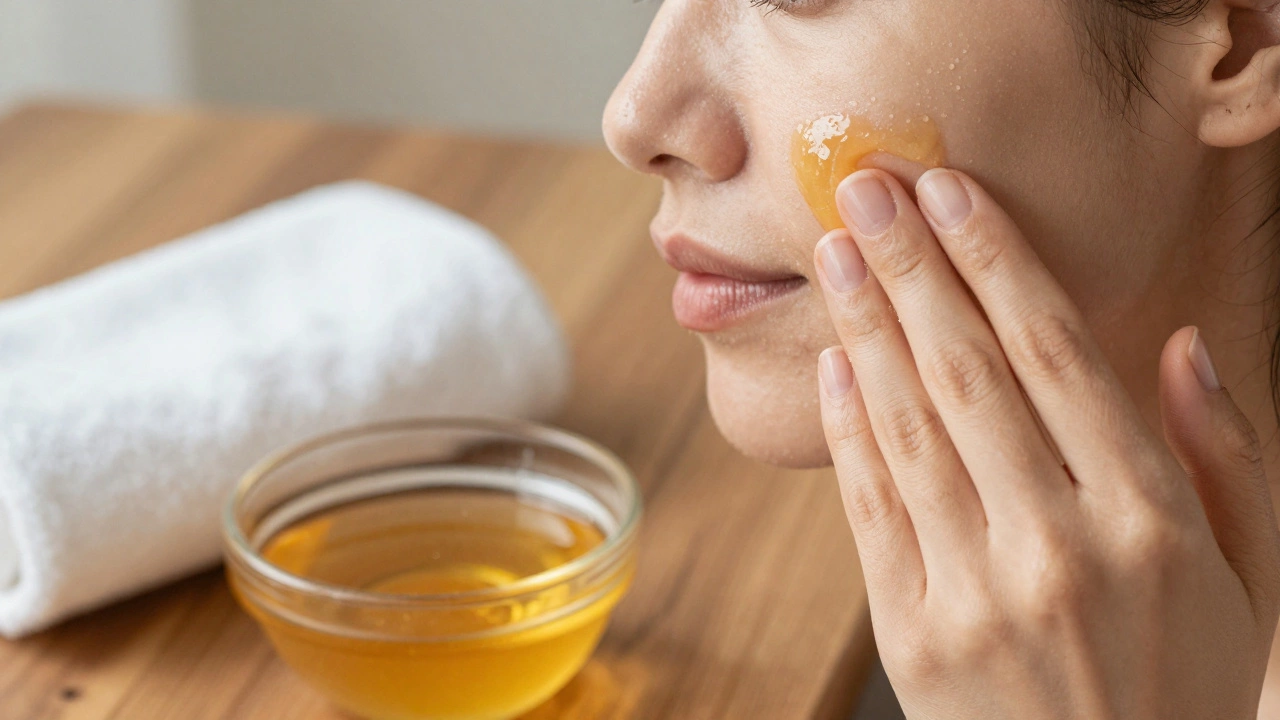
Honey isn’t just for tea. Raw, unprocessed honey-especially Manuka honey from New Zealand or local wildflower honey-is one of the most powerful natural things you can put on your skin. It’s naturally antibacterial, humectant (draws moisture into skin), and anti-inflammatory. Dermatologists have studied its use for acne, eczema, and even minor wounds. A 2017 study in the Journal of Clinical and Aesthetic Dermatology showed honey reduced acne lesions by 70% in participants using it as a nightly mask over 8 weeks.
How to use it? Cleanse your face, then apply a thin layer of raw honey. Leave it on for 15-20 minutes. Rinse with lukewarm water. No need to scrub. Your skin will feel soft, calm, and hydrated. It’s safe for sensitive skin, and if you’re prone to breakouts, it won’t clog pores.
Jojoba Oil: Your Skin’s Best Friend
Most people think oils will make their skin greasy. But jojoba oil isn’t an oil at all-it’s a liquid wax ester that mimics your skin’s natural sebum. That’s why your skin recognizes it instantly. It doesn’t sit on top like mineral oil. It balances oil production, soothes redness, and repairs the skin barrier.
People with oily skin often skip oils. Big mistake. When you strip your skin of oil, it overproduces sebum to compensate. Jojoba oil tells your skin, "We’re good. No need to panic." Use 2-3 drops on damp skin after cleansing, morning or night. It absorbs fast, leaves no residue, and works as a standalone moisturizer for most skin types.
Green Tea: The Antioxidant Powerhouse
Green tea isn’t just for sipping. Topically, it’s loaded with catechins-powerful antioxidants that fight free radicals from pollution and UV exposure. A 2019 study in the Journal of Medicinal Food found that green tea extract reduced signs of aging and sun damage more effectively than some over-the-counter vitamin C serums.
You don’t need fancy products. Brew a cup of organic green tea, let it cool, then soak a cotton pad and gently pat it over your face. Or mix cooled tea into your DIY face mask. It’s cheap, calming, and works wonders for red, inflamed skin. If you live in a city, this is your daily defense.

Colloidal Oatmeal: The Soother for Sensitive Skin
Colloidal oatmeal isn’t just for babies with eczema. It’s one of the few ingredients approved by the FDA as a skin protectant. It forms a protective film on skin, locks in moisture, and reduces itching and irritation. A 2020 clinical trial in the British Journal of Dermatology showed colloidal oatmeal reduced eczema symptoms in 85% of adults within 3 days.
Use it as a mask: mix 1 tablespoon of finely ground colloidal oatmeal with enough water to form a paste. Apply for 10 minutes, then rinse. Or add it to your bath for full-body relief. If your skin feels tight, itchy, or reactive, this is your go-to.
Cold-Pressed Rosehip Oil: The Renewal Oil
Rosehip oil comes from the seeds of wild rose bushes. It’s rich in essential fatty acids (linoleic and linolenic acid), vitamin A (natural retinoid), and vitamin C. That means it helps fade dark spots, smooth fine lines, and boost collagen without synthetic chemicals.
It’s not a miracle worker overnight. But after 6-8 weeks of nightly use, users report brighter, more even skin tone. Use 3-4 drops after toner, before heavier creams. Avoid if you have severe acne-some find it too rich. But for dry, mature, or sun-damaged skin? It’s hard to beat.
Why Not Just One Thing?
People want a single answer: "Is it honey? Is it oil?" But skin isn’t one-size-fits-all. Your needs change with seasons, stress, hormones, and environment. Honey is great for acne-prone skin. Jojoba oil helps oily skin balance. Green tea fights pollution. Oatmeal calms irritation. Rosehip oil rebuilds aging skin.
The best natural thing to put on your face isn’t one product-it’s a toolkit. Start with one. Try honey for two weeks. If your skin feels better, add jojoba oil. Then try green tea. You don’t need 10 steps. You need 2-3 that actually work for your skin right now.
What to Avoid
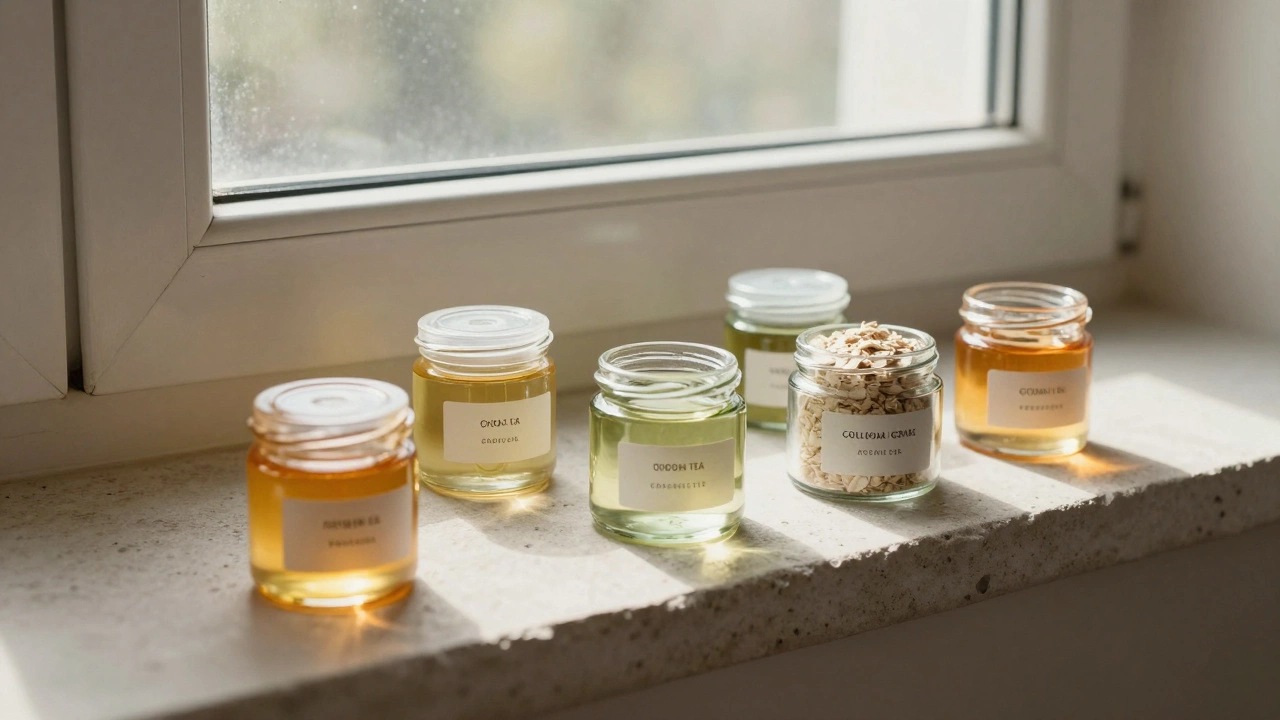
Not everything "natural" is safe. Lemon juice? Too acidic-it burns skin and increases sun sensitivity. Baking soda? It strips your skin’s pH, causing irritation and dryness. Essential oils? Highly concentrated. Lavender or tea tree oil can be irritating if not diluted properly. Stick to the basics: honey, jojoba, green tea, oatmeal, rosehip.
Also, avoid anything labeled "natural" that lists 15 ingredients you can’t pronounce. True natural skincare is simple. If it looks like a science lab experiment, it’s not.
Real-Life Test: What Worked in Brighton
I’ve seen clients in Brighton-where the sea air dries skin and pollution settles on faces-switch from expensive serums to this simple routine:
- Morning: splash with cooled green tea, pat dry, apply 2 drops of jojoba oil.
- Night: cleanse, apply honey mask twice a week, use rosehip oil every night.
- When skin flares: colloidal oatmeal mask once a day for 3 days.
Within a month, they stopped buying $80 creams. Their skin was clearer, calmer, and more resilient. No new products. Just better choices.
How to Start Today
You don’t need to overhaul your routine. Pick one thing from this list and try it for 14 days.
- Buy raw, unfiltered honey (check the label-no additives).
- Get cold-pressed jojoba oil (look for "100% pure" on the bottle).
- Steep a bag of organic green tea, cool it, and use it as a toner.
- Find colloidal oatmeal in the baby aisle or online-it’s sold as a skin treatment.
- Choose rosehip oil with no fragrance, no fillers.
Use one. See how your skin responds. Then add another. Your skin doesn’t need more. It needs the right things.
Can I use honey on my face every day?
Yes, but only if your skin tolerates it. Honey is gentle, but using it daily can be overkill for some. Start with 2-3 times a week. If your skin feels smoother and less oily, you can increase frequency. If it feels sticky or irritated, cut back. Listen to your skin-not the internet.
Is jojoba oil good for acne-prone skin?
Yes, and it’s often better than harsh acne treatments. Acne isn’t caused by oil-it’s caused by clogged pores and inflammation. Jojoba oil mimics your skin’s natural sebum, which tells your skin to stop overproducing oil. Many people with cystic acne see fewer breakouts after switching to jojoba. Use 2 drops only, and avoid if you’re allergic to nuts (jojoba is technically a seed, but cross-reactivity is rare).
Can I mix these natural ingredients together?
Yes, but start simple. A mix of honey and jojoba oil works well as a hydrating mask. Green tea and colloidal oatmeal can be combined into a soothing paste. But don’t throw everything into one jar. Layer them. Use honey as a mask, then apply jojoba oil after. Let each ingredient do its job without overwhelming your skin.
How long before I see results?
Honey and green tea can calm irritation in days. Jojoba oil balances oil in 1-2 weeks. Rosehip oil and colloidal oatmeal take 4-8 weeks to show full effects. Natural skincare isn’t fast. It’s lasting. If you don’t see changes in 30 days, you might need to switch one ingredient or check if your water, pillowcase, or stress levels are affecting your skin.
Do I still need sunscreen if I use these natural things?
Absolutely. None of these ingredients block UV rays. Honey, rosehip oil, and green tea help repair sun damage-but they don’t prevent it. You still need a mineral sunscreen with zinc oxide or titanium dioxide every morning. Natural skincare doesn’t mean skipping sun protection. It means protecting smarter.