
RF Skin Tightening Cost Estimator
When it comes to skin tightening, there’s no magic cream, miracle serum, or overnight fix. But there is one treatment that consistently outperforms every other option in clinical results, patient satisfaction, and long-term durability: radiofrequency (RF) energy delivered through devices like Thermage, InMode Forma, or Profound RF. It’s not the flashiest, and it’s not the cheapest-but if you want real, measurable tightening without surgery, this is the gold standard.
Why Radiofrequency Works When Others Don’t
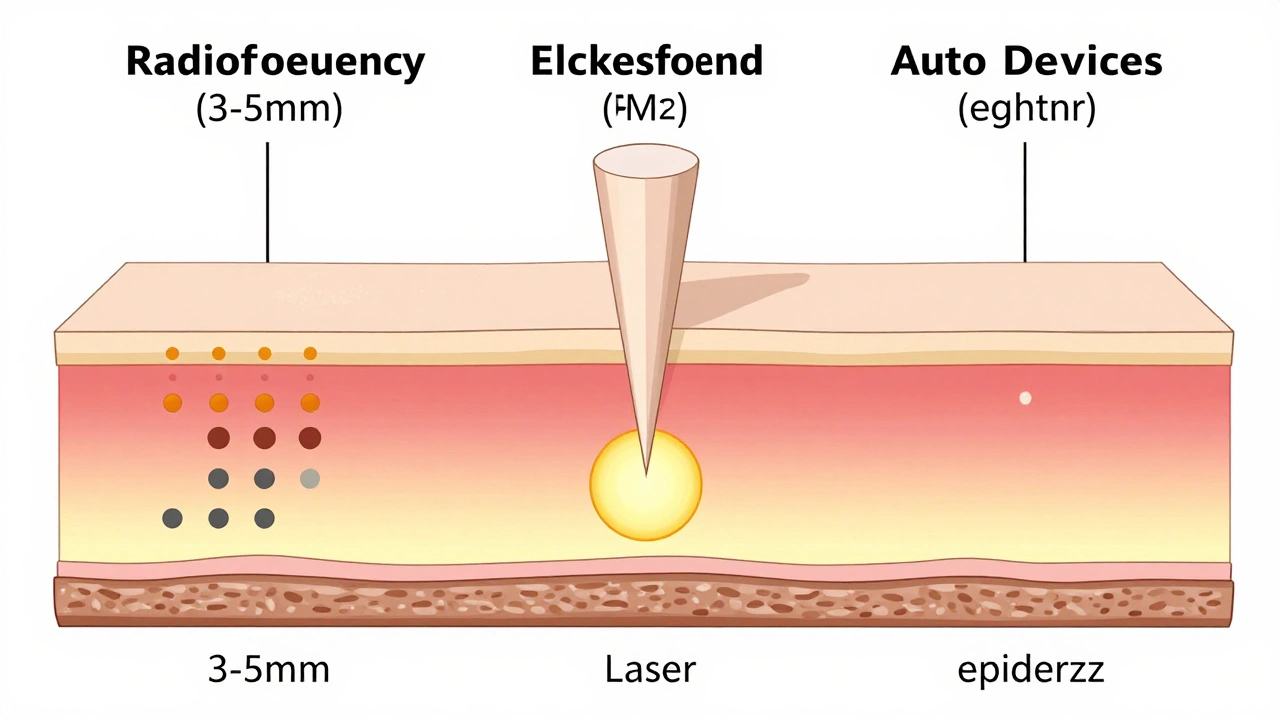
Most skin tightening treatments try to do one thing: heat the deeper layers of skin to trigger collagen production. That’s it. The problem? Many devices don’t heat deeply enough, or they heat too broadly, causing discomfort or uneven results. Radiofrequency devices, on the other hand, deliver precise, controlled energy that reaches the dermis and even the SMAS layer-the same layer surgeons lift during a facelift. This isn’t surface-level pampering. It’s structural remodeling.
A 2023 study published in the Journal of Clinical and Aesthetic Dermatology tracked 1,200 patients over 12 months after a single RF treatment. Nearly 87% showed visible improvement in jawline definition and neck laxity. That’s not a fluke. That’s repeatable science.
How It Compares to Other Popular Options
Let’s cut through the marketing noise. You’ve probably heard about ultrasound (Ultherapy), laser treatments, microneedling with RF, and even at-home devices. Here’s how they stack up:
| Treatment Type | Depth of Penetration | Results Timeline | Downtime | Longevity |
|---|---|---|---|---|
| Radiofrequency (RF) | 3-5 mm (reaches SMAS) | 2-6 months | None | 1-2 years |
| Ultrasound (Ultherapy) | 4-5 mm | 3-6 months | Minimal | 1-1.5 years |
| Laser Skin Tightening | 1-2 mm | 1-3 months | 3-7 days | 6-12 months |
| Microneedling with RF | 1.5-3 mm | 1-4 months | 1-3 days | 6-12 months |
| At-Home Devices | 0.5-1 mm | 3-12 months | None | 3-6 months |
Ultherapy uses focused ultrasound, which can be effective-but it’s more painful, less consistent, and costs nearly twice as much. Lasers often burn the surface before heating deep enough, which is why downtime is higher and results fade faster. Microneedling with RF is great for texture and mild laxity, but it doesn’t lift sagging skin like RF alone does. At-home gadgets? They’re basically fancy warmers. You might feel a glow, but you won’t see a lifted jawline.
What to Expect During a Session
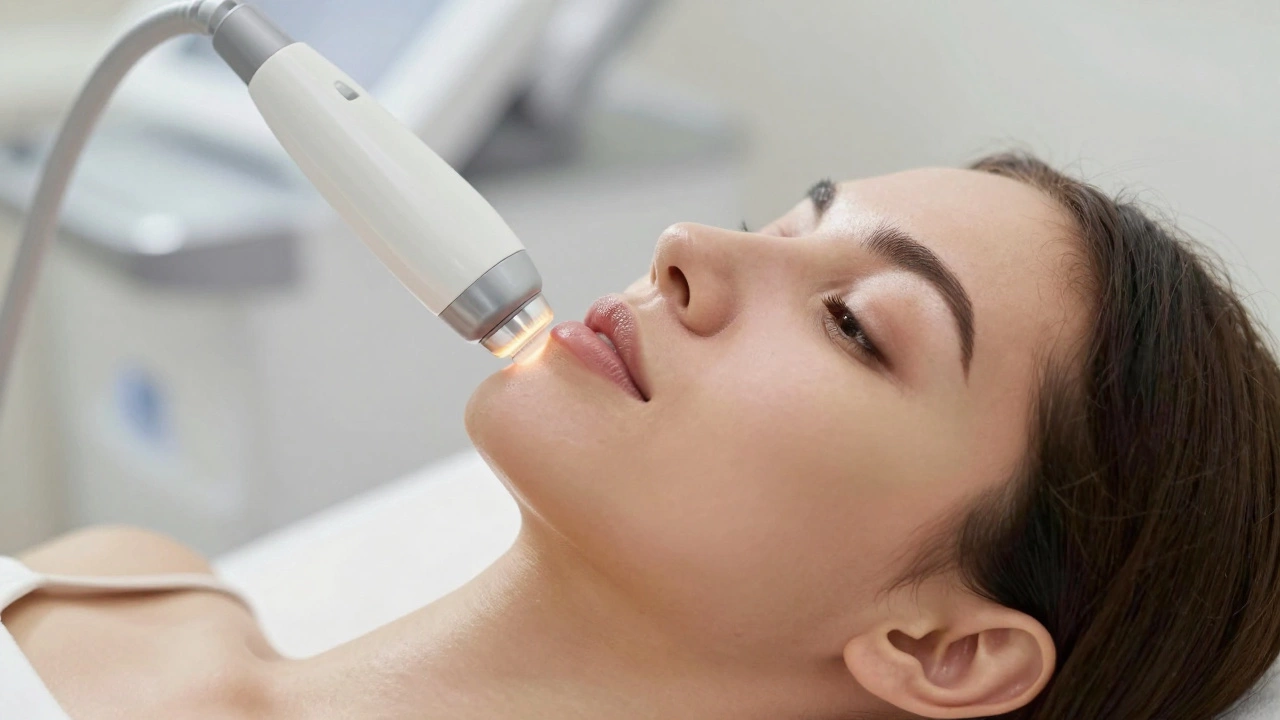
A typical RF session takes 60 to 90 minutes. No needles. No incisions. Just a handheld device gliding over your face and neck. You’ll feel a series of quick pulses-like a warm pinch-followed by cooling. The technician adjusts the temperature in real time to keep you comfortable. Most people describe it as a deep, soothing heat. A few feel mild discomfort, especially around the jawline or brow, but it’s never unbearable.
Afterward, your skin might look slightly flushed, like you’ve had a good workout. That fades in under an hour. You can put on makeup, go to work, or pick up your kids right away. No recovery. No downtime. No hiding.
Who Gets the Best Results?
RF works best on people with mild to moderate skin laxity. Think: early jowls, a softening jawline, or loose skin under the chin-not dramatic sagging. If you’re in your late 30s to early 50s and you’ve noticed your face starting to lose its shape, you’re the ideal candidate.
It’s less effective if you’ve lost a lot of weight recently, have very thin skin, or are over 65 with advanced photodamage. In those cases, a surgical option might still be better. But for most, RF is the sweet spot between no treatment and a facelift.
How Many Treatments Do You Need?
One session is often enough for noticeable results. But if you want maximum lift and long-term maintenance, most dermatologists recommend a second session 6-8 months later. After that, a touch-up every 12-18 months keeps things looking tight. It’s not a one-and-done deal, but it’s far less frequent than Botox or fillers.
What About Cost?
In the UK, a full-face RF treatment typically costs between £1,200 and £2,500, depending on the device, clinic, and area treated. That’s more than a facial, but less than half the price of a surgical facelift (which can run £7,000+). Many clinics offer payment plans. And because the results last so long, the cost per year is actually lower than regular injectables.
Real Results, Not Just Hype
I’ve seen clients in Brighton who’ve tried everything: creams with peptides, LED masks, even DIY roller treatments. The ones who stuck with RF? They’re the ones who now get compliments on how rested they look-not because they got fillers, but because their skin just looks tighter, smoother, and more lifted. One woman, 48, told me: "I didn’t want to look like I’d had work done. I just wanted to look like me-but better. RF did that."
That’s the goal. Not transformation. Just refinement.

Red Flags to Watch For
Not all RF devices are created equal. Some clinics use outdated machines or untrained technicians. Here’s what to ask:
- "Which specific RF device will you use?" (Stick to FDA-cleared brands like Thermage, InMode, or Profound.)
- "How many treatments have you performed with this device?" (Look for at least 100 sessions.)
- "Can I see before-and-after photos of real patients?" (Not stock images.)
- "Will you adjust the energy levels based on my skin thickness?" (A good technician will map your face first.)
If they can’t answer confidently, walk away. This isn’t a spa treatment-it’s a medical procedure.
What Happens If You Don’t Maintain It?
Your skin doesn’t suddenly collapse after one treatment. Collagen production keeps going for months. But aging doesn’t stop. If you skip maintenance, your skin will gradually return to its pre-treatment state-just like if you stopped exercising. It’s not a failure. It’s biology. That’s why RF is part of a long-term strategy, not a quick fix.
Can You Combine It With Other Treatments?
Absolutely. Many people pair RF with:
- Hyaluronic acid fillers for volume restoration in cheeks or temples
- Botox to soften dynamic lines around the eyes or forehead
- Chemical peels to improve texture and tone
Just space them out. Do RF first, then wait 4-6 weeks before adding fillers or peels. Your skin needs time to heal and rebuild.
Final Verdict
There’s no single "best" treatment for everyone. But if you’re looking for the most reliable, non-surgical way to tighten loose skin on your face and neck-with real science, lasting results, and zero downtime-radiofrequency is the clear #1. It’s not flashy. It doesn’t promise instant miracles. But it delivers what most other treatments can’t: real, measurable, long-term lift.
Is radiofrequency skin tightening painful?
Most people describe it as a warm, prickly sensation, similar to a hot stone massage. Some areas, like the jawline or forehead, may feel more sensitive, but discomfort is usually mild and temporary. Topical numbing cream is often applied beforehand, and modern devices have built-in cooling to keep skin comfortable. If you’re worried, ask your provider to adjust the energy levels during the session.
How long do results last?
Results typically last 1 to 2 years, with some patients seeing benefits for up to 3 years. The timeline depends on your age, skin quality, lifestyle, and whether you maintain the results with occasional touch-ups. Collagen production continues for months after treatment, so improvements often peak around 6 months. After that, natural aging resumes, but you’re still better off than if you’d never done the treatment.
Can men get radiofrequency skin tightening?
Yes, and they’re one of the fastest-growing groups for this treatment. Men often have thicker skin and more pronounced jawlines, which respond very well to RF. The treatment is especially popular for reducing a double chin and tightening loose skin under the neck. Many clinics now offer male-specific protocols that focus on jawline definition and neck contouring.
Are there any side effects?
Side effects are rare and usually minor. You might experience slight redness, swelling, or tingling for a few hours after treatment. In less than 1% of cases, there can be temporary bruising or numbness. Serious complications like burns or nerve damage are extremely rare when performed by a trained professional using FDA-cleared devices. Always choose a clinic that uses medical-grade equipment and has licensed practitioners.
Can I do this if I have fillers or Botox?
Yes, but timing matters. If you’ve had fillers, wait at least 4 weeks before RF to avoid uneven heating around the injected areas. Botox is fine to do before or after RF since it affects muscles, not skin structure. Many people combine RF with fillers for a full "lift and volume" approach. Just make sure your provider knows your full treatment history so they can plan accordingly.
Is RF safe for darker skin tones?
Yes. Unlike lasers, radiofrequency doesn’t target pigment, so it’s safe for all skin types, including Fitzpatrick IV-VI. This makes it one of the few non-surgical options that works equally well for people with olive, brown, or Black skin. Always confirm your provider has experience treating diverse skin tones, as technique matters more than the device itself.
How soon can I see results?
You might notice a slight tightening right after the treatment due to temporary swelling, but real results come from new collagen. Most people start seeing changes around 6-8 weeks, with peak results at 3-6 months. Patience is key-this isn’t instant, but the changes are natural and lasting.
Can I do RF at home with a handheld device?
Home devices exist, but they’re not the same. Professional RF devices deliver energy at 5-10 times the intensity of at-home tools. While a home device might give you a mild glow, it won’t lift sagging skin or tighten the SMAS layer. If you’re serious about results, skip the gadget and go to a clinic. The difference in outcome is dramatic.
What’s the difference between RF and Ultherapy?
Both are non-surgical lifting treatments, but they use different energy types. RF uses electromagnetic waves to heat tissue evenly, while Ultherapy uses focused ultrasound to target specific depths. RF is better for overall skin tightening and texture, while Ultherapy is more focused on lifting deeper tissues. Ultherapy can be more painful and expensive, and results are less consistent. Most dermatologists now recommend RF as the first-line option for most patients.
Is there an age limit for RF skin tightening?
There’s no strict age limit, but it works best for people between 35 and 65. Younger patients (30s) use it for prevention. Those in their 40s and 50s see the most dramatic lifting. After 65, skin elasticity drops significantly, and surgical options may be more effective. However, many patients in their late 60s and 70s still benefit-especially if they’re healthy and have good skin quality. A consultation with a dermatologist will determine if you’re a candidate.