
Waxing Schedule Calculator
Waxing Frequency Calculator
Get personalized waxing schedule recommendations based on your hair growth and skin type
Your Recommendation
Most beauty salons don’t just do hair and makeup-they’re full-service spots where people go to feel put together, relaxed, and confident. Whether you’re in Brighton, Birmingham, or Boise, the core offerings haven’t changed much over the years, but the standards have. Today’s salons are cleaner, better trained, and more focused on results than ever before.
Hair Services Are Still the Main Attraction
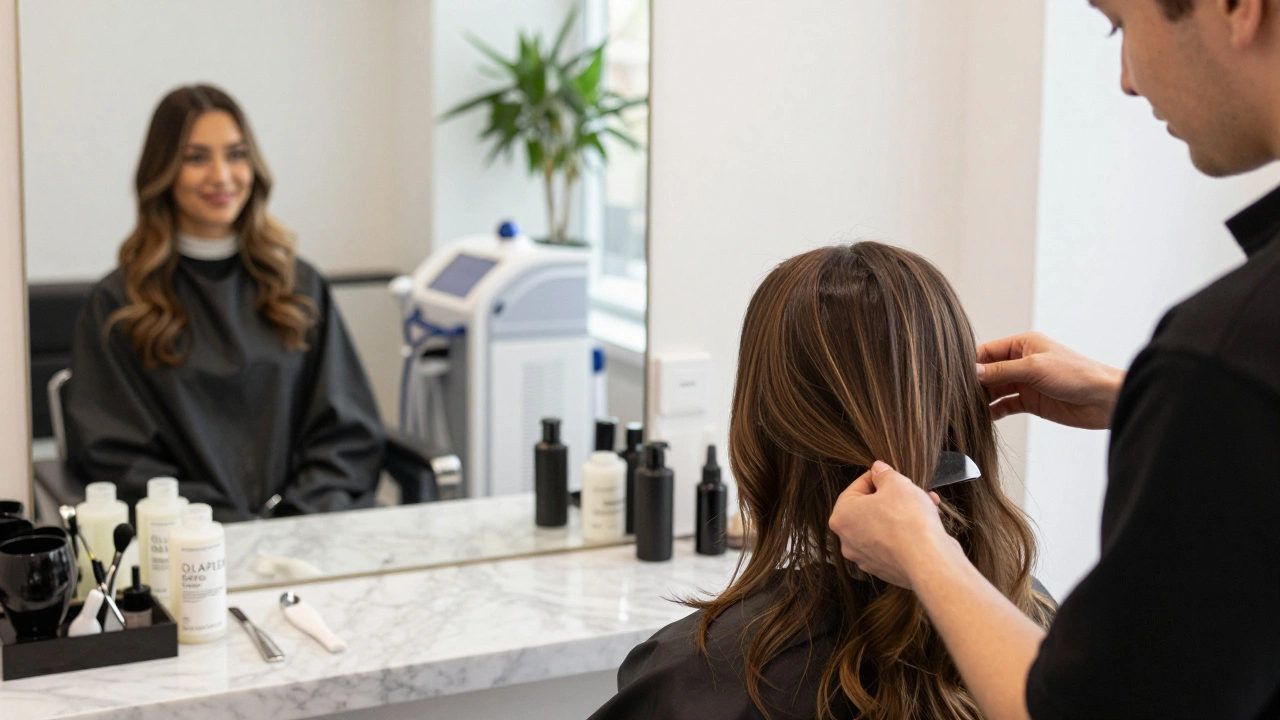
Let’s be real-hair is why most people walk through the door. Cut, color, and style are the bread and butter. But it’s not just a trim anymore. Clients expect precision. They want balayage that looks sun-kissed, not streaky. They want keratin treatments that smooth frizz without flattening volume. And they want stylists who know how to work with their hair type, not just follow a trend.
Salons now offer advanced treatments like Olaplex, which rebuilds broken bonds in damaged hair, and heat-activated protein masks that repair color-treated strands. Many also specialize in curly hair, Afro-textured hair, or fine hair that won’t hold volume. It’s no longer a one-size-fits-all approach. A good salon will ask about your routine, your products, and even your water hardness before suggesting a cut.
Facials and Skin Treatments Are Everywhere
Skincare isn’t just for people in their 30s anymore. Teens are walking in for acne treatments. People in their 50s are coming in for anti-aging protocols. And everyone in between wants glowy, even skin.
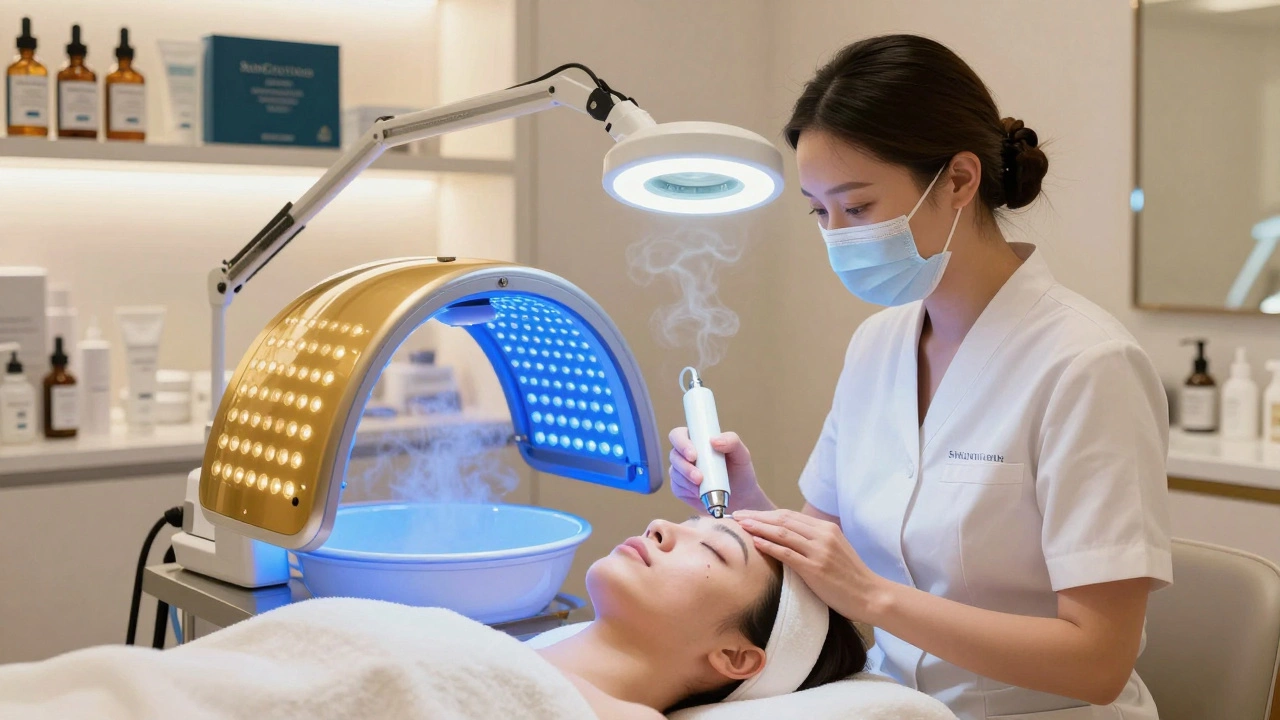
Most salons offer basic facials-cleansing, exfoliation, steam, mask, and moisturizer. But the real differentiators are the advanced ones: chemical peels using glycolic or salicylic acid, microdermabrasion, LED light therapy for inflammation or acne, and hyaluronic acid infusions that plump skin instantly. Some salons even use devices like the HydraFacial, which combines cleansing, exfoliation, extraction, and hydration in one 30-minute session.
Don’t assume all facials are the same. A $60 facial at a mall kiosk is not the same as a $150 medical-grade facial done by a licensed esthetician. The latter uses clinical-grade products, sterile tools, and often includes a skin analysis with a magnifying lamp. That’s worth paying for if you’re serious about results.
Nail Care Is More Than Just Polish
Manicures and pedicures used to mean a quick paint job. Now, they’re mini-spa experiences. Most salons offer gel polish that lasts two to three weeks without chipping. But the real growth is in nail health. Clients want cuticle oil treatments, paraffin wax dips, and strengthening serums that actually help brittle nails grow longer.
Some salons now offer nail reconstruction for people who bite or pick at their nails. Others specialize in acrylics or gel extensions that look natural, not like fake claws. And yes, foot care is getting serious-callus removal, fungal treatment, and even custom orthotic inserts are now offered by top-tier salons.
Watch out for salons that reuse tools or don’t sterilize properly. Infection risks are real. Ask to see their autoclave or ask if they use disposable liners for foot baths. If they hesitate, walk out.
Hair Removal Is a Big Part of the Business
Waxing isn’t going anywhere. In fact, it’s more popular than ever. Most salons offer full-body waxing-brows, upper lip, underarms, legs, bikini lines, and even back and chest for men. Hard wax is gentler on sensitive skin and better for fine hair. Soft wax is faster and cheaper but can be more irritating.
But laser hair removal is changing the game. It’s no longer just for celebrities. Many salons now have in-house laser machines (like Candela or Soprano) that offer permanent reduction after 6-8 sessions. It’s expensive upfront-around £150-£300 per session-but saves money over time compared to monthly waxing. Always ask if the technician is certified and if they’ve treated your skin tone before. Darker skin needs specific wavelengths to avoid burns.
Threading is still common for eyebrows, especially in South Asian communities. It’s precise, chemical-free, and great for sensitive skin. But it’s not for everyone-some find it painful.
Makeup Services Are More Than Just Events
Yes, bridal makeup is still a huge driver. But salons now offer everyday makeup lessons, airbrush foundation for oily skin, and corrective makeup for scars or hyperpigmentation. Some even do photo shoots for LinkedIn profiles or social media.
High-end salons carry professional brands like MAC, NARS, and Charlotte Tilbury. They don’t just slap on foundation-they match skin tone under natural light, use color theory to correct undertones, and apply products that last through sweat, humidity, or long days. If you’re spending £80 on a makeup application, you should leave looking like you’ve had a professional photoshoot-not like you’re wearing a mask.
Additional Services You Might Not Expect
Salons are expanding. You’ll now find:
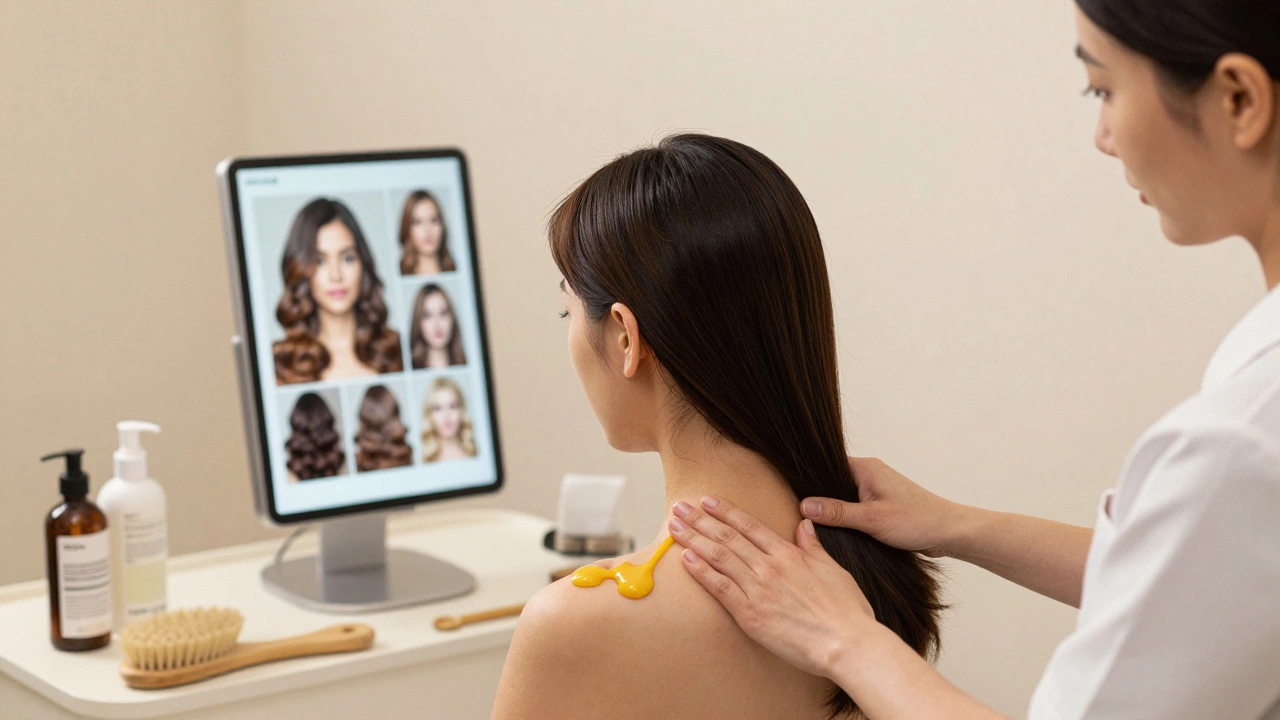
- Scalp treatments for dandruff or thinning hair, often with LED therapy or microneedling
- Body scrubs and wraps using salt, sugar, or seaweed to exfoliate and hydrate
- Ear candling (though controversial and not medically recommended-ask if they offer it and why)
- Massage therapy-neck, shoulder, or hand massages added to hair or nail services
- Wellness add-ons like aromatherapy, hot stone treatments, or even CBD-infused oils
These extras aren’t always advertised. If you’re looking for a relaxing experience, ask what’s included beyond the basic service. Some salons will throw in a scalp massage with your cut for free. Others charge extra.
What to Look For When Choosing a Salon
Not all salons are equal. Here’s what actually matters:
- Hygiene: Are tools sterilized? Are towels fresh? Are sinks clean?
- Staff training: Do they have certifications? Are they continuing education?
- Product quality: Do they use professional brands? Or cheap salon-only lines?
- Consultation: Do they ask questions before starting?
- Reviews: Look for recent photos, not just 5-star ratings. Real results show up in pictures.
Don’t just pick the cheapest. A £20 haircut that ruins your hair costs more in the long run. A £100 facial that gives you clear skin? That’s a bargain.
What’s New in 2025?
Salons are getting smarter. AI skin analyzers now scan your face and recommend products based on pores, wrinkles, and redness. Some salons use AR mirrors so you can see how you’ll look with different hair colors before committing. Others offer subscription plans-pay £40/month and get a monthly facial, brow wax, and nail touch-up.
There’s also a push toward sustainability. More salons are using refillable product containers, bamboo brushes, and water-saving chairs. If eco-friendliness matters to you, ask about their practices. It’s becoming a differentiator.
Bottom line: A good beauty salon isn’t just a place to get your hair done. It’s a wellness hub. Whether you need a quick touch-up before a job interview or a full self-care day, the right salon can make you feel like the best version of yourself.
What’s the most common service at beauty salons?
Haircuts and color are still the most common services, followed closely by facials and nail care. These three categories make up about 75% of all salon visits in 2025. People come in for routine maintenance, but often end up adding on other services like waxing or scalp treatments.
Are salon facials worth it compared to at-home routines?
Yes-if you’re doing it right. At-home routines are great for daily care, but salon facials use stronger, professional-grade ingredients and equipment you can’t buy over the counter. A chemical peel or microdermabrasion done by a licensed esthetician gives results you can’t get with a scrub and serum. Plus, they assess your skin properly. If you’re struggling with breakouts, dullness, or aging signs, a professional facial every 4-6 weeks makes a noticeable difference.
How often should I get a waxing service?
For most people, waxing every 4 to 6 weeks works best. Hair needs to be at least 1/4 inch long to be gripped by the wax. Going too soon means it won’t come out cleanly. Waiting too long makes it more painful and less effective. After a few sessions, hair grows back finer and sparser, so some people can stretch it to 8 weeks.
Can beauty salons help with acne?
Absolutely. Many salons offer acne-specific facials that include extractions, salicylic acid peels, and blue LED light therapy to kill bacteria. They’ll also recommend products and routines tailored to your skin type. But if your acne is severe or cystic, they’ll refer you to a dermatologist. Salons handle mild to moderate cases well-especially when combined with good home care.
Is laser hair removal safe for darker skin tones?
Yes, but only if the salon uses the right equipment. Lasers like Nd:YAG or Soprano ICE are designed for darker skin and won’t burn or lighten it. Avoid older IPL devices-they’re risky on melanin-rich skin. Always ask if the technician has experience treating your skin tone. A reputable salon will do a patch test first.
If you’re looking for a salon that does more than just the basics, check out places that list their certifications, show real client photos, and offer consultations before booking. The best salons don’t just fix your hair-they help you feel better about yourself.