
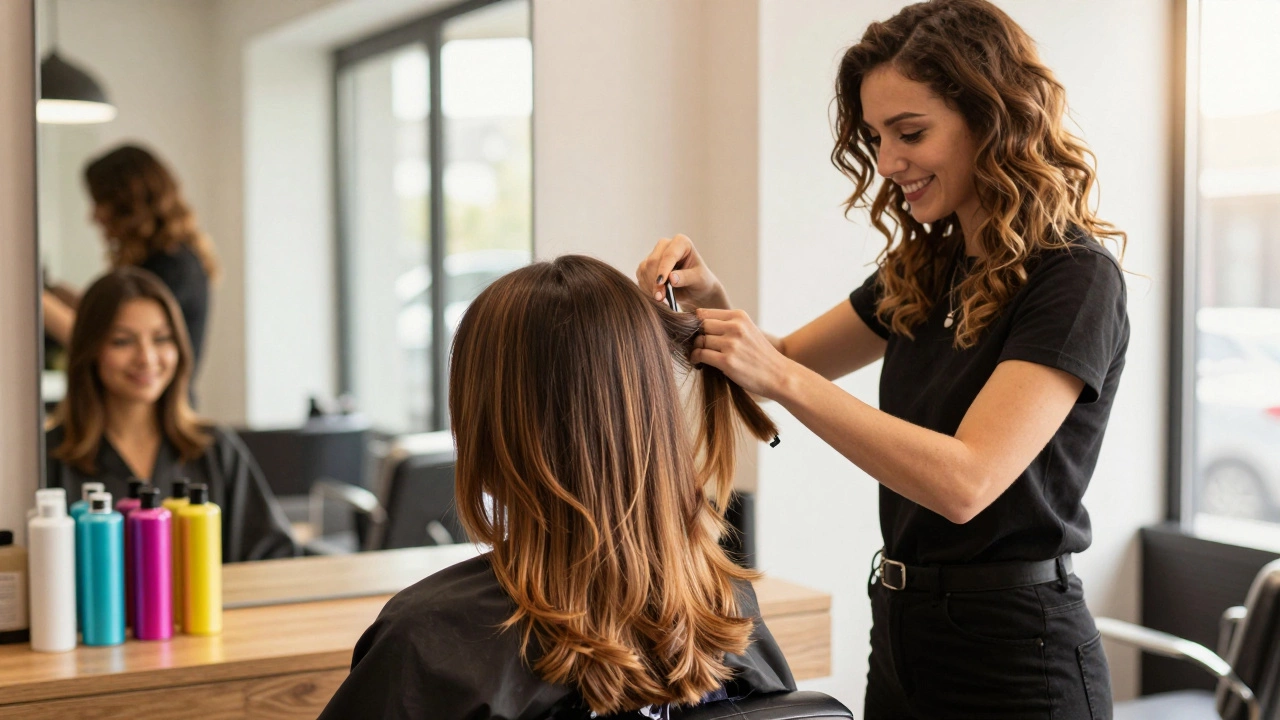
Hair Color Tipping Calculator
Calculate Your Tip
Recommended Tip
$15
(15% of service cost)
Based on your selections: Standard service complexity with 15% tip
Tipping this amount directly supports your stylist's skill and hard work. Most stylists rely on tips to cover their costs and education.
Getting your hair colored can feel like a big investment-especially when the bill hits $100. You walk out looking fresh, but then you’re left wondering: how much should you actually tip? It’s not just about being polite. Tipping right shows you value the skill, time, and effort your stylist poured into your hair. And in a world where many salon workers rely on tips to make a living, getting it right matters more than you think.
Standard Tipping Rules for Hair Color
The go-to rule in the beauty industry is 15% to 20% of the total service cost. For a $100 hair color, that means $15 to $20. That’s the baseline. Most people stick to this range, and for good reason. It’s fair, it’s expected, and it aligns with how most salons structure their pay.
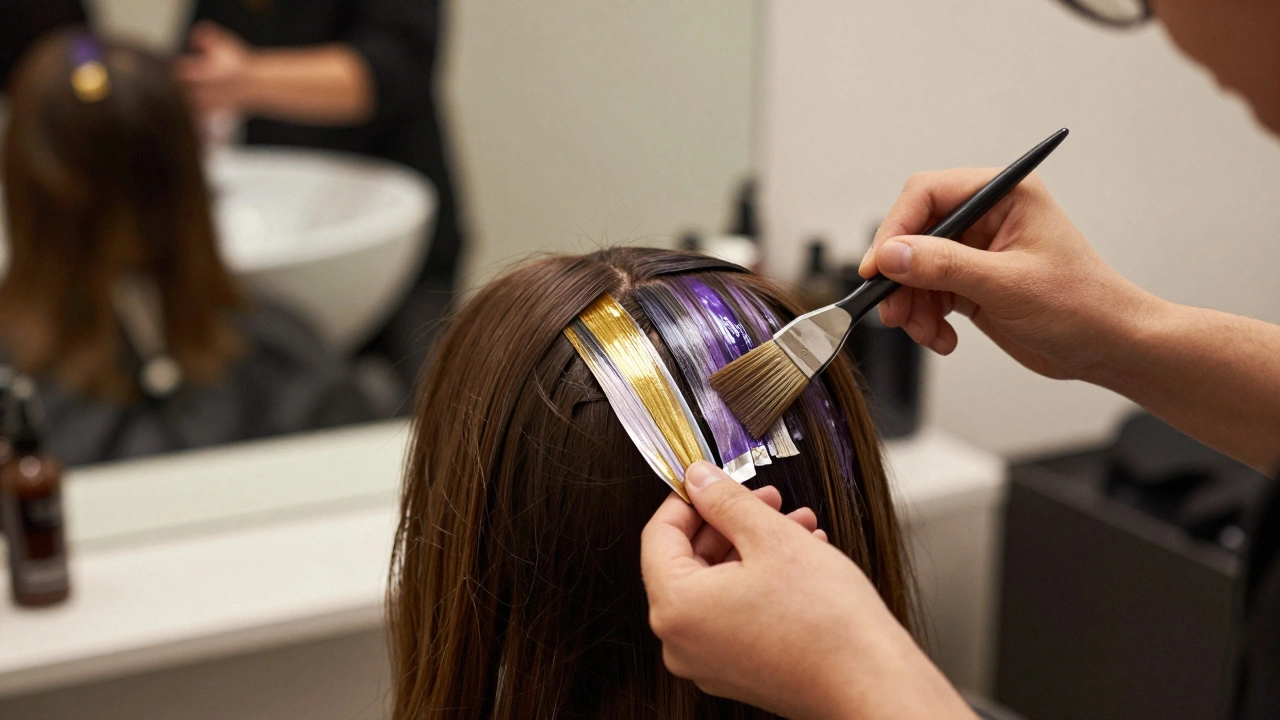
But here’s the thing: not all $100 hair colors are the same. If you walked in with dark roots and left with a full head of balayage, multiple foils, and a toner touch-up, you’re looking at 3-4 hours of precision work. That’s not just coloring-it’s art. In cases like that, 20% feels more like a minimum.
On the flip side, if you had a simple root touch-up with a single-process color and it took 90 minutes, 15% is perfectly appropriate. The key isn’t just the price tag-it’s the complexity and time involved.
Why Tipping Matters More Than You Think
Many people assume salon owners pay stylists a salary. They don’t. Most stylists work on commission or as booth renters. That means their income isn’t guaranteed. A $100 color might only net the stylist $50-$60 after the salon takes its cut. If you tip $15, you’re adding 30% to their take-home pay for that appointment.
Think of it this way: if you got your car serviced and the mechanic spent three hours fixing something tricky, you’d probably tip them $20-$30 if they went above and beyond. Hair coloring is the same. It requires training, precision, and constant learning. Color formulas change. Tools evolve. Stylists spend hundreds of hours on courses just to stay current.
And don’t forget the assistant. Many salons have color assistants who mix your dye, apply foils, or wash your hair. They’re not always visible, but they’re part of the process. A good tip covers them too.
When to Tip More Than 20%
You should consider tipping more if:
- Your stylist went out of their way-stayed late, rearranged their schedule, or offered extra advice on at-home care.
- You had a difficult color situation: gray coverage, previous bad dye jobs, or virgin hair that needed multiple lightening sessions.
- You’re booking with a top-tier stylist or someone in high demand. These professionals often charge premium rates because their work is consistently excellent.
- You’ve been a loyal client for years. Consistent clients build relationships. A little extra shows you appreciate that.
There’s no hard rule for tipping 25% or 30%, but if you feel like your stylist truly exceeded expectations, go for it. They’ll remember it-and so will you the next time you need a touch-up.
When 15% Is Enough
It’s okay to stick with 15% if:
- The service was basic: single-process color, no highlights, no corrective work.
- You were unhappy with the result. Tipping isn’t mandatory if the outcome didn’t meet your expectations. But do speak up politely first-most stylists will fix it for free.
- You’re on a tight budget. Tipping should never cause financial stress. Even $10 is better than nothing if that’s all you can afford.
Remember: tipping is a gesture of appreciation, not a fine. If you’re unhappy, say so. Don’t just stiff the stylist and walk away. Most professionals want to make things right.
What About Cash vs. Card Tips?
Cash tips are still the gold standard. They go straight to the stylist. When you tip with a credit card, the salon often takes a cut-sometimes up to 5% in processing fees. That means if you add $20 to your card payment, the stylist might only get $19.
If you’re paying by card and want to tip fully, add the tip before you sign. Say, “Can you add $20 for the stylist?” That way, the full amount goes to them. If you tip after the fact on the receipt, it might get lost in the system.
Some salons now have digital tipping options through apps or tablets. These are usually better than card tips because they’re direct. But always confirm with the front desk: “Does this go straight to the stylist?”

What If You’re Not Sure What to Tip?
Here’s a simple trick: look at your stylist’s face when they hand you the bill. If they smile, make eye contact, and say something like, “Hope you love your new color!”-that’s a sign they’re proud of their work. Tip on the higher end.
If they’re rushed, distracted, or barely say goodbye, they might be overworked or underpaid. Even then, a $15 tip shows you notice the effort, not just the result.
Another trick: ask yourself, “Would I recommend this stylist to a friend?” If yes, tip at least 20%. If you’re unsure, 15% is still respectful.
Regional Differences and Trends in 2025
In cities like London, Manchester, or Brighton, tipping 20% is becoming the norm-even for standard services. Salaries in the beauty industry haven’t kept up with inflation. Many stylists now earn less than minimum wage before tips. Clients are starting to notice.
Recent surveys from the British Hairdressing Council show that 68% of stylists in England rely on tips to cover basic expenses like tools, products, and continuing education. That’s up from 52% in 2020.
There’s also a quiet shift: more clients are tipping in cash, even if they pay by card. It’s a small act, but it makes a real difference.
Final Rule: Tip Like You Mean It
There’s no secret formula. No hidden code. Just this: tip based on how much you value the result and the person who created it. A $100 hair color isn’t just dye and bleach-it’s time, skill, patience, and artistry. If you love how you look, reward that. If you’re unsure, go with 20%. You’ll never regret it.
And if you’re ever in doubt? Ask the front desk: “What’s the usual tip for a color like this?” Most will say, “Whatever feels right to you.” And that’s the truth. Tipping is personal. But it’s also powerful.
Is it rude not to tip for a $100 hair color?
It’s not illegal, but it’s seen as disrespectful in most salons. Stylists often depend on tips to make a living, and $100 services usually involve hours of work. Skipping a tip can feel like undervaluing their skill-even if you didn’t mean it that way. If you can’t afford to tip, it’s better to say so honestly than to stay silent.
Should I tip the shampoo assistant too?
Yes, if they helped during your service. Even if they just washed your hair or mixed color, they contributed. You don’t need to give them a separate tip-just include them in your overall tip. Most stylists share tips with assistants, especially in larger salons. If you’re unsure, ask the stylist: “Do you share tips with your assistant?”
What if the color didn’t turn out right?
Don’t tip until the issue is fixed. Politely explain what you expected versus what you got. Most salons will correct mistakes at no extra cost. If they fix it and you’re happy, tip as usual. If they refuse to fix it or are rude, you’re under no obligation to tip. But still, say thank you for their time-it keeps things professional.
Can I tip with a gift card or product instead of cash?
Some stylists appreciate it, but most prefer cash. Gift cards often go to the salon, not the individual. Products can be useful, but they’re not a substitute for money. If you want to give a gift, add it on top of a cash tip-not instead of one. A $10 gift card with a $20 tip is great. A $20 gift card alone might feel impersonal.
Do I tip differently for a salon vs. a home-based stylist?
Yes. Home-based stylists usually keep 100% of their earnings-they don’t pay booth rent or split with a salon. For them, tipping 20% is even more important. You’re directly supporting their business. If they’re working out of their home, they likely cover their own supplies, utilities, and insurance. A $20 tip on a $100 service means more to them than it does to a stylist in a chain salon.