
Salon Tipping Calculator
Service Details
Breakdown
This is a standard, respectful tip for good service.
You just walked out of the salon with a fresh cut. It looks great. You hand over your card, and then that awkward pause happens. How much do you put down as a tip? If your haircut cost $30, is $10 enough? Or are you shortchanging the stylist who spent an hour on your hair?
This isn't just about money; it's about respect for skilled labor. In 2026, with rising costs of living and shifting wage structures in the service industry, the old rules of thumb need a refresh. Tipping is no longer optional in many places-it’s part of the stylist’s base income. Getting it wrong can hurt someone’s livelihood, while getting it right builds a lasting relationship with your go-to barber or cosmetologist.
The Math Behind the Tip: Percentages vs. Flat Rates
Let’s look at the numbers first. For a $30 haircut, a standard tip percentage ranges from 15% to 20%. Here is what that breaks down to:
- 15% Tip: $4.50
- 18% Tip: $5.40
- 20% Tip: $6.00
So, if you are tipping $10 on a $30 service, you are actually tipping 33%. That is significantly above the standard expectation. In pure mathematical terms, $10 is not just "good"-it is generous. However, context matters. A flat rate like $10 might feel natural because it is a round number, but relying on flat rates instead of percentages can lead to inconsistencies. If you later get a $100 blowout and still tip $10, you are only giving 10%, which is considered low.
The core issue here is whether $10 feels fair to you and whether it reflects the value of the service. For a basic trim at a budget-friendly chain salon, $10 is excellent. For a detailed style at a high-end boutique, even though the price is low ($30), the skill level might warrant the higher end of the spectrum. But generally, $10 on $30 puts you in the top tier of tippers.
Why Stylists Rely on Tips More Than Ever
To understand why the amount matters, you have to look at how hairdressers are paid. Unlike retail workers who might make minimum wage plus tips, many salons operate on a commission model or a booth-rental model.
| Model Type | How It Works | Impact on Tipping |
|---|---|---|
| Commission-Based | Stylist pays the salon a % (e.g., 40-60%) of every service. They keep the rest + tips. | Tips are often the difference between making rent and saving money. |
| Booth Rental | Stylist rents a chair like a small business owner. They keep 100% of service fees but pay overhead. | Tips are bonus income, but they still cover insurance and supplies. |
| Hourly Wage | Rare in private salons. Common in corporate chains. Base pay is fixed. | Tips supplement a low hourly wage (often near federal minimum). |
In most independent salons, the stylist does not receive a traditional salary. Their take-home pay is directly tied to how many clients they see and how well those clients tip. When you tip $10 on a $30 cut, you are acknowledging that their time, skill, and product usage have value beyond the sticker price. In 2026, with inflation affecting everything from shampoo costs to rent, this support is crucial.
Factors That Should Influence Your Tip Amount
While 20% is the golden rule, there are variables that can push you to tip more (or occasionally less). Consider these factors before you swipe your card:
- Complexity of the Cut: Did you get a simple buzz cut that took 15 minutes? Or did you sit for 45 minutes getting layers blended, textured, and styled? A $30 price tag doesn't always reflect time. If the stylist spent extra time ensuring precision, lean toward 20-25%.
- Experience Level: Is this a senior stylist with 20 years of experience charging a lower rate for students or seniors? Or is it a junior stylist building their portfolio? Experienced stylists often command higher tips due to expertise, even if the base price is modest.
- Service Quality: Was the consultation thorough? Did they listen to what you wanted? Did they wash, cut, and style without rushing? High-quality service warrants the full 20% or more.
- Location: Tipping norms vary by region. In major metropolitan areas like New York City or San Francisco, expectations are higher. In rural areas, $10 on a $30 cut might be seen as exceptionally generous.
If any of these factors point to extra effort, $10 is a safe and respectful bet. If it was a quick, straightforward cut, $6-$7 is perfectly acceptable.
The Hidden Costs: Who Else Deserves a Tip?
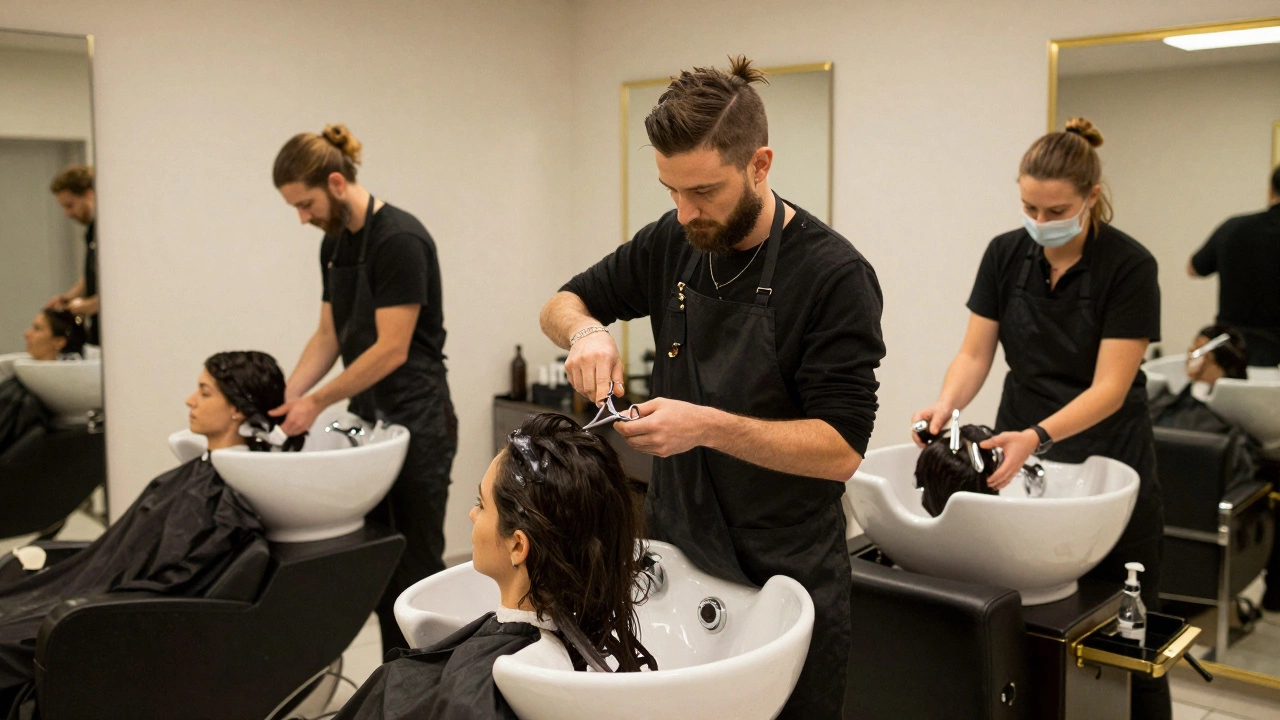
One common mistake people make is tipping only the person who held the scissors. But a salon is a team effort. When you walk in, someone greets you. Someone else might wash your hair. Someone cleans up after you. Ignoring these roles can create friction in the workplace.
Here is a breakdown of who typically expects a tip and how much:
- The Stylist: 15-25% of the total bill. This is your main tip.
- The Assistant/Shampooer: If a separate person washed and prepped your hair, tip them $3-$5. Some salons split the main tip among staff, but it is safer to tip them directly if possible.
- The Colorist: If you got color added to your cut, tip the colorist separately. Usually 20% of the color service cost.
If you tipped $10 to your stylist for a $30 cut, that leaves little room for others if multiple people were involved. In such cases, consider increasing the stylist tip to $12-$15 so you can spare $3-$5 for the assistant. This ensures everyone who contributed to your experience is compensated fairly.
Cash vs. Card: Does the Method Matter?
In 2026, digital payments are the norm, but cash still holds power in the salon world. Here is why:
When you tip via credit card, the tip goes through the salon’s payment processor. Some salons deduct processing fees (around 2-3%) from tips before handing them out. Others distribute tips weekly or bi-weekly, meaning the stylist has to wait days to access their money. Cash, however, is immediate and untouched by fees.
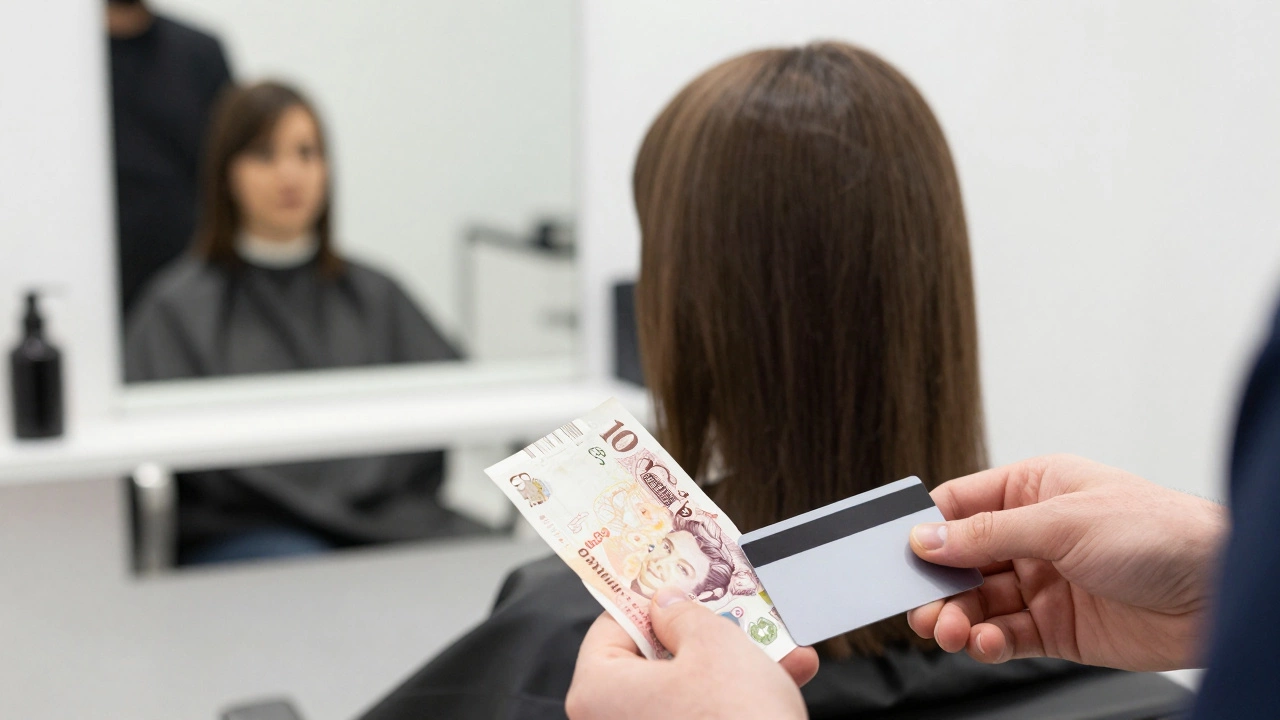
If you want to make a real impact, carrying small bills is a pro move. Handing a stylist a crisp $10 bill along with your card payment says, "I appreciate you, and I want you to have this money today." It also avoids any ambiguity about whether the tip was included in the transaction or left out by mistake.
That said, don’t stress if you only have a card. Most modern POS systems allow you to add a tip easily. Just ensure you select the correct percentage. Many apps now default to 20%, which makes it easier than ever to tip correctly.
What If You Can’t Afford to Tip Much?
Life happens. Budgets tighten. If $10 feels like a stretch, remember that consistency matters more than generosity. A regular client who tips 15% every time is more valuable to a stylist than a sporadic client who tips 30% once and never returns.
If you are on a tight budget, aim for the 15% minimum ($4.50 for a $30 cut). Communicate openly if needed. Stylists are human; they understand financial struggles. Building a relationship based on honesty and regularity is better than over-tipping once and disappearing.
Also, consider non-monetary ways to show appreciation. Leave a positive online review mentioning the stylist by name. Bring friends to the salon. These actions help the business grow, which indirectly benefits the stylist’s income.
Common Tipping Mistakes to Avoid
Even well-meaning clients make errors. Here are three pitfalls to steer clear of:
- Tipping on the Discounted Price: If you used a coupon or Groupon for the $30 cut, tip based on the original menu price, not the discounted amount. The stylist still performed the same service.
- Under-Tipping Regulars: If you see the same stylist every month, don’t reduce your tip because you know them well. Loyalty should be rewarded, not penalized.
- Ignoring the Consultation: If the stylist spends 10 minutes discussing your hair goals and suggesting products, that is part of the service. Factor that time into your tip calculation.
Avoiding these mistakes shows professionalism and respect for the industry standards.
Final Thoughts on Salon Etiquette
So, back to the original question: Is $10 a good tip for a $30 haircut? Yes. It is above average, thoughtful, and likely to earn you preferential treatment in future appointments. However, don’t let the dollar amount distract you from the principle. Tipping is about recognizing value. Whether you give $6 or $10, ensure it aligns with the quality of service and the local norms.
Next time you sit in that chair, take a moment to observe the effort involved. Then, tip accordingly. Your stylist will notice, and it will show in the care they put into your next visit.
What is the standard tip percentage for a haircut in 2026?
The standard tip percentage for a haircut is 15% to 20%. For exceptional service, some clients tip up to 25%. This range applies regardless of the service cost, ensuring the stylist is compensated fairly for their time and skill.
Should I tip more if my stylist is a beginner?
Not necessarily. Beginners often charge lower rates to build their clientele. Tipping 15-20% of the reduced rate is appropriate. However, if they provide excellent service despite their experience level, a slightly higher tip can encourage their growth and retention.
Do I need to tip the shampoo assistant separately?
Yes, if a separate person washes your hair, it is customary to tip them $3-$5. In some salons, the main stylist shares a portion of their tip with assistants, but direct tipping ensures the assistant is compensated immediately and fairly.
Is it better to tip in cash or on a credit card?
Cash is often preferred by stylists because it is immediate and avoids processing fees. However, tipping on a card is perfectly acceptable and convenient. If you tip via card, ensure the amount is clearly added before finalizing the transaction.
How should I tip if I used a discount coupon?
You should calculate your tip based on the original menu price, not the discounted amount. The stylist performs the same service regardless of the coupon, so their compensation should reflect the full value of their work.