
Hair Shower Timing Calculator
Personalize Your Recommendation
Your Recommendation
Every morning, I stand under the shower and wonder: should I be doing this at night instead? It’s not just about feeling clean. It’s about how your hair looks, feels, and holds up over time. If you’ve ever woken up with flat, greasy roots or ended the day with frizz that won’t quit, the answer might be simpler than you think. The truth? shower timing matters more than most people realize-especially when it comes to your hair.
What Happens to Your Hair Overnight?
While you sleep, your scalp keeps working. Oil glands produce sebum to keep your hair moisturized. That’s good-until it’s too much. By morning, especially if you have fine or straight hair, that natural oil has spread from roots to ends, making your hair look limp. Add sweat, pillow friction, and the buildup of product residue from the day before, and your hair starts the day already fighting an uphill battle.If you shower at night, you wipe the slate clean. No oil buildup. No sweat. No styling product gunk clinging to strands. That means when you wake up, your hair starts fresh. No need for dry shampoo. No frantic brushing to revive volume. Just clean, light hair that holds a style better-whether it’s air-dried waves or a quick ponytail.
Why Morning Showers Can Hurt Your Hair
Morning showers aren’t bad for everyone. But if you’re using hot water, harsh shampoos, or blow-drying right after waking up, you’re putting stress on hair that’s still in recovery mode. Hair is most fragile when wet. And if you’ve just slept on it for 7-8 hours, the cuticles are already slightly raised from friction.Think about it: you’re washing away the natural oils your scalp produced overnight. That’s fine if you have oily hair. But if you have dry, curly, or color-treated hair, you’re stripping moisture you can’t easily replace. A 2023 study from the Journal of Cosmetic Dermatology found that people who washed their hair daily in the morning had 22% more breakage over six months compared to those who washed at night. Why? Because morning washing often leads to more heat styling-blow dryers, straighteners, curling wands-all done before the day begins, when hair is most vulnerable.
How Night Showers Help Hair Retain Moisture
Showering at night gives your hair time to recover. After washing, you let it air-dry slowly. No rush. No heat tools. Just gentle towel-drying and maybe a silk scarf or bonnet if you’re prone to frizz. This slow drying process helps the hair cuticle lie flat, which reduces frizz and boosts shine.Plus, you can apply leave-in conditioners or hair oils right after washing, while your strands are still damp. These products lock in moisture better when applied to clean hair. By morning, your hair has absorbed the treatment overnight. You wake up with softer ends, less tangles, and more bounce.
People with curly or coily hair know this instinctively. Many follow the “wash and go” routine at night precisely because it gives curls time to set without interference. Even if you don’t have curls, the principle is the same: moisture needs time to sink in.
What About Scalp Health?
Your scalp is skin. And like skin, it needs to breathe. If you go to bed with a sweaty, oily scalp, you’re creating a breeding ground for yeast and bacteria. That can lead to dandruff, itching, or even folliculitis-small, painful bumps along the hairline.A night shower removes sweat, pollution, and product buildup that accumulate during the day. It also helps regulate sebum production. When your scalp is clean, it doesn’t overproduce oil the next day. That’s why many dermatologists recommend washing hair before bed for people with oily scalps or acne-prone skin around the hairline.
On the flip side, if you wash in the morning, you’re leaving your scalp exposed to environmental stressors all day without a protective layer of natural oils. That can lead to dryness, flaking, and irritation-especially in winter or in dry climates like Brighton’s.
When Morning Showers Make Sense
There are exceptions. If you work out early, sweat heavily, or use heavy styling products during the day, a morning rinse can feel refreshing and necessary. Athletes, construction workers, or anyone who gets dirty before 9 a.m. should absolutely wash in the morning. It’s not about tradition-it’s about hygiene.Also, if you’re someone who styles their hair daily-think blowouts, updos, or intricate braids-washing in the morning gives you a blank canvas. You can style with confidence, knowing your hair is clean and ready to hold shape.
But here’s the catch: if you wash in the morning, you need to protect your hair from heat and environmental damage. Use a heat protectant spray. Wear a hat if it’s windy. Avoid brushing wet hair too hard. And never skip conditioner.
What Experts Recommend
Hair professionals don’t agree on one universal rule. But most agree on this: frequency matters more than timing. Washing every day isn’t necessary for most people. Two to three times a week is enough for normal to dry hair. Oily hair might need daily washing-but even then, night is better.Trichologists (hair specialists) in London and Berlin have been recommending night showers for clients with thinning hair or scalp sensitivity since 2022. The reasoning? Less manipulation. Less heat. Less friction. All of that adds up to less breakage over time.
And if you’re using expensive hair treatments-keratin, protein masks, color-safe conditioners-applying them at night means they work while you sleep. You’re not rushing to get out the door. You’re giving them 8 hours to penetrate.
How to Make Night Showers Work for You
If you’re switching from morning to night showers, here’s how to do it right:- Wash with a sulfate-free shampoo. It’s gentler and won’t strip your hair’s natural oils.
- Use a wide-tooth comb on wet hair before bed. This prevents tangles and breakage.
- Pat hair dry with a microfiber towel. Rubbing causes frizz.
- Let it air-dry 70-80% before going to bed. Dripping wet hair can lead to damp pillows and fungal growth.
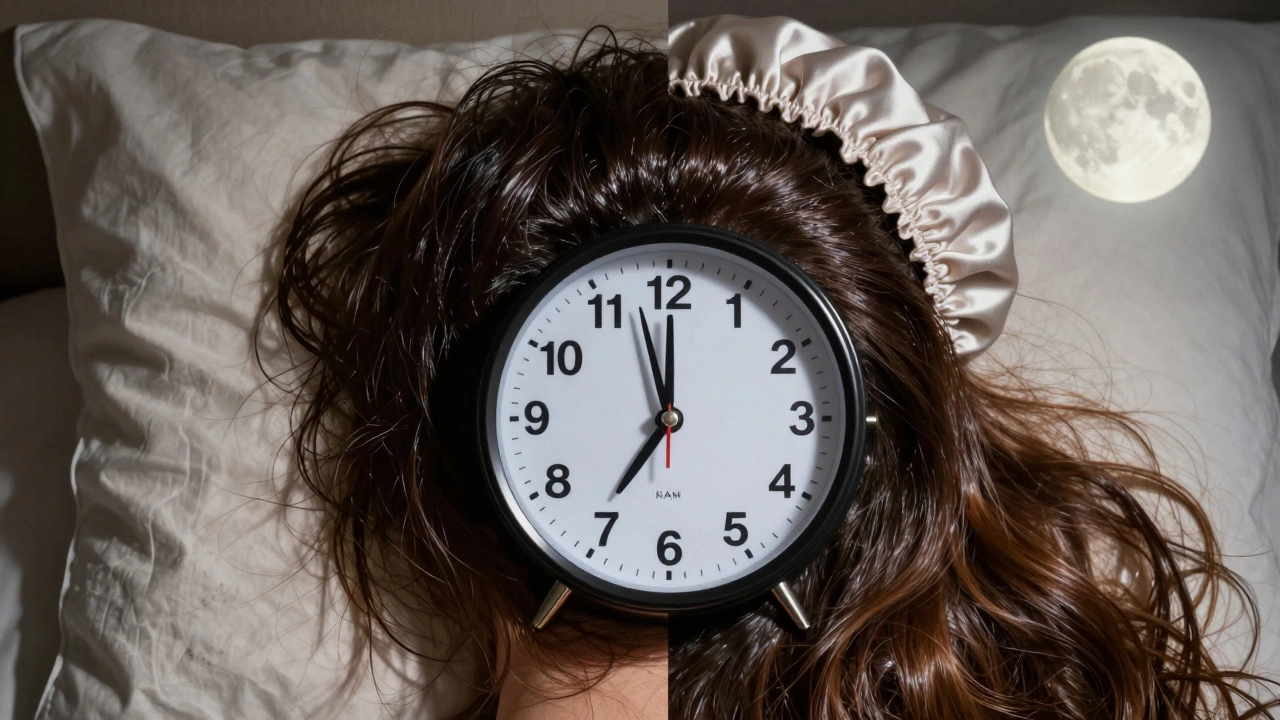
- Sleep on a silk or satin pillowcase. It reduces friction and keeps hair smoother.
- If you use oils or serums, apply them to the mid-lengths and ends only. Avoid the scalp unless you have dryness there.
Don’t feel like you need to wash every night. Try it 3-4 times a week and see how your hair responds. Some people find that washing every other night gives them the best balance.
What to Avoid
No matter when you shower, avoid these common mistakes:- Using water that’s too hot. It dries out your scalp and fades color.
- Skipping conditioner. Even if you have oily hair, the ends need moisture.
- Brushing wet hair with a regular brush. Use a detangling comb instead.
- Going to bed with wet hair if you have fine or fragile strands. It increases breakage.
- Using heavy creams or gels before bed. They can clog follicles and cause buildup.
If you’ve tried everything and still get greasy roots by noon, your issue isn’t timing-it’s product choice. Switch to lightweight, oil-free formulas. Look for terms like "non-comedogenic" or "for fine hair" on the label.
The Bottom Line
For most people, showering at night is better for hair health. It reduces breakage, improves moisture retention, and gives your hair time to recover. Morning showers have their place-especially if you sweat or style heavily-but they come with trade-offs.The goal isn’t perfection. It’s sustainability. Find a routine that works with your life, not against it. If you’re someone who wakes up with frizz, flat hair, or a flaky scalp, try switching your shower to nighttime for two weeks. Track how your hair looks on day 7 and day 14. You might be surprised.
It’s not magic. It’s just science-applied gently, consistently, and with care.
Is it bad to sleep with wet hair?
Sleeping with soaking wet hair can lead to fungal growth on the scalp, increased breakage, and frizz. It’s fine to sleep with damp hair-just make sure it’s not dripping. Pat it dry with a microfiber towel first, and use a silk pillowcase to reduce friction.
Should I wash my hair every day?
No, not unless you have very oily hair or work in a dusty environment. Most people benefit from washing 2-4 times a week. Daily washing strips natural oils and can lead to dryness or overproduction of sebum. If you must wash daily, use a gentle, sulfate-free shampoo and always follow with conditioner.
Does shower timing affect hair color?
Yes. Hot water and frequent washing fade color faster. Washing at night with cool water and a color-safe shampoo helps preserve dye. Also, avoiding morning heat styling reduces UV and thermal damage-two big culprits in color fading.
What’s the best time to apply hair masks?
Always after washing at night. Clean hair absorbs treatment better. Leave the mask on for 15-30 minutes, then rinse and go to bed with damp hair. Your hair will wake up softer, stronger, and more hydrated.
Can I still use styling products if I shower at night?
Yes-but avoid heavy gels, waxes, or sprays before bed. They can clog follicles. Stick to lightweight leave-in conditioners, serums, or oils applied only to the mid-lengths and ends. Save your styling products for the morning, after your hair is dry.