
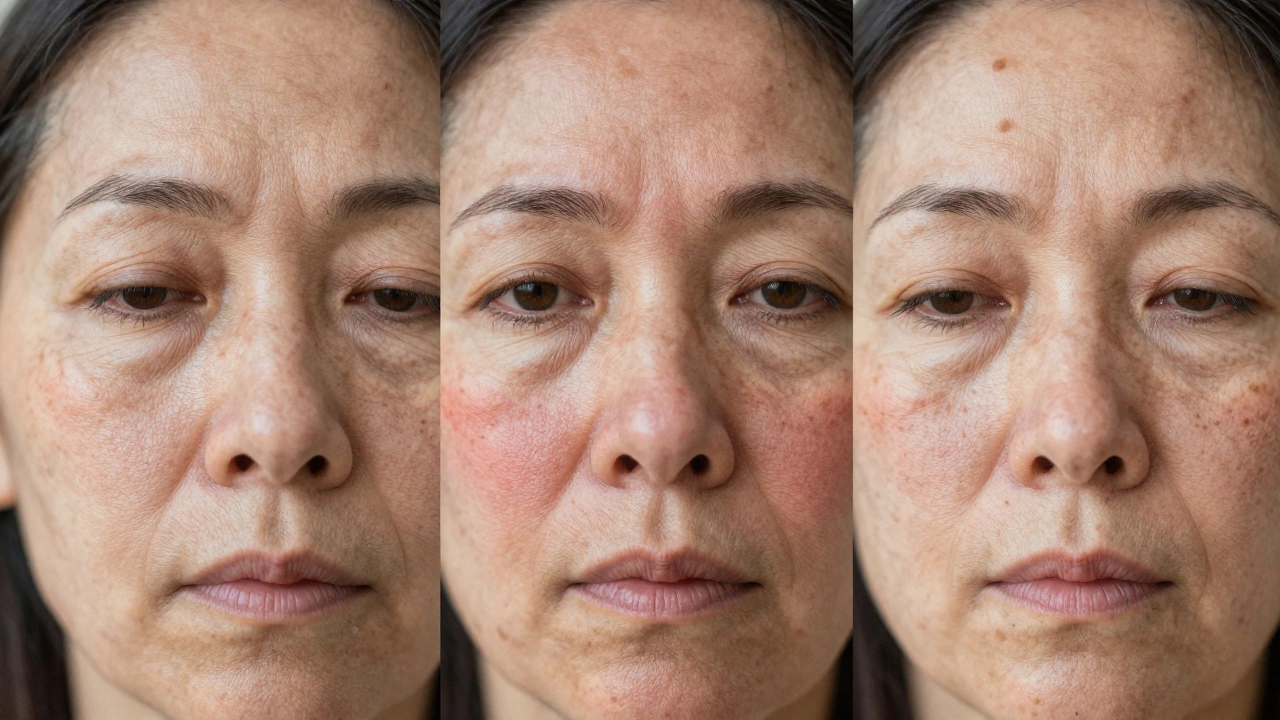
A 2025 study published in the Journal of Cosmetic Dermatology tracked 350 patients who followed personalized treatment plans. Those who combined three specific non-surgical procedures saw an average reduction of 8.7 years in perceived age. But here’s the catch: not all treatments work for every sign of aging. A deep forehead wrinkle needs Botox, while hollowed cheeks require fillers. Let’s break down exactly which treatments target what, backed by real clinical data.
Most people think anti-aging treatments are one-size-fits-all. That’s where things go wrong. A 2024 survey by the American Academy of Dermatology found that 68% of patients wasted money on treatments that didn’t address their specific concerns. The key is matching the treatment to the aging sign. We’ll explain exactly how each procedure works, what results you can expect, and how to avoid common pitfalls.
Why your aging signs need different solutions
Your face ages in three distinct ways: dynamic wrinkles (from muscle movement), volume loss (from fat and bone changes), and texture issues (sun damage and collagen loss). Each requires a different approach. For example:
- Dynamic wrinkles like crow’s feet and forehead lines form when you smile or frown. These respond best to neuromodulators like Botox.
- Volume loss in cheeks, temples, or under eyes happens as facial fat pads shift. Fillers restore this lost volume.
- Texture problems-rough skin, sun spots, fine lines-need surface renewal from lasers or chemical peels.
Trying to fix volume loss with Botox alone won’t work. Similarly, laser treatments won’t plump hollow cheeks. This is why a personalized plan matters.
Botox: The gold standard for dynamic wrinkles
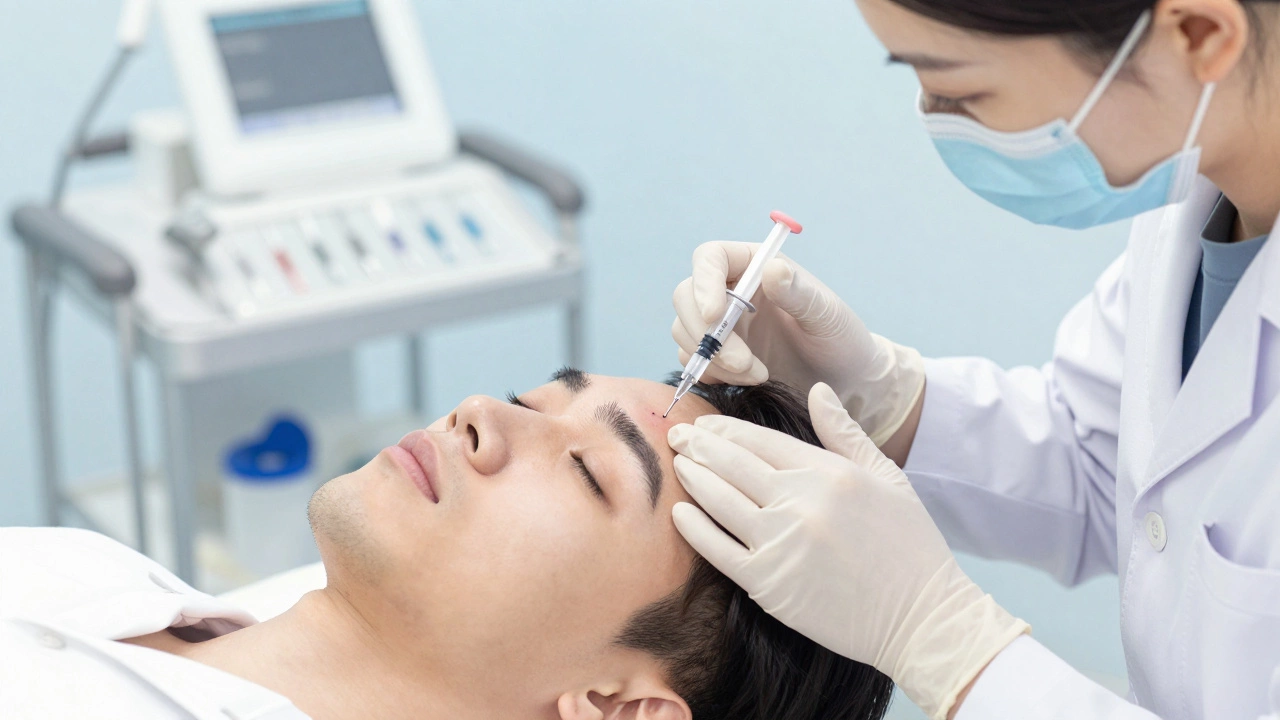
Botox is a purified neurotoxin that temporarily blocks nerve signals to muscles. When injected into areas like the forehead, glabella (between eyebrows), or crow’s feet, it relaxes the muscles that cause wrinkles during facial expressions.
Here’s what to expect:
- Results appear in 3-7 days and last 3-4 months.
- Typical cost: $300-$600 per treatment area (forehead, glabella, or crow’s feet).
- No downtime-patients return to work immediately.
- Best for people in their late 20s to 50s with early-to-moderate dynamic wrinkles.
A 2023 clinical trial showed 92% of patients reported significant improvement in forehead lines after one treatment. But Botox won’t help with static wrinkles (wrinkles visible at rest) or volume loss. It’s purely for movement-related lines.
Dermal fillers: Restoring lost volume
Dermal fillers use hyaluronic acid (like Juvederm or Restylane) or calcium hydroxylapatite (Radiesse) to add volume where your face has lost it. They’re perfect for plumping lips, filling nasolabial folds, or lifting cheekbones.
Key details:
- Results last 6-18 months depending on the filler type and area treated.
- Cost ranges from $600-$1,200 per syringe.
- Some swelling or bruising for 2-3 days post-treatment.
- Best for patients with hollowed temples, sunken cheeks, or deep smile lines.
A 2025 study in Dermatologic Surgery found that patients who received cheek fillers reported looking 7.2 years younger on average. Unlike Botox, fillers directly replace lost volume-making them essential for mid-face aging.
Laser resurfacing: Erasing texture issues
Laser resurfacing uses targeted light energy to remove damaged outer skin layers and stimulate collagen. Ablative lasers (like CO2) are more aggressive, while non-ablative (like Fraxel) offer gentler treatments with less downtime.
What you need to know:
- CO2 lasers: 5-10 days of downtime, $1,500-$3,000 per session. Best for deep wrinkles and severe sun damage.
- Fraxel: 1-3 days of downtime, $800-$1,500 per session. Ideal for mild-to-moderate texture issues.
- Results improve over 3-6 months as collagen rebuilds.
- Most effective for sun spots, acne scars, and fine lines around eyes.
A 2024 review of 12 clinical trials showed patients with sun-damaged skin saw a 6.5-year reduction in perceived age after two CO2 laser sessions. But lasers won’t address volume loss-this is why they’re often paired with fillers.
Microneedling with PRP: Natural collagen boost
Microneedling creates tiny punctures in the skin to trigger healing and collagen production. Adding PRP (platelet-rich plasma) from your own blood enhances this effect, making it especially effective for fine lines and overall skin texture.
What to expect:
- Minimal downtime (redness for 24-48 hours).
- Cost: $400-$800 per session; PRP adds $100-$200.
- Results build over 3-6 months with multiple sessions.
- Best for mild sagging, enlarged pores, and early signs of aging.
According to a 2025 study in the Journal of Clinical and Aesthetic Dermatology, patients who did six microneedling sessions with PRP saw a 5.8-year reduction in perceived age. It’s a great option for those wanting natural-looking results without surgery.
Comparison of Top Non-Surgical Treatments
| Treatment | Targets | Downtime | Average Cost | Duration of Results |
|---|---|---|---|---|
| Botox | Dynamic wrinkles (forehead, crow's feet) | None | $300-$600 per session | 3-4 months |
| Dermal Fillers | Volume loss (cheeks, lips, under eyes) | 2-3 days | $600-$1,200 per syringe | 6-18 months |
| CO2 Laser Resurfacing | Deep wrinkles, sun damage | 5-10 days | $1,500-$3,000 per session | 1-2 years |
| Fraxel Laser | Mild texture issues, fine lines | 1-3 days | $800-$1,500 per session | 6-12 months |
| Microneedling with PRP | Fine lines, pores, mild sagging | 24-48 hours | $400-$800 per session | 6-12 months (with maintenance) |
Why combining treatments gives the best results
Real-world results show that the biggest age reductions come from combining treatments that target different aging mechanisms. For example:
- For someone with forehead lines, hollow cheeks, and sun spots: Botox + fillers + laser resurfacing.
- For mild sagging and fine lines: microneedling with PRP + a light chemical peel.
A 2025 case study from the Skin Health Institute tracked a 52-year-old woman who did:
- Botox for forehead and crow’s feet
- Restylane Lyft for cheek volume
- CO2 laser for sun spots and texture
After one year, she looked 9.3 years younger in before-and-after photos rated by dermatologists. This combination works because it addresses all three aging factors simultaneously.
What to ask your provider before starting
Not all providers have the same expertise. Here’s what to discuss:
- “Which aging signs do I have, and which treatments target them?”
- “What’s your experience with this specific treatment for my skin type?”
- “Can I see before-and-after photos of patients with similar concerns?”
- “What’s the realistic timeline for results?”
Also, avoid providers who push one treatment for everything. A good provider will tailor a plan based on your unique aging pattern-not a one-size-fits-all approach.
Common mistakes to avoid
Many patients make these errors:
- Starting with too much filler too soon (leading to an unnatural look).
- Skipping sunscreen after laser treatments (causing hyperpigmentation).
- Expecting Botox to fix static wrinkles (it only works on dynamic ones).
- Doing too many treatments at once (increasing risk of complications).
According to a 2024 report from the American Society for Dermatologic Surgery, 40% of complications from facial treatments happened because patients ignored these basics. Always start with one treatment, then build your plan.
FAQs about looking younger with treatments
How long do results from anti-aging treatments last?
It varies by treatment. Botox lasts 3-4 months, dermal fillers 6-18 months, laser resurfacing results improve over 6 months and last 1-2 years with proper skincare, and microneedling effects build over time but require maintenance sessions every 6-12 months. Consistent follow-up treatments are needed to maintain results.
Are non-surgical treatments safer than surgery?
Generally, yes. Non-surgical options like Botox, fillers, and lasers have far fewer risks than surgical facelifts. Common side effects are temporary swelling or bruising, while surgical risks include infection, scarring, and longer recovery. However, results from non-surgical treatments aren’t permanent and require ongoing maintenance.
Can I do these treatments if I have sensitive skin?
Yes, but you’ll need a customized plan. For sensitive skin, start with gentler options like non-ablative lasers (Fraxel), light chemical peels (lactic or mandelic acid), or microneedling without PRP. Avoid aggressive treatments like deep CO2 lasers or high-strength chemical peels. Always do a patch test first with any new procedure.
What’s the difference between Botox and fillers?
Botox relaxes muscles to reduce dynamic wrinkles (like forehead lines), while fillers add volume to restore areas that have lost fat (like cheeks or under eyes). Botox is for movement-related lines; fillers are for static volume loss. They’re often used together for comprehensive results.
How much do these treatments cost?
Botox averages $300-$600 per area, dermal fillers $600-$1,200 per syringe, laser resurfacing $800-$3,000 per session, and microneedling $400-$800 per session. Prices vary by location and provider expertise. Always get a detailed quote before committing-some clinics charge per syringe, others per treatment area.