
Foundation Shade Calculator
Calculate Your Essential Foundation Shades
Based on article recommendations: professional artists need at least 5 shades across cool, neutral, and warm undertones. This tool helps determine your specific needs.
Your Recommended Foundation Shades
Professional Tip: Always carry at least 5 shades across all undertones. For commercial shoots, consider adding 2-3 more for high-fashion clients.
Every makeup artist, whether they’re working on a bridal party in Brighton or shooting a commercial in London, starts with the same question: what do I actually need in my kit? It’s not about having the most products-it’s about having the right ones. A cluttered bag full of unused palettes won’t help you on a 6 a.m. call. You need tools that work fast, look professional, and deliver consistent results under any lighting.
Base Makeup: The Foundation of the Look
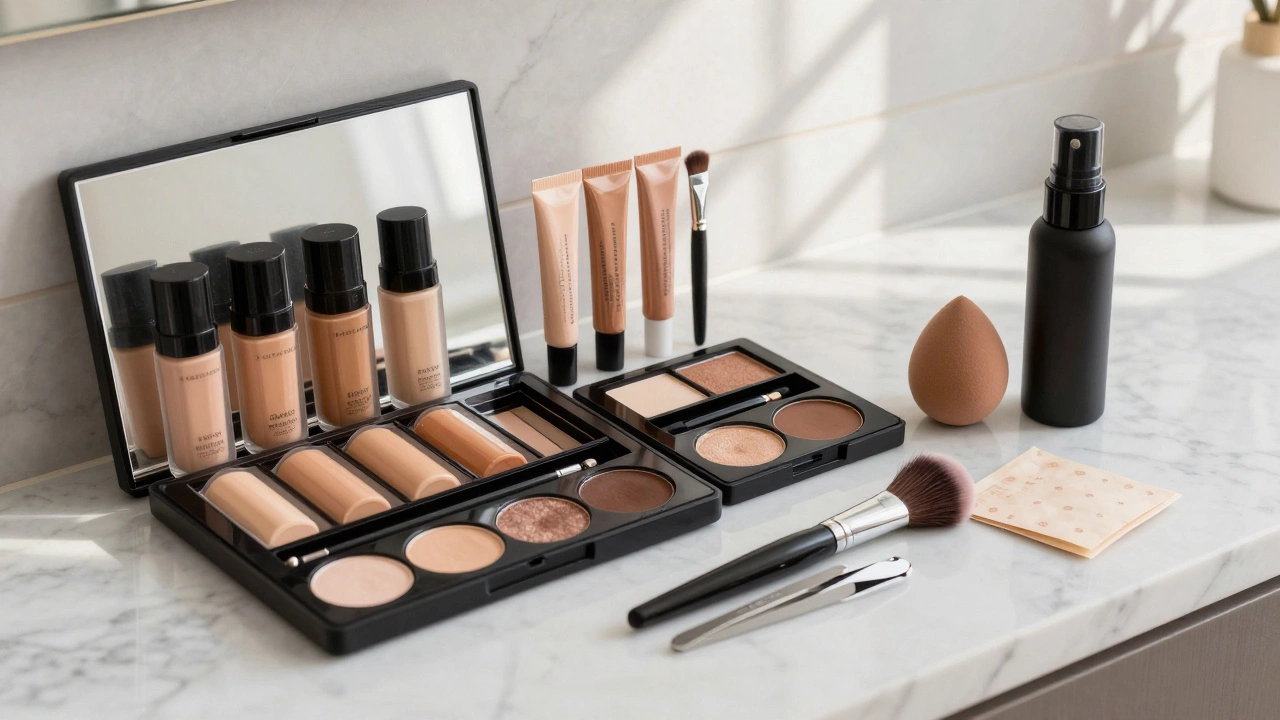
Foundation is the first thing you apply, and it sets the tone for the whole look. But not all foundations are created equal. You need at least five shades across different undertones-cool, neutral, and warm-to cover every skin tone you’ll encounter. Brands like MAC, NARS, and Fenty Beauty offer wide ranges, but the real test is how they perform under LED lights and natural daylight. A good professional foundation should blend seamlessly, last 12+ hours, and not oxidize or cake up. Don’t forget a translucent setting powder. Many artists swear by Laura Mercier Translucent Setting Powder-it’s fine, doesn’t add color, and keeps skin looking airbrushed without shine.
Concealer is just as important. You need at least two: one that’s a shade lighter for under the eyes and one that matches the foundation for blemishes and redness. Kevyn Aucoin The Sensual Skin Enhancer and Tarte Shape Tape are staples in most kits. Apply with a small, dense brush, not your fingers. Finger heat can melt the product and ruin the finish.
Color: Eyes, Cheeks, Lips
A professional makeup artist doesn’t rely on one palette. You need a full spectrum. For eyes, you need neutral browns, soft taupes, deep charcoals, and a few bright pops like gold or plum. The MAC Professional Palette and the Anastasia Beverly Hills Soft Glam Palette are widely used because they offer blendable pigments and long wear. Always include a matte black eyeliner pencil-Kevyn Aucoin The Eyeliner is a favorite for its precision and smudge resistance.
For cheeks, you need a mix of cream and powder formulas. Cream blushes like Rare Beauty Soft Pinch look natural on skin, while powders like NARS Orgasm give that lit-from-within glow. Always carry at least two blush tones-one warm, one cool-because skin tones change with seasons and lighting.
Lips need even more variety. You can’t just bring reds and nudes. You need mauves, berries, deep plums, and a glossy nude for a no-makeup makeup look. Fenty Beauty Stunna Lip Paint in Uncensored and Charlotte Tilbury Pillow Talk are go-tos because they stay put through meals and tears. Always have a lip liner in a neutral brown and a clear one for sealing the edge and preventing feathering.
Brushes and Tools: Your Hands Have No Business Touching the Product
If you’re using your fingers to apply foundation, you’re doing it wrong. Brushes and sponges are non-negotiable. You need:
- A flat buffer brush for foundation (Sigma F80 or MAC 190)
- A fluffy blending brush for eyeshadow (Morphe M433)
- A small angled brush for brows and liner (EcoTools Angled Brow Brush)
- A stippling brush for cream products (Real Techniques Stippling Brush)
- A beauty sponge (Real Techniques or Beautyblender) for seamless blending
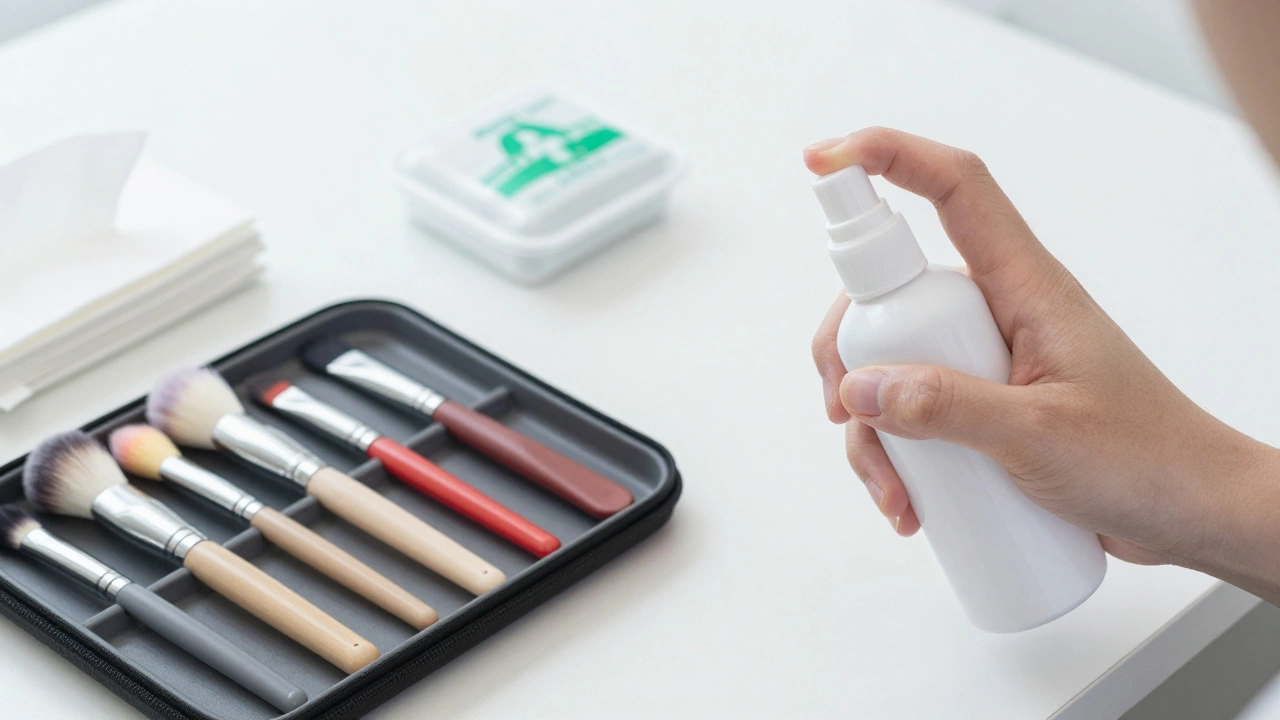
Keep your brushes clean. Dirty brushes cause breakouts and uneven application. Use a brush shampoo like Cinema Secrets or a quick spray cleaner between clients. And always carry a spray bottle with 70% isopropyl alcohol to sanitize tools on the spot.
Setting and Finishing: Lock It In
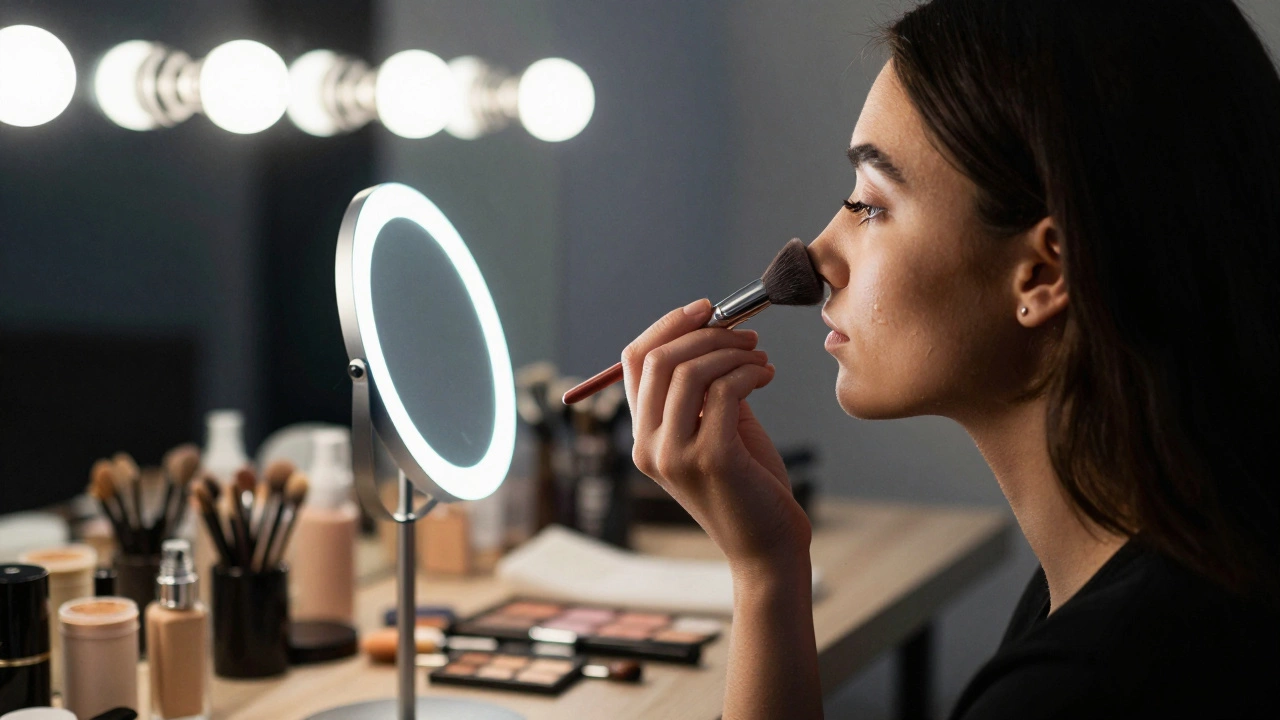
Setting spray isn’t optional-it’s mandatory. Urban Decay All Nighter and MAC Fix+ are industry standards. All Nighter keeps makeup intact for 12+ hours, even in humidity. Fix+ hydrates and refreshes without disturbing the look, perfect for touch-ups on set or during events. Spray from at least 10 inches away, and let it dry naturally. Don’t wipe or blot.
Also carry a translucent setting powder in a compact for midday shine control. A small powder brush and a puff are essential. Don’t over-powder. Too much looks chalky. A light dusting on the T-zone is all you need.
Specialty Items: The Hidden Heroes
There are a few things you won’t find on every list, but every pro has them:
- Makeup remover wipes (Neutrogena Oil-Free Makeup Remover Wipes) for quick corrections
- Small scissors and tweezers for trimming lashes or fixing stray hairs
- Clear brow gel (Benefit Gimme Brow+) to tame flyaways
- Blotting papers (Clean & Clear) to absorb oil without disturbing makeup
- Double-sided tape or spirit gum for securing false lashes
- Mini makeup mirror and a portable LED light (like the Fancii LED Mirror) for touch-ups in dim rooms
And don’t forget a small first-aid kit: alcohol wipes, band-aids, and a tiny tube of hydrocortisone cream for sudden redness or irritation.
Storage and Organization: Your Kit Is Your Brand
A messy kit reflects poorly on your professionalism. Use a hard-shell case with compartments. The MUA Professional Makeup Bag or the Clio Professional Makeup Case are popular because they’re durable, lightweight, and have clear windows. Label your products. Color-code your brushes. Keep a checklist inside the lid so you never leave something behind.
Wipe down your kit after every job. Moisture and product residue build up fast. A clean kit lasts longer and stays hygienic.
What Not to Bring
Here’s what you should leave at home:
- Old or expired products (they can irritate skin)
- Products with strong fragrances (some clients are sensitive)
- Single-use items you can’t sanitize (like cheap sponge applicators)
- Too many shades of the same product (you’ll just confuse yourself)
- Personal makeup (your own lipstick, foundation, etc.)
Your kit isn’t a reflection of your personal style-it’s a tool for your clients. Keep it clean, focused, and ready for anything.
Building Your Kit Over Time
You don’t need to buy everything at once. Start with the basics: foundation, concealer, powder, one neutral eyeshadow palette, a black eyeliner, a brown brow pencil, two blushes, two lipsticks, five brushes, a sponge, setting spray, and a good case. As you work with more clients, you’ll notice gaps. Maybe you’re always running out of cool-toned foundations. Maybe you need more vibrant lip colors for editorial shoots. Let your clients’ needs guide your purchases-not Instagram trends.
Professional makeup artists don’t win because they have the most products. They win because they know exactly what to use, when to use it, and how to make it look flawless under pressure. Your kit should feel like an extension of your skill-not a burden.
What’s the most important item in a makeup artist’s kit?
The most important item isn’t a product-it’s a clean, organized kit with properly sanitized tools. Even the best foundation won’t work if your brushes are caked with old product or your sponge is moldy. Hygiene and organization are the foundation of professional work.
How many foundation shades should I carry?
Carry at least five shades covering cool, neutral, and warm undertones. This ensures you can match any skin tone you encounter. Some artists carry up to eight for editorial or high-fashion work, but five is the minimum for weddings, events, and commercial shoots.
Do I need expensive products to be a professional?
No. While high-end brands are popular, many professionals use drugstore products like Maybelline Fit Me Foundation, e.l.f. Cosmetics brushes, and NYX Concealer. What matters is performance, blendability, and longevity-not the price tag. Test products on real skin before investing.
How often should I replace my makeup tools?
Brushes last 2-5 years if cleaned weekly. Sponges should be replaced every 1-3 months, depending on use. Replace eyeliner pencils every 6 months to avoid bacterial buildup. If a product smells off, changes texture, or causes irritation, toss it immediately.
Should I carry a full contour kit?
Not necessarily. Many modern looks favor natural skin. A single contour powder or cream in a neutral taupe shade is enough for subtle definition. Over-contouring looks dated. Focus on enhancing bone structure, not creating harsh lines.