
Sunscreen Calculator
Sun Protection Calculator
Calculate the right amount of sunscreen needed and reapplication schedule to maximize protection against sun damage - the #1 cause of visible aging.
You look in the mirror and wonder: how can I make my old face look younger? It’s not about chasing impossible perfection. It’s about reversing what’s visible - the fine lines, the dullness, the sagging - with smart, science-backed steps that actually work. And yes, it’s possible, even in your 50s, 60s, or beyond.
Start with what you already do - but do it better
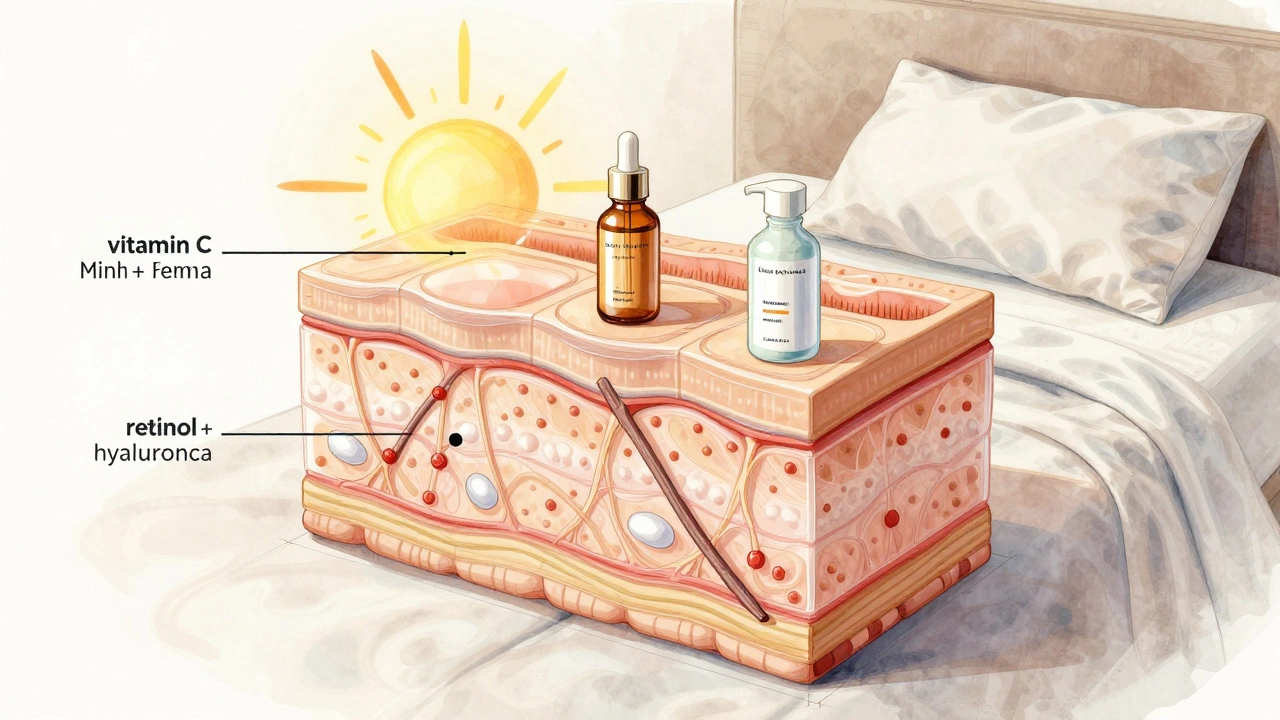
Most people over 40 have a skincare routine. But most of it is outdated. You might be using a gentle cleanser and moisturizer, which is good. But if you’re not using retinoids, you’re missing the single most proven anti-aging ingredient on the market. Retinol - the over-the-counter version of prescription tretinoin - boosts collagen, smooths texture, and fades sun spots. Studies show visible improvement in wrinkles after just 12 weeks of consistent use. Start with 0.1% retinol every other night. Build up slowly. If your skin stings or peels, cut back. Don’t rush. This isn’t a sprint.Pair that with a vitamin C serum every morning. It’s not just for brightening. Vitamin C neutralizes free radicals from UV exposure and pollution, which break down collagen. Look for L-ascorbic acid at 10-20% concentration, stored in an opaque bottle. If it’s yellow or brown, toss it. It’s oxidized and useless.
Sunscreen isn’t optional - it’s your main weapon
You’ve heard it a thousand times. But here’s the truth: 80% of visible aging comes from sun damage. Not genetics. Not stress. Not even smoking. The sun’s UV rays break down elastin and collagen, leading to deep wrinkles, brown spots, and leathery skin. If you’re not wearing SPF 30 or higher every single day - even when it’s cloudy, even when you’re inside near a window - you’re undoing everything else you do.Mineral sunscreens with zinc oxide or titanium dioxide are better for mature skin. They sit on top of the skin and reflect UV rays without irritating sensitive or thinning skin. Avoid sprays. They don’t give full coverage. Use a quarter-sized dollop for your face and neck. Reapply if you’re outside for more than two hours.
Hydration isn’t just about moisture - it’s about structure
As we age, our skin loses hyaluronic acid - the natural sponge that holds water. That’s why skin looks flat, dry, and hollow. A good hyaluronic acid serum can plump fine lines instantly. But it only works if your skin isn’t dehydrated. Drink water. Eat foods rich in omega-3s like salmon, walnuts, and flaxseeds. Use a humidifier in your bedroom. Dry air pulls moisture out of your skin overnight.Don’t rely on heavy creams alone. Layer products: cleanser → toner → serum → moisturizer. Apply serums to damp skin. That helps them sink in deeper. A simple routine: vitamin C in the morning, retinol at night, hyaluronic acid under both. That’s it. No need for 10 steps.
Facial massage and tools aren’t gimmicks - they’re science
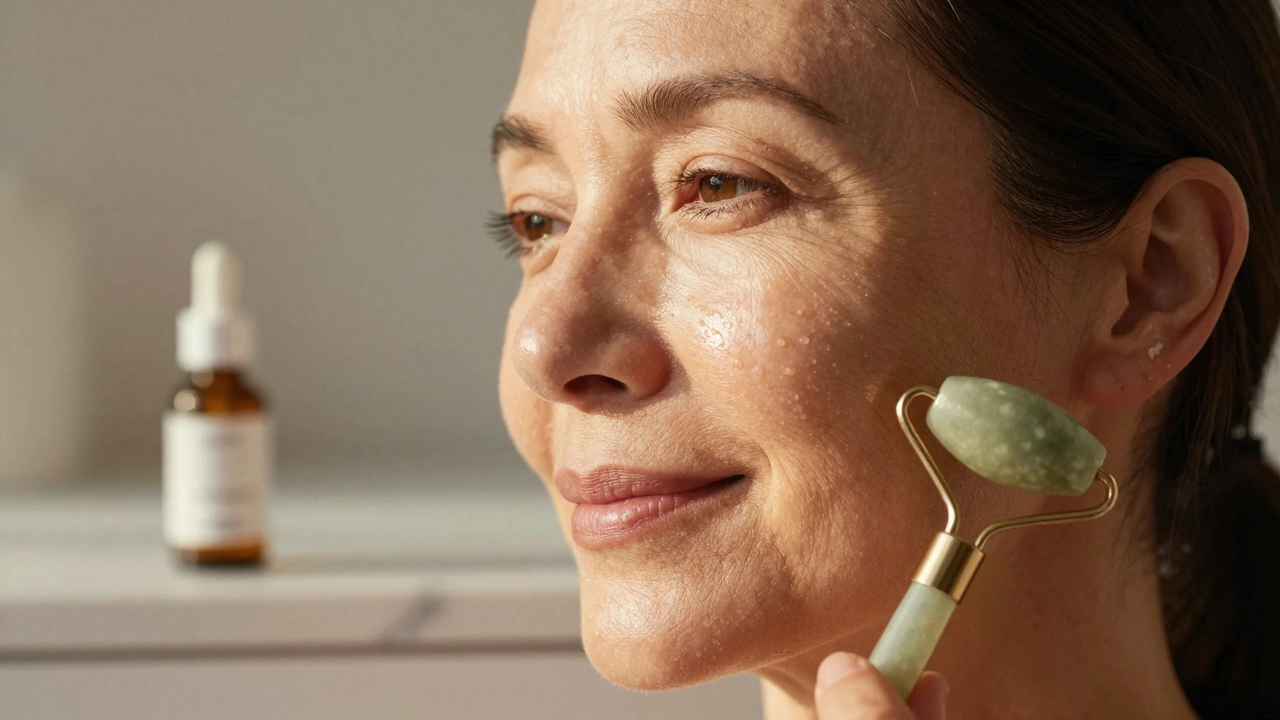
Gua sha and facial rollers aren’t just Instagram trends. They improve lymphatic drainage, which reduces puffiness and dullness. A 2023 study in the Journal of Clinical and Aesthetic Dermatology found that daily facial massage for eight weeks improved skin elasticity by 27% in women over 50. Use a jade roller or gua sha tool after applying serum. Glide upward and outward, not back and forth. Do it for five minutes every morning. It’s like a workout for your face.Also, stop sleeping on your stomach. The pressure from your pillow creates creases that turn into permanent wrinkles over time. Switch to a silk pillowcase. It’s smoother, reduces friction, and helps your skincare products stay where they belong - on your skin, not your pillow.
Professional treatments? Yes - but choose wisely
If you’ve nailed the basics and still want more, consider professional help. But don’t fall for flashy ads promising “miracle” results. Here’s what actually works:- Chemical peels (glycolic or lactic acid): Remove dead skin, reveal brighter skin, reduce fine lines. Best done every 4-6 weeks.
- Radiofrequency microneedling: Stimulates collagen deep in the skin. Results last 12-18 months. One session costs around £400-£600 in the UK.
- Low-level laser therapy: Improves skin tone and texture. Requires 6-8 sessions. Safe and non-invasive.
- Dermal fillers: For volume loss in cheeks, under eyes, or jawline. Hyaluronic acid fillers last 6-12 months. Choose a board-certified dermatologist - not a beauty salon.
Avoid Botox if you’re only worried about fine lines. It’s for dynamic wrinkles - the ones that appear when you smile or frown. If your lines are there even when you’re relaxed, fillers or laser treatments are better options.
What not to do - the big mistakes
You’re not alone if you’ve tried every trend. But some things make aging worse:- Over-exfoliating with scrubs or acids - this thins your skin and makes it more sensitive.
- Using alcohol-based toners - they dry out mature skin.
- Skipping neck and chest care - those areas show aging just as fast as your face.
- Believing “natural” means better - essential oils can irritate skin. Jojoba oil is fine. Tea tree oil? Not for daily use.
- Waiting until you’re “ready” - the best time to start anti-aging was 10 years ago. The second best time is now.

Diet and lifestyle - the invisible boosters
Your skin reflects what’s happening inside. Sugar causes glycation - a process where sugar molecules stick to collagen and make it stiff. That’s why high-sugar diets lead to sagging skin. Cut back on sweets, sodas, and processed snacks.Protein intake matters too. After 50, your body makes less collagen naturally. Eating enough lean protein - eggs, chicken, lentils, tofu - gives your body the building blocks to repair skin. Aim for 1.2 grams of protein per kilogram of body weight daily.
And sleep. Not just any sleep - deep, uninterrupted sleep. That’s when your skin repairs itself. If you’re tossing and turning, try magnesium glycinate before bed. It helps calm the nervous system and improves sleep quality.
Real results take time - but they’re worth it
You won’t wake up looking 25. But in three months, you’ll notice your skin feels firmer. In six months, your makeup glides on smoother. In a year, people will ask if you’ve been on vacation - because your skin glows.Anti-aging isn’t about hiding. It’s about restoring. Your skin has memory. It remembers how to look healthy. You just have to give it the right tools, time, and consistency.
Can I reverse aging skin naturally?
You can’t reverse aging completely, but you can significantly improve how your skin looks and feels. Retinoids, sunscreen, hydration, and a healthy diet are the most effective natural tools. They don’t erase wrinkles overnight, but they rebuild collagen, protect against damage, and restore radiance over time.
What’s the best anti-aging cream for over 50?
There’s no single “best” cream. Look for one with retinol (0.1-0.5%), peptides, and ceramides. Brands like CeraVe, La Roche-Posay, and The Ordinary have affordable, science-backed options. Avoid creams with heavy fragrances or alcohol. The key isn’t the brand - it’s the ingredients.
Do face exercises really work?
There’s limited evidence. A 2020 study in JAMA Dermatology showed facial exercises improved mid-face volume after 20 weeks. But results are subtle. They won’t replace retinoids or fillers. They can help with tone and circulation, but they’re a supplement - not a solution.
Is Botox safe for older skin?
Yes, when done by a qualified professional. Botox relaxes muscles that cause wrinkles from repeated expressions. For older skin, it’s often used sparingly to avoid a frozen look. It doesn’t fix sagging or volume loss - just expression lines. Always choose a dermatologist or plastic surgeon, not a spa technician.
How long until I see results from anti-aging products?
Retinoids and vitamin C take 8-12 weeks to show visible changes. Sunscreen works immediately to prevent damage, but its anti-aging benefits show up over years. Professional treatments like microneedling or lasers may show improvement in 4-6 weeks, with full results at 3-6 months. Patience is the most important ingredient.