
100% Organic Skincare Certification Checker
Verify if a skincare product meets true 100% organic standards. Enter the product name and select its certification to see if it meets the strict requirements for 100% organic claims.
When you see the word "organic" on a skincare bottle, what does it really mean? Many brands slap the label on products that are 5% organic and call it a day. But true 100% organic products aren’t just a marketing buzzword-they’re a strict standard with real rules. If you’re tired of greenwashing and want to know exactly what you’re putting on your skin, here’s the unfiltered truth.
What Does "100% Organic" Actually Mean?
A product labeled "100% organic" doesn’t mean it’s mostly organic with a little something extra. It means every single ingredient, except water and salt, is grown without synthetic pesticides, fertilizers, GMOs, or irradiation. That includes the oils, extracts, clays, and even the preservatives. No exceptions.
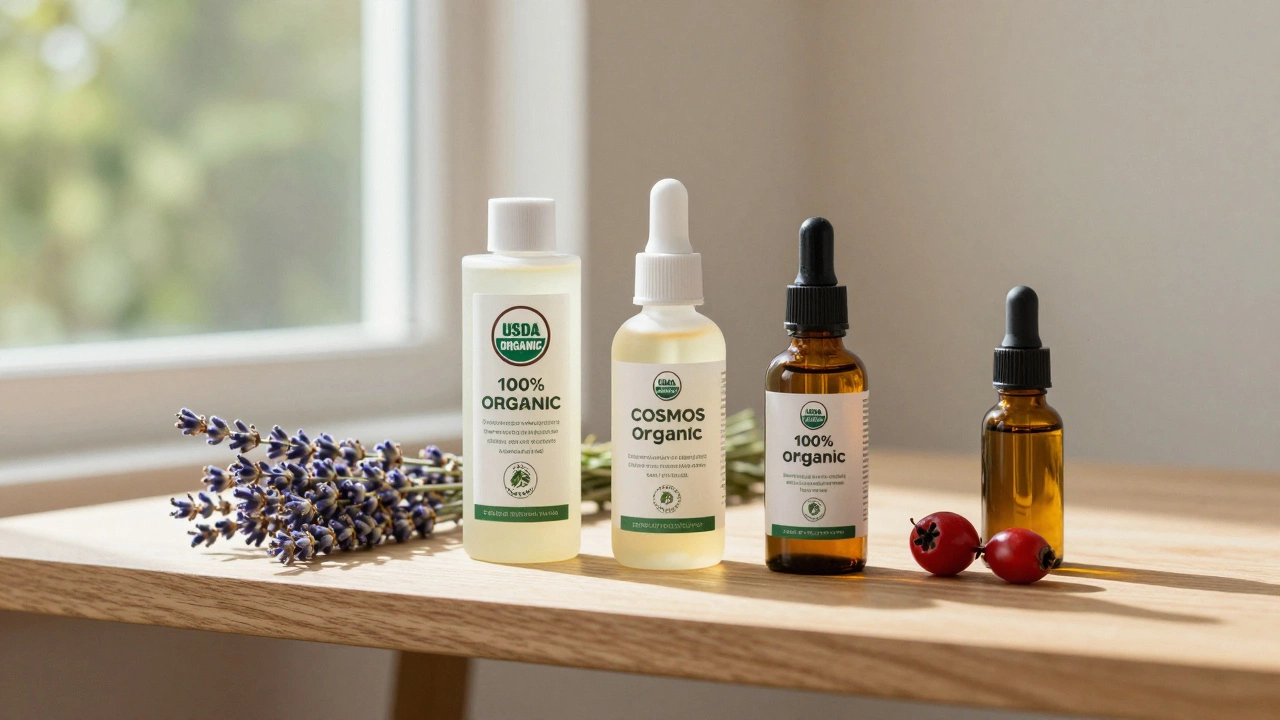
In the U.S., the USDA Organic seal requires this. In the EU, it’s the COSMOS Organic or Ecocert standard. Both demand that 100% of agricultural ingredients are organically produced. That’s different from "organic," which can mean 95% organic, or "made with organic ingredients," which only needs 70%. If a product says "100% organic," it has to pass a third-party audit and prove every ingredient on the label meets the standard.
Here’s what gets left out: synthetic fragrances, parabens, phthalates, sulfates, and petroleum-based chemicals. These aren’t just avoided-they’re banned outright. Even natural preservatives like benzyl alcohol must be certified organic if used. That’s why 100% organic skincare often has a shorter shelf life. It doesn’t rely on lab-made stabilizers.
How to Spot Real 100% Organic Skincare
You can’t trust the front label. Look for the certification logo on the back. The most trusted ones are:
- USDA Organic (United States)
- COSMOS Organic (Europe)
- Ecocert (Global, widely accepted)
- Soil Association (UK, strictest in Europe)
Each certification has its own rulebook. For example, the Soil Association requires 95% of agricultural ingredients to be organic, and the entire manufacturing process must be traceable. COSMOS bans silicones and synthetic dyes. USDA Organic forbids nanotechnology. If you don’t see one of these logos, the product isn’t truly 100% organic-it’s just using the word as a tactic.
Check the ingredient list. If you see "fragrance," "parfum," or "glycerin" without the word "organic," that’s a red flag. Even if the brand says "plant-based," unless it’s certified, it could be chemically processed. Real organic ingredients are listed by their Latin names too: Prunus amygdalus dulcis oil (sweet almond oil), not just "almond oil."
Why 100% Organic Matters for Your Skin
Your skin absorbs about 60% of what you put on it. That means a lotion with synthetic chemicals isn’t just sitting on top-it’s entering your bloodstream. Studies from the Environmental Working Group show that parabens and phthalates can disrupt hormones, even at low doses. For people with sensitive skin, eczema, or rosacea, switching to 100% organic can reduce irritation within weeks.
Take rosehip oil, for example. Non-organic rosehip oil might be extracted using hexane, a toxic solvent. Organic rosehip oil is cold-pressed, preserving antioxidants like vitamin C and linoleic acid. The difference? One version nourishes. The other leaves behind chemical residues that your body has to filter out.
Also, organic farming protects the soil. Synthetic pesticides kill beneficial microbes that keep land fertile. When you choose certified organic skincare, you’re supporting farms that regenerate the earth instead of depleting it. That’s not just good for your skin-it’s good for the planet.
Common Myths About Organic Skincare
Myth #1: "Organic doesn’t work as well as conventional."
That’s false. A 2023 study in the Journal of Clinical and Aesthetic Dermatology found that organic formulations with certified botanicals improved skin hydration by 37% more than synthetic counterparts over 8 weeks. Why? Because organic plants grow slower, develop thicker cell walls, and produce more phytonutrients to survive in nature. Those same compounds heal and protect your skin.
Myth #2: "It’s too expensive."
True, 100% organic products cost more. But that’s because they use real, traceable ingredients-not cheap fillers. A $12 bottle of non-organic toner might contain 80% water and 20% synthetic chemicals. A $28 organic toner contains 100% active botanicals. You’re paying for quality, not packaging.
Myth #3: "All natural means organic."
Nope. "Natural" has no legal definition. A product can be 100% natural and still be sprayed with synthetic pesticides in the field. Only certification guarantees the process was clean from seed to shelf.
What to Look for in a 100% Organic Product
If you’re ready to switch, here’s your checklist:
- Look for a certification logo (USDA, COSMOS, Ecocert, Soil Association)
- Read the ingredient list: no synthetic additives, no "fragrance," no parabens
- Check if the brand discloses its supply chain-real organic brands do
- Avoid products with long ingredient lists (15+ items usually means fillers)
- Smell it: organic oils have subtle, earthy scents, not artificial perfumes
Brands like Dr. Hauschka is a certified 100% organic skincare brand founded in Germany in 1967, using biodynamic farming and anthroposophic principles, True Botanicals is a U.S.-based brand with USDA Organic certification and full transparency in sourcing, and Laurel Whole Plant Organics is a small-batch brand that uses only cold-pressed, wild-harvested botanicals are known for meeting these standards.
What You Won’t Find in 100% Organic Skincare
Here’s a quick list of what’s banned:
- Synthetic fragrances (even "natural" ones if not certified)
- Parabens, phthalates, sulfates
- Mineral oil, petrolatum, lanolin (unless from certified organic sources)
- Artificial colors and dyes
- Formaldehyde-releasing preservatives
- Genetically modified organisms (GMOs)
- Chemical solvents like hexane or acetone
If you see any of these on the label, the product isn’t 100% organic-even if it says "natural" or "plant-based."
Why Certification Is Non-Negotiable
Without certification, there’s no way to verify claims. A brand can say "organic" and never be inspected. Certification means inspectors visit farms, check processing facilities, and audit supply chains. They test soil, water, and final products.
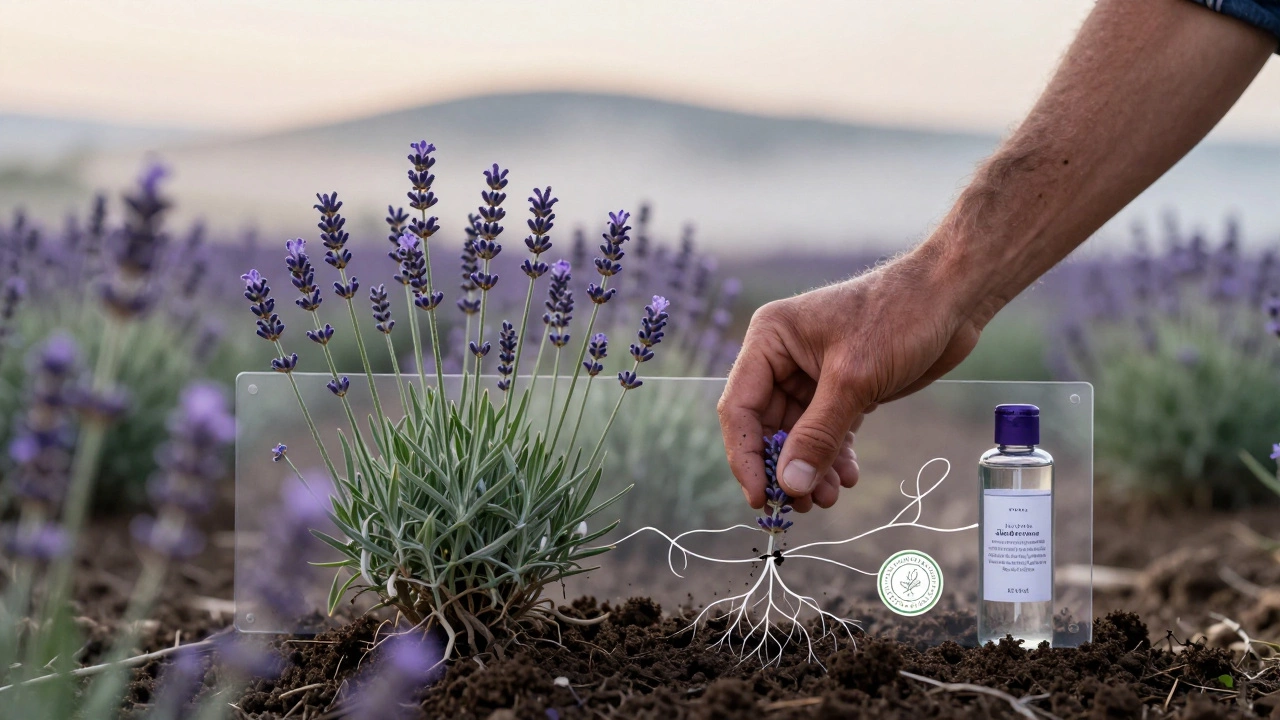
For example, the Soil Association requires annual audits. They check if the lavender used in your cream was grown on land that hasn’t been sprayed with chemicals for at least three years. That’s not guesswork-that’s science.
Some brands get around this by using "organic ingredients" in small amounts and calling the whole product organic. But 100% organic means the entire formula meets the standard. No loopholes.
Is 100% Organic Worth It?
If you care about what goes on your skin, yes. It’s not about being perfect. It’s about choosing products that don’t add toxins to your body or harm the environment. Real organic skincare doesn’t promise miracles-it delivers clean, nourishing ingredients that work with your skin’s natural rhythm.
Start small. Swap your cleanser or moisturizer first. Look for the certification. Read the ingredients. Trust what you can verify, not what you’re told. Your skin-and the planet-will thank you.
Can a product be 100% organic and still contain water?
Yes. Water and salt are the only two exceptions allowed in 100% organic products. All other ingredients-oils, extracts, preservatives-must be certified organic. Water doesn’t count toward the 100% because it’s not an agricultural product.
Is 100% organic skincare better for sensitive skin?
Often, yes. Synthetic chemicals like fragrances, sulfates, and parabens are common triggers for irritation, redness, and breakouts. Certified organic products exclude these entirely and use gentle, plant-based alternatives that are less likely to cause reactions. Many dermatologists recommend organic options for eczema and rosacea patients.
Do 100% organic products expire faster?
Yes, because they don’t use synthetic preservatives like parabens or phenoxyethanol. Instead, they rely on natural preservatives like radish root ferment or vitamin E, which are effective but have shorter lifespans. Most last 6-12 months after opening. Always check the PAO (Period After Opening) symbol on the packaging.
Can organic skincare be vegan?
Yes, but not automatically. "Organic" refers to how ingredients are grown, not whether they come from animals. Some organic products contain beeswax, honey, or lanolin. If you want vegan organic skincare, look for both "100% organic" and "vegan" certifications on the label.
Are there any downsides to using 100% organic skincare?
The main downsides are cost and availability. Organic ingredients are more expensive to source and process, so prices are higher. Also, because they lack synthetic stabilizers, textures can vary between batches, and shelf life is shorter. But these aren’t flaws-they’re signs of authenticity. You’re getting real, unprocessed ingredients, not chemically engineered formulas.