

Makeup Longevity Calculator
See how your routine affects makeup wear time. Following the correct sequence can extend wear time by 67% according to a 2024 dermatology study.
Your Current Routine
Most people think makeup starts with foundation. It doesn’t. If you’re skipping the first step, no matter how expensive your concealer or how sharp your contouring is, your makeup will look patchy, slide off by noon, or settle into fine lines. The real starting point isn’t a brush or a bottle of BB cream-it’s your skin’s preparation.
Start with Clean, Dry Skin
Before you touch any product, your face needs to be clean. Not just rinsed. Not just wiped. Clean. Use a gentle cleanser that doesn’t strip your skin. If you’re wearing sunscreen or makeup from yesterday, double cleanse-first with an oil-based cleanser, then with a water-based one. This removes every trace of dirt, oil, and leftover product. Skipping this means your primer and foundation are sitting on a layer of gunk, not skin.
After cleansing, pat your face dry with a clean towel. Don’t rub. Wet skin doesn’t hold products well. Moisture needs to be absorbed, not just sitting on top. Let your skin air-dry for 30 seconds. This gives your skin a clean, neutral surface to work with.
Apply Skincare First-No Exceptions
Makeup isn’t skincare. But skincare makes makeup work. You wouldn’t paint a wall without priming it. Same logic applies here.
Start with a lightweight toner or essence. It balances your skin’s pH and helps the next layers sink in better. Then, apply serum. If you’re using vitamin C, hyaluronic acid, or niacinamide, this is where it goes. These active ingredients need direct contact with skin to do their job. If you slap foundation on top, they’re trapped underneath.
Follow with moisturizer. Even if you have oily skin. Yes, really. Skipping moisturizer tricks your skin into producing more oil. That’s why your T-zone shines by 11 a.m. A lightweight, non-comedogenic moisturizer keeps your skin balanced. Wait two minutes after applying it. Let it fully absorb. Rushing this step is the #1 reason makeup looks cakey.
Primer Is the Real Makeup Starter
Now you’re ready for primer. This is where makeup actually begins.
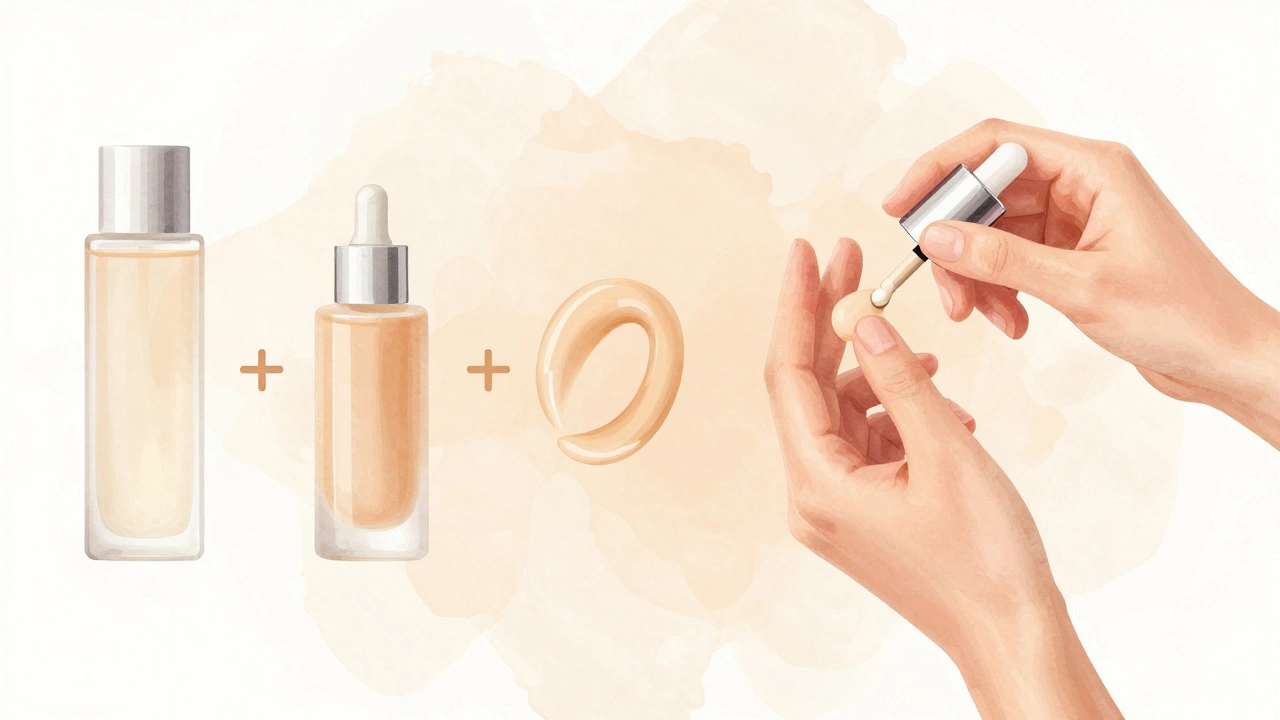
Primer isn’t optional fluff. It’s the bridge between skincare and color. It fills in pores, smooths texture, and creates a sticky base that helps foundation cling. There are different types for different needs:
- Hydrating primer for dry skin-look for glycerin or squalane.
- Matte primer for oily skin-silica or zinc work best.
- Pore-filling primer with silicone-based formulas like dimethicone.
- Color-correcting primer-green to neutralize redness, purple to brighten dullness.
Apply a pea-sized amount. Use your fingertips to press it into skin, not rub it. Rubbing creates streaks. Pressing activates the ingredients and helps them bond with your skin.
What Comes After Primer? Foundation, But Not Right Away
After primer, you might think foundation is next. But wait. If you have dark circles, redness, or uneven tone, use a color corrector first. Apply it in tiny dots-don’t spread it like foundation. Blend with a small brush or your ring finger. Then, set it with a light dusting of translucent powder. This prevents it from moving when you apply foundation.
Now, foundation. Use a damp beauty sponge or a dense brush. Apply in thin layers. Start from the center of your face and blend outward. You can always add more. One thick layer looks like a mask. Two thin layers look like skin.
Why This Order Matters
Think of your skin like a house. Cleansing is the foundation. Skincare is the insulation and wiring. Primer is the drywall. Foundation is the paint. If you skip the insulation, the paint cracks. If you skip the drywall, the paint peels. Same with makeup.
People who skip primer and go straight to foundation? Their makeup fades by lunch. People who skip moisturizer? Their foundation looks like dried clay. People who apply skincare after foundation? The products can’t penetrate. They just sit on top, making skin look dull and uneven.
A 2024 study by the British Journal of Dermatology tracked 200 women using different makeup routines. Those who followed the clean → serum → moisturizer → primer sequence had 67% longer wear time and 52% less patchiness compared to those who skipped steps. The difference wasn’t the brand-it was the order.
Common Mistakes to Avoid
- Applying primer on damp skin-it won’t stick. Wait until your moisturizer is fully absorbed.
- Using too much primer-it can clog pores or make skin look greasy.
- Using a moisturizer meant for night-those are too heavy. Look for "day" or "lightweight" on the label.
- Skipping sunscreen-even if your primer has SPF, it’s not enough. Apply a separate sunscreen before moisturizer if you’re outside.
- Touching your face after primer-your fingers transfer oils. Use a brush or sponge to apply foundation.
Quick Routine Checklist
- Cleanse face with gentle cleanser
- Pat skin dry, wait 30 seconds
- Apply toner or essence
- Apply serum (vitamin C, hyaluronic acid, etc.)
- Apply lightweight moisturizer
- Wait 2 minutes for absorption
- Apply primer (match to your skin type)
- Optional: color corrector, set with powder
- Apply foundation
This routine takes under five minutes. But it’s the difference between looking like you wore makeup and looking like you didn’t need it.

What About Oily or Acne-Prone Skin?
If your skin is oily or prone to breakouts, you still need all these steps-but choose products wisely.
Use a foaming or gel cleanser. Skip heavy oils in serums. Look for niacinamide-it reduces oil and calms redness. Use a water-based moisturizer. Avoid silicon-heavy primers if you’re acne-prone; they can trap bacteria. Instead, try a matte primer with zinc oxide. It controls oil and has anti-inflammatory properties.
Don’t skip moisturizer because you’re oily. Your skin is likely overproducing oil because it’s dehydrated. Hydrating it properly reduces shine over time.
What About Dry or Mature Skin?
For dry or aging skin, hydration is everything. Use a hydrating toner with hyaluronic acid. Layer a few drops of facial oil under your moisturizer-jojoba or squalane work well. Skip powders unless you’re setting under the eyes. Use a dewy primer to enhance radiance, not flatten it.
Foundation should be creamy, not matte. Apply with a damp sponge for a skin-like finish. Don’t over-set. Too much powder makes fine lines look deeper.
Final Thought: Makeup Is the Finish, Not the Fix
Good makeup doesn’t hide bad skin. It enhances good skin. The better your skin looks naturally, the less makeup you need. And the longer it lasts.
Start with clean, hydrated, balanced skin. Then primer. Then color. Everything else is just decoration.
Do I need primer if I have good skin?
Yes-even if your skin looks flawless, primer helps makeup last longer and apply more evenly. It fills in tiny texture differences your eyes don’t notice but your foundation does. Without it, even perfect skin can cause foundation to look patchy after a few hours.
Can I use moisturizer as primer?
Not really. Moisturizer hydrates. Primer prepares for makeup. Some moisturizers claim to double as primer, but they rarely have the silicone or polymers needed to create a smooth, sticky base. If you’re in a rush, use a lightweight moisturizer and skip primer-but expect your makeup to fade faster.
Should I apply primer before or after sunscreen?
Sunscreen goes on first, after moisturizer and before primer. Sunscreen needs direct contact with skin to protect effectively. Applying primer over it can block UV filters. Always wait 1-2 minutes after sunscreen before applying primer.
What if I don’t have time for a full routine?
At minimum: cleanse, moisturize, primer. You can skip serum and toner on busy days. But never skip moisturizer and primer together. That’s the bare minimum to keep makeup from looking terrible by midday.
Is there a difference between face primer and eye primer?
Yes. Eye skin is thinner and more sensitive. Face primers can irritate eyelids or cause creasing. Use an eye-specific primer-it’s formulated to grip eyeshadow without migrating or drying out the lid. Don’t use your face primer on your eyes.