

Hair Label Decoder
Confused by a "3" on your shampoo or serum? Select the context below to decode its meaning.
Quick Reference: The Andre Walker System
Straight
Wavy
Curly
Coily/Kinky
You’re standing in the aisle of a drugstore or scrolling through an online beauty retailer, staring at a bottle of shampoo. The label says something cryptic: "Type 3" or maybe you see a small number "3" next to a symbol. Your first instinct might be that it’s a batch code, a price glitch, or perhaps a secret level of hold for hairspray. But here’s the thing: in the world of hair care, numbers often mean very different things depending on who made the product and what problem they are trying to solve.
If you’ve ever wondered "what does 3 mean hair," you aren’t alone. This confusion usually stems from two completely different systems colliding: the classification of your actual biological hair type versus the functional codes used by brands to describe their products. One refers to how curly or straight your strands are; the other might refer to the strength of a treatment or a specific ingredient concentration. Getting these mixed up can lead to buying expensive serums that do absolutely nothing for your frizz, or shampoos that strip your scalp because you didn’t realize the "3" meant a harsh chemical level rather than a gentle formula.
The Andre Walker Hair Typing System
Let’s start with the most common reason people search for this phrase. When stylists talk about "Type 3" hair, they are almost always referring to the Andre Walker Hair Typing System. This is a classification system created by Oprah Winfrey’s former stylist, Andre Walker, which categorizes hair into four main types based on curl pattern.
In this widely accepted industry standard, Type 1 is straight, Type 2 is wavy, Type 4 is coily or kinky, and Type 3 sits right in the middle: it is curly. If a product is labeled "For Type 3 Hair," it means the formulation is specifically engineered to handle the unique challenges of curly hair, such as dryness, frizz, and volume management. Curly hair tends to be drier than straight hair because natural oils from the scalp have a harder time traveling down the spiral shape of the strand to the ends. Therefore, products targeting Type 3 hair are usually richer in moisturizing agents like shea butter, coconut oil, or glycerin.
But wait, there’s more nuance. Type 3 isn’t just one thing. It’s broken down into subcategories:
- Type 3A: Loose, shiny curls that have a wide diameter (like a piece of sidewalk chalk).
- Type 3B: Springy ringlets with a circumference similar to a sharpie marker.
- Type 3C: Tight corkscrews that resemble a pencil in width.
Understanding where you fall on this spectrum matters because a heavy cream designed for 3C might weigh down loose 3A waves, making them look greasy instead of defined. So, if you see a "3" on a bottle of leave-in conditioner, check if it specifies A, B, or C. If it doesn’t, assume it’s a general-purpose curly hair product.
Functional Codes and Treatment Levels
Now, let’s pivot to the second scenario. Sometimes, the number "3" has nothing to do with your curl pattern and everything to do with the product’s function. Many professional brands use numerical coding to indicate the intensity of a treatment or the stage of a multi-step process.
For example, in some salon-grade keratin treatments or color correction lines, steps are numbered 1, 2, and 3. Step 1 might be a clarifying shampoo, Step 2 the treatment application, and Step 3 the neutralizer or sealant. If you bought a home kit and found a bottle marked "Step 3," using it before Step 1 could ruin your hair. Always read the instruction manual alongside the label.
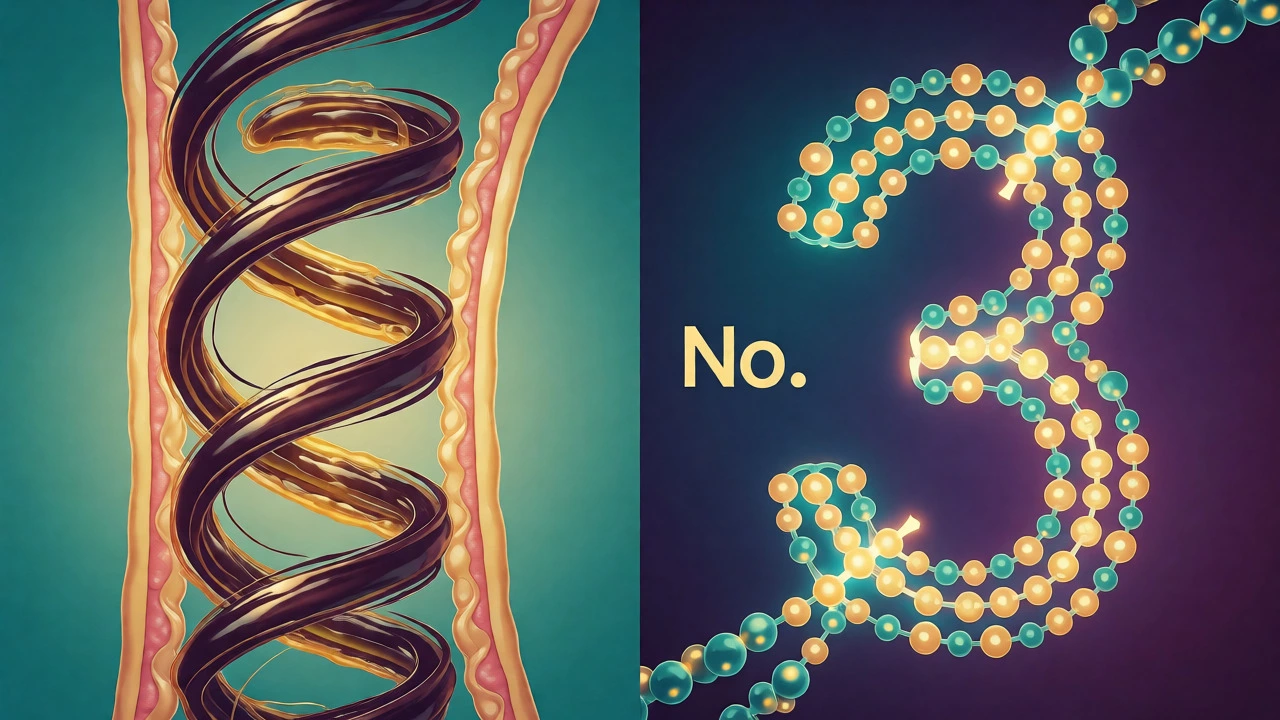
Another common use of numbers is in bond-building treatments, popularized recently by brands like Olaplex. While Olaplex uses names like No. 3, other brands mimic this numbering to suggest a sequence. In these cases, "No. 3" typically refers to a pre-shampoo treatment mask designed to repair broken disulfide bonds in the hair shaft. It’s not a daily conditioner; it’s a targeted repair tool. Using it too often can actually make hair feel stiff or brittle due to protein overload, so moderation is key.
| Context | Meaning of "3" | Action Required |
|---|---|---|
| Hair Typing (e.g., "For Type 3") | Curly hair pattern (loose to tight curls) | Use for moisture and curl definition |
| Bond Repair Systems (e.g., "No. 3") | Pre-shampoo repair mask | Apply to damp hair before washing |
| Multi-Step Kits (e.g., "Step 3") | Final stage of a chemical process | Follow manufacturer instructions strictly |
| Hold Level (e.g., Hairspray) | Medium-to-strong hold | Use for styles needing structure |
Density vs. Texture: A Common Misconception
Here is where things get tricky for many consumers. People often confuse hair texture (the shape of the individual strand) with hair density (how many strands you have per square inch). Some niche brands try to simplify shopping by asking users to select their density on a scale of 1 to 3 or 1 to 5. In this hypothetical or brand-specific context, "3" might mean medium density.
However, this is not a universal standard. Unlike the Andre Walker system, which is taught in cosmetology schools worldwide, density scales vary wildly between companies. Brand A might consider 3 to be fine hair, while Brand B considers 3 to be thick. If you see a number without a clear legend on the packaging, don’t guess. Look for keywords like "fine," "medium," or "thick." If the label only says "Level 3," contact customer support or look for a chart on the back of the box. Assuming "3" means medium density when it actually refers to a strong-hold gel can lead to product buildup and flat roots.
How to Decode Your Specific Label
So, how do you know which "3" you are dealing with? Start by looking at the rest of the text on the label. Is there a picture of a curl? Is the product described as a "mask," "gel," or "spray"?
If it’s a styling product like mousse or gel, check the hold factor. Many brands use stars or numbers to denote hold. A "3" out of 5 usually implies flexible but firm hold-good for defining curls without crunchiness. If it’s out of 3, then "3" is the maximum strength, likely creating a hard cast that needs to be scrunched out.
If it’s a shampoo or conditioner, look for the word "curly" or "waves." If those words are absent, the "3" is likely part of a proprietary system. For instance, some organic lines number their products by pH balance or ingredient potency. A "3" might indicate a lower concentration of active acids compared to a "5." Without context, these internal codes are useless to the average shopper. That’s why transparent brands are moving away from cryptic numbers and toward descriptive language like "Hydrating," "Volumizing," or "Repairing."
Pitfalls to Avoid When Buying Based on Numbers
Relying solely on a number can backfire. Here are three mistakes to avoid:
- Assuming Universal Standards: Just because one brand uses "3" for curly hair doesn’t mean another does. Always cross-reference with the product description.
- Ignoring Sub-types: If you have 3C hair, a generic "Type 3" product might be too light. You may need heavier butters. Conversely, if you have 3A, heavy creams will flatten your style.
- Misinterpreting Treatment Frequency: Bond builders labeled "No. 3" are not daily conditioners. Overusing them causes protein sensitivity, leading to breakage. Stick to once a week unless directed otherwise.
Instead of fixating on the number, focus on your hair’s porosity and current health. Low-porosity hair struggles with heavy proteins regardless of whether it’s Type 2 or Type 3. High-porosity hair needs sealing agents. These factors matter more than a single digit on a label.
Practical Tips for Navigating Hair Care Aisles
Next time you’re shopping, ignore the big bold number until you’ve read the fine print. Ask yourself: What problem am I trying to solve? Is it frizz? Breakage? Lack of volume?
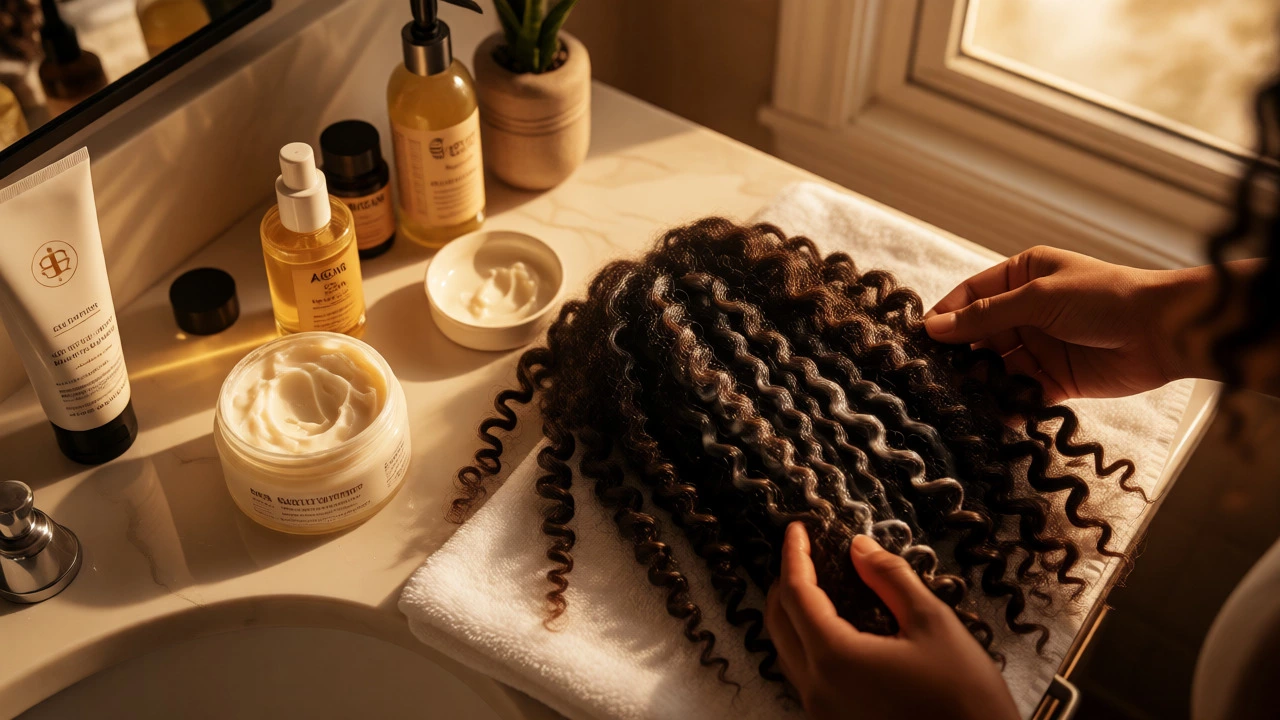
If you have curly hair (Type 3), prioritize ingredients like aloe vera, flaxseed extract, and lightweight oils like argan or jojoba. Avoid sulfates if your scalp is sensitive, as curly hair is naturally drier. If you are dealing with damaged hair and see a "No. 3" treatment, test it on a small section first. See how your hair feels after rinsing. If it feels straw-like, you’re over-proteinizing. If it feels slippery and soft, it’s working.
Remember, your hair changes with the weather, your diet, and your hormonal cycles. A product that worked for your "Type 3" curls in summer might feel too heavy in winter. Don’t let a static number on a bottle dictate your entire routine. Listen to your hair. Adjust your usage frequency. And if a label is confusing, skip it. There are plenty of brands that communicate clearly without requiring a decoder ring.
Is Type 3 hair considered rare?
No, Type 3 hair is quite common globally. It encompasses a wide range of curl patterns, from loose waves to tight coils. While straight hair (Type 1) is statistically more prevalent in certain populations, curly hair types are widespread across African, Latin American, Southern European, and South Asian demographics.
Can I change my hair type from Type 3 to Type 1?
You cannot permanently change your genetic hair texture without chemical processing. Heat styling (flat ironing) can temporarily make Type 3 hair look like Type 1, but it will revert once exposed to humidity or water. Chemical relaxers or keratin treatments can alter the structure, but this is damage-based modification, not a natural change.
What is the difference between Type 3B and 3C?
The main difference is curl diameter. Type 3B curls are springy and roughly the size of a Sharpie marker. Type 3C curls are tighter, smaller corkscrews about the size of a pencil. 3C hair often experiences more shrinkage and dryness than 3B, requiring heavier moisturizers.
Does "No. 3" mean I should use it every day?
Usually, no. In bond-repair systems like Olaplex, No. 3 is a weekly treatment. Daily use can lead to protein overload, making hair stiff and prone to snapping. Check the specific brand's instructions, but generally, intensive treatments are for occasional maintenance, not daily conditioning.
Why does my Type 3 hair feel dry even with conditioner?
This is often due to low porosity or product buildup. If your cuticles are tightly closed, moisture can't penetrate. Try a clarifying shampoo to remove buildup, then use heat (like a shower cap during deep conditioning) to help open the cuticle and allow hydration to enter the strand.