
Skin Aging Risk Calculator
Your Dietary Habits
Your Risk Assessment
Recommended Actions
What if the thing aging your skin isn’t your sunscreen, your sleep, or even the sun-but what’s on your plate? You’ve heard about collagen serums and retinol creams, but most people don’t realize that what you eat can speed up aging faster than any environmental factor. The truth is, some everyday foods are quietly breaking down your skin’s structure, drying out your cells, and triggering inflammation that shows up as wrinkles, dullness, and sagging. And it’s not just about calories-it’s about chemistry.
Processed Sugar: The Invisible Wrinkle Accelerator
Table sugar, high-fructose corn syrup, even "natural" sweeteners like agave-they all do the same thing. When sugar floods your bloodstream, it sticks to proteins like collagen and elastin in a process called glycation. This forms nasty molecules called AGEs-advanced glycation end products. These AGEs don’t just sit there. They cross-link collagen fibers, making them stiff and brittle. Think of it like caramelizing meat: the protein turns brown, hard, and loses its elasticity. Your skin does the same thing.
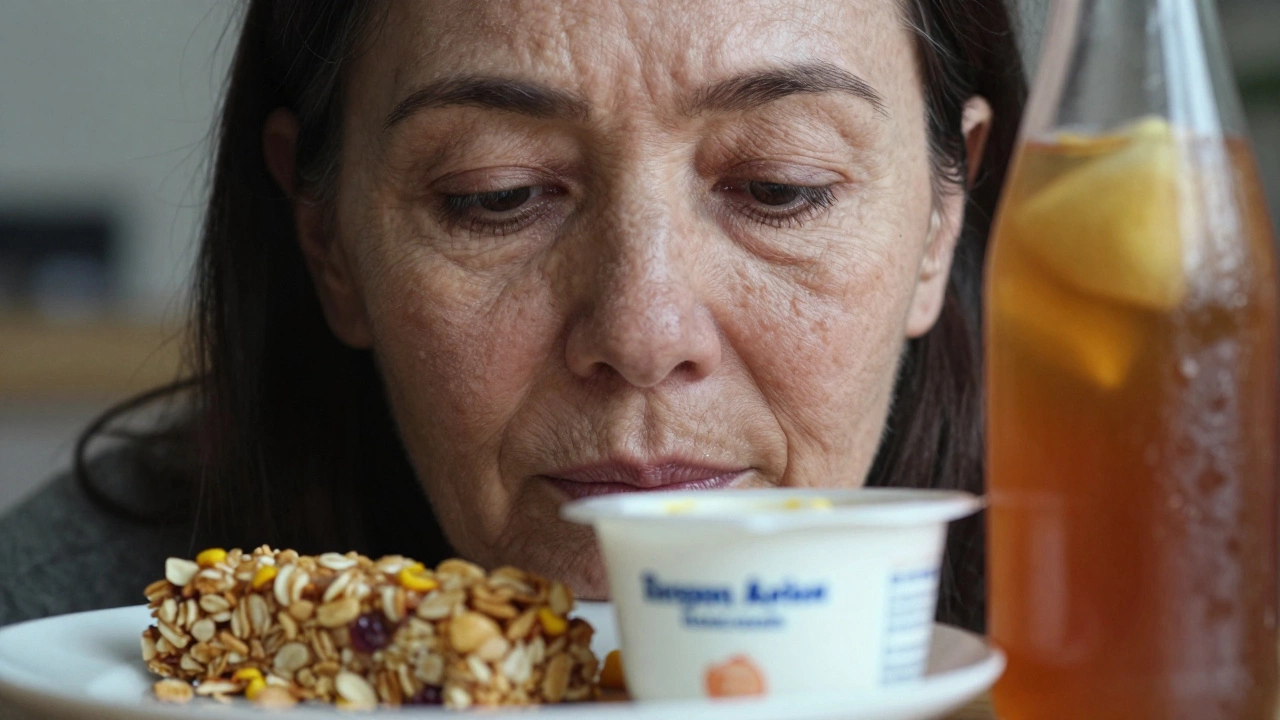
A 2023 study in the Journal of Clinical and Aesthetic Dermatology found that people who consumed more than 70 grams of added sugar daily had 15% more visible fine lines than those who stayed under 25 grams. That’s about five teaspoons of sugar-less than one can of soda. It’s not the occasional cookie. It’s the daily granola bar, the flavored yogurt, the bottled iced tea. These add up.
Trans Fats: The Silent Skin Destroyers
You’ve probably seen "partially hydrogenated oils" on ingredient lists and thought, "That’s just bad for the heart." But trans fats don’t just clog arteries-they clog your skin’s repair system. They interfere with cell membrane fluidity, which means your skin cells can’t hold onto moisture or absorb nutrients properly. They also ramp up inflammation, which triggers enzymes that break down collagen.
Trans fats are hidden in packaged baked goods, frozen pizzas, microwave popcorn, and even some margarines labeled "zero trans fat" (because the FDA allows up to 0.5 grams per serving to be labeled as zero). If you eat these regularly, you’re not just gaining weight-you’re accelerating skin aging by 3-5 years, according to research from the University of California, San Francisco.
Fried Foods: Heat-Induced Toxins
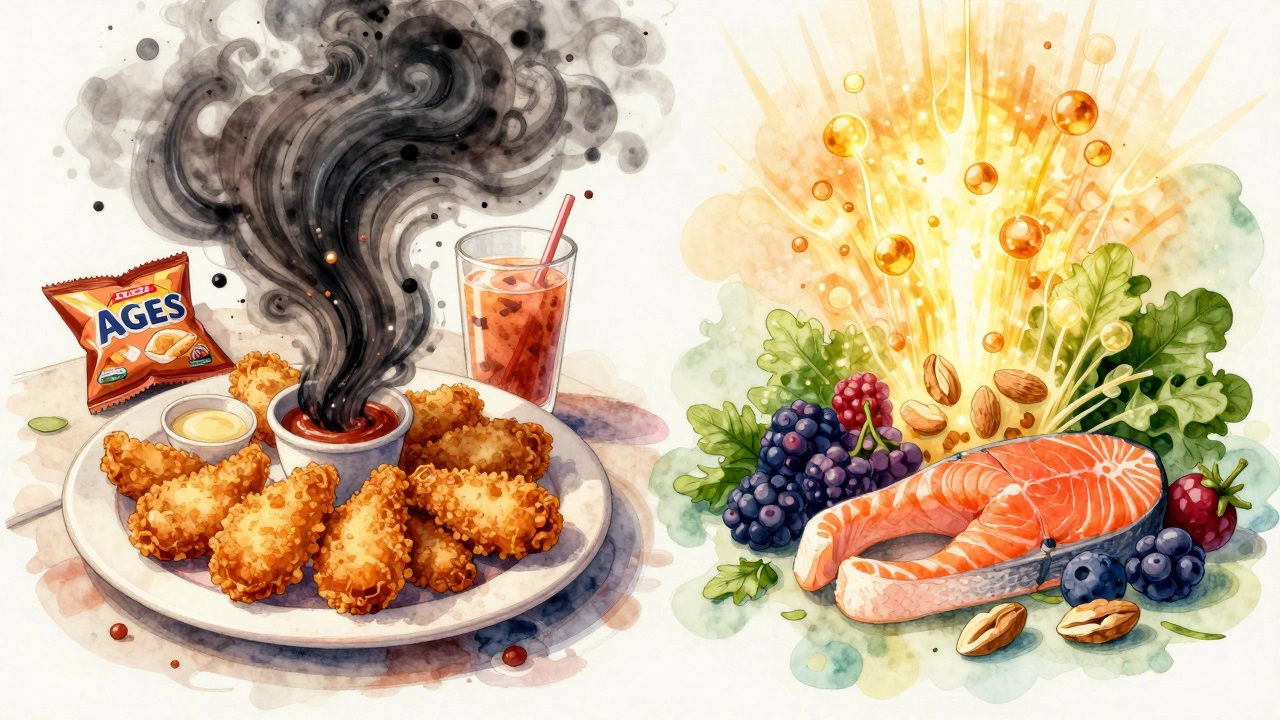
When oils are heated past their smoke point-especially reused oils in fryers-they break down into harmful compounds like acrylamide and aldehydes. These toxins trigger oxidative stress, which overwhelms your body’s natural antioxidants. Your skin, being your largest organ, takes the hit. It’s why deep-fried foods leave you feeling sluggish and looking dull the next day.
Studies show that people who eat fried foods more than four times a week have significantly higher levels of malondialdehyde, a marker of lipid peroxidation that damages skin cells. That’s not just a bad day-it’s cumulative damage. Even air-fried foods can be problematic if they’re coated in starchy breading that browns too much. The Maillard reaction that gives fries their flavor also creates AGEs.
Alcohol: Dehydration with Consequences
Alcohol doesn’t just make you feel tired-it makes your skin look it. It’s a diuretic, so it pulls water out of your cells. Your skin loses plumpness. But the bigger problem is how it affects your liver. Your liver filters toxins, including alcohol. When it’s busy detoxing, it can’t support your skin’s repair cycle. Plus, alcohol triggers inflammation and lowers vitamin A levels, which are critical for skin cell turnover.
Heavy drinkers (three or more drinks daily) show signs of premature aging 7-10 years earlier than non-drinkers, according to a 2024 analysis in the British Journal of Dermatology. Even moderate drinkers notice their eyes look puffier, their complexion more uneven, and fine lines more pronounced after just a few weeks of regular consumption.
Refined Carbs: The Sugar Cousin You Ignore
White bread, pasta, bagels, crackers-they’re just sugar in disguise. They spike blood glucose just like candy, triggering the same glycation process. But because they’re "healthy" and "whole grain" (even when they’re not), people eat them without thinking. A slice of white bread can raise blood sugar higher than a candy bar.
When you eat refined carbs, your insulin levels shoot up. High insulin tells your body to store fat and suppresses growth hormone, which is essential for skin renewal. Over time, this leads to thicker, oilier skin that’s more prone to breakouts and less able to repair itself. It’s why some people in their 30s look older than their 40-year-old friends who eat whole foods.
Salty Snacks: Bloating, Puffiness, and Collagen Breakdown
Sodium doesn’t just make you thirsty-it makes you look older. Too much salt causes your body to retain water, which puffs up your face and under-eye area. That’s temporary, sure, but chronic high sodium intake has another effect: it increases cortisol, the stress hormone. High cortisol breaks down collagen and slows skin repair.
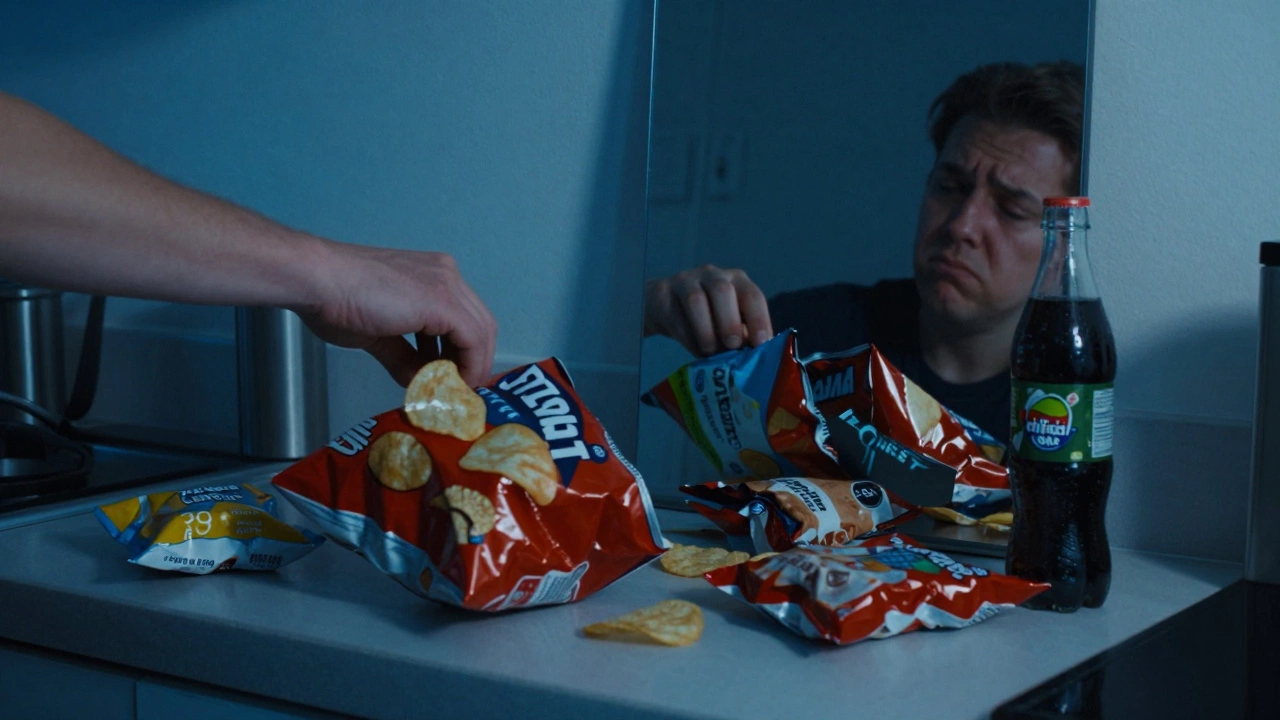
Processed snacks like chips, pretzels, and cured meats are loaded with salt. One bag of chips can contain more than half your daily sodium limit. And it’s not just the salt-it’s the combo with unhealthy fats and preservatives. A 2022 study in Age and Ageing linked high sodium diets to reduced skin elasticity in adults over 45, even after adjusting for age and sun exposure.
Artificial Sweeteners: The "Healthy" Trap
People turn to diet sodas and sugar-free snacks thinking they’re avoiding sugar. But artificial sweeteners like aspartame, sucralose, and saccharin can disrupt your gut microbiome. That’s a big deal because your gut and skin are deeply connected. When gut bacteria get out of balance, inflammation rises, and your skin suffers.
Research from the University of Copenhagen found that people who consumed artificial sweeteners daily had higher levels of inflammatory markers in their blood and showed more signs of skin aging than those who drank water or unsweetened tea. It’s not the sweetness-it’s the chemical signal it sends to your body. Your body doesn’t know how to process these synthetic compounds, so it reacts like it’s under attack.
What to Eat Instead
It’s not about perfection. It’s about balance. Swap out the sugary snacks for berries, which are packed with antioxidants. Choose whole grains over white bread. Cook with olive oil instead of frying. Drink water, herbal tea, or sparkling water with lemon. Eat fatty fish like salmon twice a week for omega-3s, which reduce inflammation and keep skin supple. Nuts, seeds, and dark leafy greens give you vitamin E and zinc-both critical for skin repair.
One woman in Brighton, 52, switched from daily lattes with sugar to black coffee with almond milk, stopped eating packaged snacks, and started eating more lentils and broccoli. Within six months, her dermatologist noted a "significant improvement in skin texture and tone"-no treatments, no lasers. Just food changes.
It’s Not About Restriction. It’s About Awareness.
You don’t need to eliminate everything forever. But if you’re seeing early signs of aging-dullness, fine lines, puffiness-and you’re doing everything right with your skincare routine, look at your plate. Food isn’t just fuel. It’s information. And your skin is listening.
Do all sugars age your skin the same way?
Yes, in terms of glycation. Whether it’s table sugar, honey, maple syrup, or high-fructose corn syrup, they all break down into glucose and fructose in your body. These molecules attach to collagen and elastin the same way. Natural doesn’t mean safe when it comes to sugar overload. The problem isn’t the source-it’s the amount.
Can drinking water reverse aging caused by these foods?
Water helps with hydration and flushing out toxins, but it can’t undo glycation or collagen damage. If your skin is already stiff from years of sugar and trans fats, water alone won’t restore elasticity. You need to stop the damage first, then support repair with nutrients like vitamin C, zinc, and omega-3s.
Are organic versions of these foods better?
Organic sugar is still sugar. Organic chips still have trans fats if they’re fried in hydrogenated oil. Organic doesn’t change the chemical structure of the ingredients that cause aging. It just means they’re grown without synthetic pesticides. For aging, focus on the ingredient list, not the label.
How long does it take to see skin improvements after cutting these foods?
Most people notice less puffiness and brighter skin in 2-3 weeks. Collagen repair takes longer-typically 8-12 weeks-because skin cell turnover slows with age. Stick with the changes for at least three months to see real texture and tone improvements.
Do I need to give up alcohol completely?
No. But if you’re noticing persistent puffiness, redness, or dullness, cutting back to one drink a week can make a noticeable difference. Your liver needs time to recover, and so does your skin. Occasional wine with dinner isn’t the problem-it’s daily drinking.