
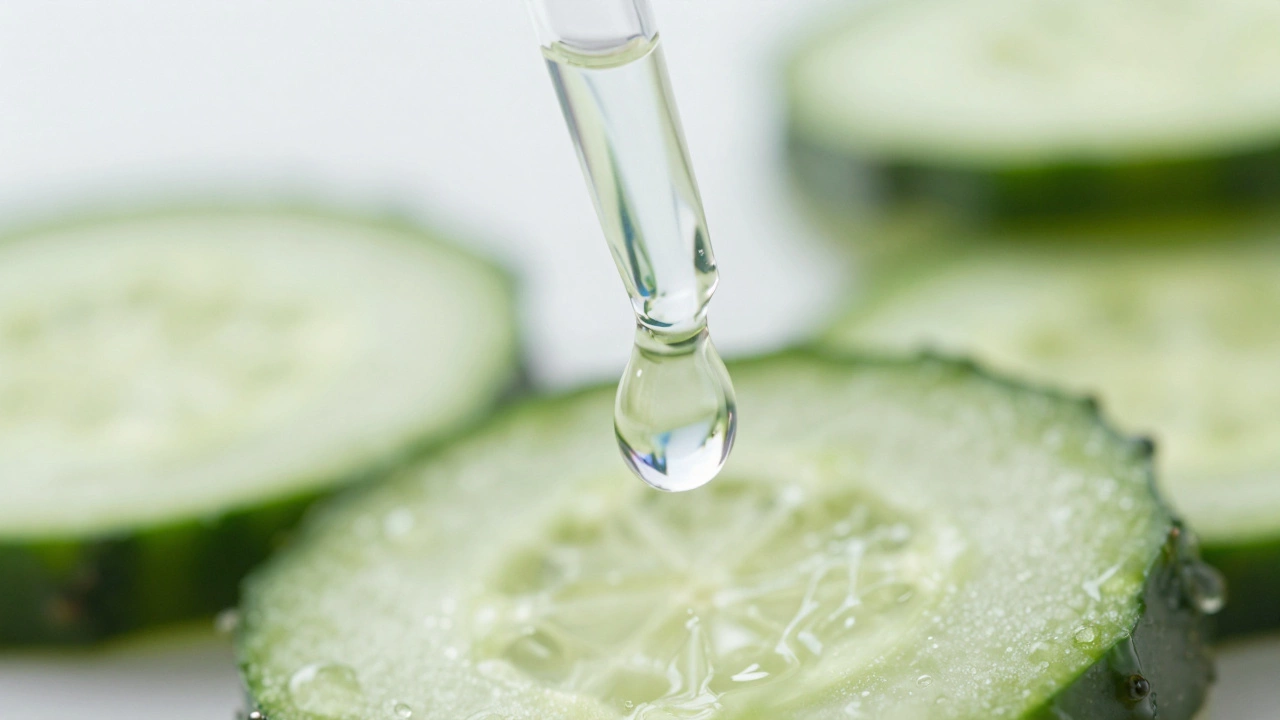
Natural Skincare Routine Builder
Configure Your Skin Profile
Select your skin profile to see recommended natural ingredients and steps.
You have probably seen every jar of cream promising a miracle cure made from "pure nature." But if you walk into any pharmacy or scroll through social media, the question remains: what is actually the best natural thing for skin? The answer isn't a single magic bullet. It depends entirely on what your skin is trying to tell you. Is it crying out for moisture? Is it fighting inflammation? Or is it looking to turn back the clock?
Natural skincare has exploded in popularity because people are tired of long ingredient lists filled with unpronounceable chemicals. However, "natural" doesn't automatically mean "safe" or "effective." Poison ivy is natural, but you wouldn't put it on your face. The key is understanding which botanical compounds actually deliver results backed by science, not just marketing hype.
The Hydration Hero: Hyaluronic Acid
If we had to pick one substance that works for almost everyone, regardless of skin type, it would be Hyaluronic Acid. While often associated with lab synthesis, this molecule occurs naturally in your body. In fact, about half of the total hyaluronic acid in your body is found in your skin. Its job is simple but powerful: it holds water. One gram of hyaluronic acid can hold up to six liters of water.
When you apply a serum containing this ingredient, it acts like a sponge, pulling moisture from the environment and binding it to your skin cells. This plumps up the skin, reducing the appearance of fine lines instantly. For dry skin types living in arid climates, this is non-negotiable. You should always apply it to damp skin and seal it in with a moisturizer; otherwise, it might pull moisture *from* your skin instead of the air, making things worse.
Look for products that list "Sodium Hyaluronate" as well. This is a smaller molecule version of hyaluronic acid that penetrates deeper into the epidermis. Combining both molecular weights gives you surface hydration and deep-layer plumping.
The Brightening Powerhouse: Vitamin C
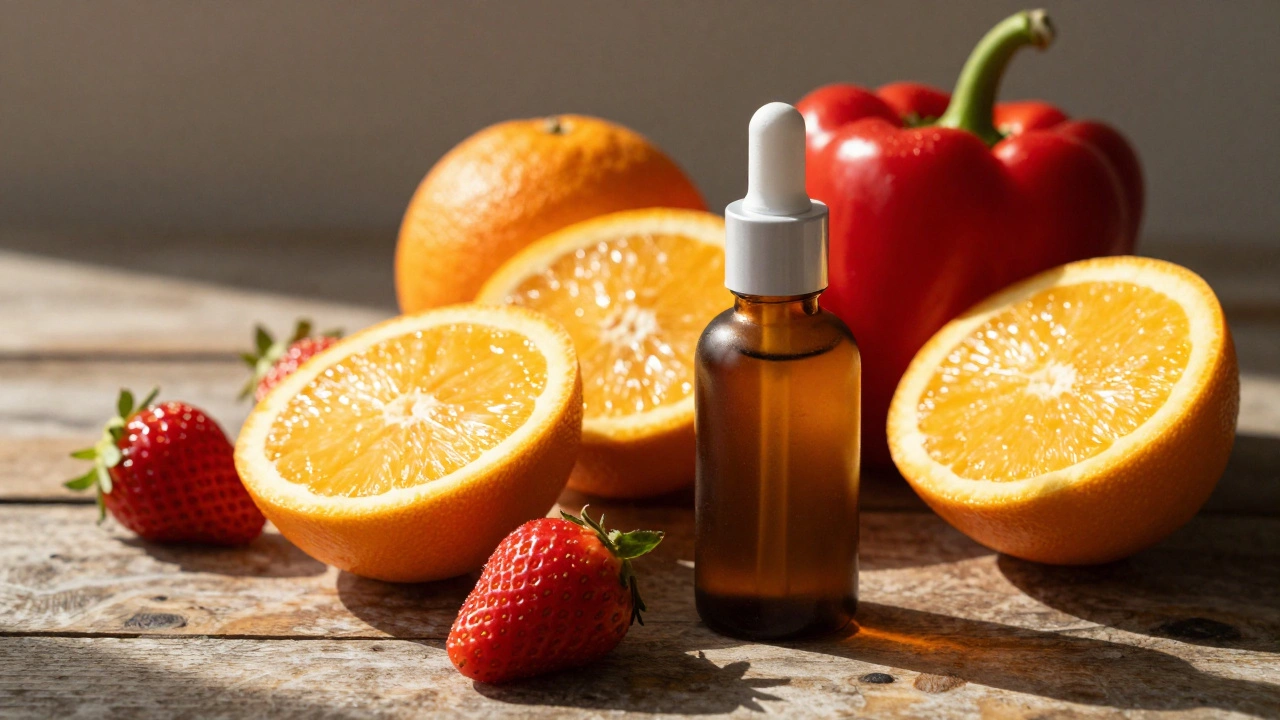
If your goal is to fade dark spots, even out skin tone, or protect against pollution damage, Vitamin C (specifically L-ascorbic acid) is the gold standard. Found abundantly in citrus fruits, strawberries, and bell peppers, this antioxidant neutralizes free radicals caused by UV exposure and environmental stressors.
Free radicals are unstable molecules that damage your collagen and elastin, leading to wrinkles and sagging. Vitamin C donates electrons to these radicals, stabilizing them before they cause harm. Beyond protection, it inhibits the enzyme tyrosinase, which is responsible for producing melanin. This means it actively lightens hyperpigmentation and post-acne marks over time.
However, pure Vitamin C is notoriously unstable. It oxidizes quickly when exposed to light and air, turning brown and becoming ineffective. When shopping, look for opaque, airless pump bottles. If the liquid inside looks dark orange or brown, toss it. For sensitive skin, consider derivatives like Magnesium Ascorbyl Phosphate, which are gentler but still effective.
The Anti-Aging Contender: Bakuchiol
For decades, Retinol (a form of Vitamin A) was the undisputed king of anti-aging. But many people couldn't tolerate its side effects: redness, peeling, and sun sensitivity. Enter Bakuchiol, a plant-based alternative derived from the seeds of the Psoralea corylifolia plant, native to India and Africa.
Clinical studies have shown that Bakuchiol can mimic the effects of Retinol without the irritation. It stimulates collagen production and improves skin elasticity, helping to smooth out wrinkles. Unlike Retinol, you can use Bakuchiol during the day, and it plays nicely with other active ingredients like Vitamin C and acids. It also has antimicrobial properties, making it a great choice for acne-prone skin that needs gentle exfoliation and cell turnover.
If you have reactive skin or are pregnant (as Retinol is generally contraindicated during pregnancy), Bakuchiol is your best friend. It delivers the structural benefits of retinoids while keeping your skin barrier calm and intact.
The Soothing Agent: Centella Asiatica
Known commonly as Cica, Tiger Grass, or Gotu Kola, Centella Asiatica has been used in traditional Chinese medicine for centuries to heal wounds. In modern skincare, it is the go-to ingredient for calming inflammation and repairing the skin barrier.
This herb contains triterpenoids, such as asiaticoside and madecassoside, which boost collagen synthesis and reduce redness. If you suffer from rosacea, eczema, or acne-induced redness, Centella Asiatica is incredibly soothing. It helps strengthen the capillaries in the skin, reducing visible redness over time. Many Korean beauty brands feature this ingredient prominently because it supports the skin's natural healing process without stripping away oils.
You will find it in gels, serums, and creams. Look for products where Centella Asiatica extract is high up on the ingredient list to ensure a potent dose. It pairs beautifully with Niacinamide, another barrier-supporting powerhouse.
The Gentle Exfoliant: Fruit Enzymes
Chemical exfoliants like Glycolic Acid (AHA) and Salicylic Acid (BHA) are effective, but they can be harsh. For a more natural approach, look to fruit enzymes. Papain from papaya and Bromelain from pineapple are proteolytic enzymes, meaning they break down proteins.
In skincare terms, this means they dissolve the "glue" holding dead skin cells together on the surface. This reveals brighter, smoother skin underneath without the sting or burning sensation associated with strong acids. These enzymes work at the surface level, making them safer for sensitive skin types that react poorly to traditional chemical peels.
Use a mask or scrub containing these enzymes once or twice a week. Avoid using them immediately after shaving, as the fresh nicks in your skin may sting slightly. They are excellent for preparing the skin to absorb subsequent treatments better.
| Ingredient | Primary Benefit | Best For | Sensitivity Level |
|---|---|---|---|
| Hyaluronic Acid | Deep Hydration | Dry, Dehydrated Skin | Low (Very Safe) |
| Vitamin C | Brightening & Protection | Dullness, Dark Spots | Medium (Can Irritate) |
| Bakuchiol | Anti-Aging | Wrinkles, Acne | Low (Gentle) |
| Centella Asiatica | Soothing & Repair | Rosacea, Eczema | Low (Calming) |
| Fruit Enzymes | Gentle Exfoliation | Rough Texture | Low-Medium |

Pitfalls to Avoid in Natural Skincare
Not everything labeled "natural" is good for you. Essential oils, for example, are highly concentrated plant extracts. While they smell wonderful, many common essential oils like lavender, peppermint, and citrus oils are known sensitizers. They can cause contact dermatitis, especially with repeated use. If you have sensitive skin, steer clear of fragrances derived from essential oils and opt for unscented products instead.
Another trap is the "cold press" myth. Just because an oil is cold-pressed doesn't mean it's superior for absorption. Some heavy oils, like coconut oil, are comedogenic, meaning they clog pores. If you are prone to acne, avoid coconut oil on your face. Instead, choose non-comedogenic oils like Jojoba Oil, which closely mimics the skin's natural sebum, or Squalane, derived from olives or sugarcane.
Building Your Routine
To get the most out of these natural ingredients, layer them correctly. Start with the thinnest consistency and move to the thickest. A basic routine might look like this:
- Cleanse: Use a gentle, pH-balanced cleanser.
- Treat: Apply Vitamin C serum in the morning or Bakuchiol at night.
- Hydrate: Layer Hyaluronic Acid on damp skin.
- Moisturize: Seal everything in with a cream containing Centella Asiatica or Jojoba Oil.
- Protect: Always finish with sunscreen. No natural ingredient replaces UV protection.
Remember, consistency beats intensity. Using a gentle, effective natural ingredient daily will yield better results than slathering on a potent treatment once a month. Listen to your skin. If it feels tight, add more hydration. If it breaks out, simplify your routine. The best natural thing for your skin is the one that respects its unique biology.
Is natural skincare better than synthetic skincare?
Not necessarily. "Natural" does not guarantee safety or efficacy. Some synthetic ingredients are highly stable and effective, while some natural ingredients can be irritating or allergenic. The quality of the formulation matters more than the origin of the ingredients. Look for evidence-backed actives, whether they come from plants or labs.
Can I use Vitamin C and Bakuchiol together?
Yes, absolutely. Unlike Retinol, which can conflict with Vitamin C due to pH differences and potential irritation, Bakuchiol is gentle and stable. You can layer Vitamin C in the morning for protection and Bakuchiol at night for anti-aging, or even use them together if your skin tolerates it well.
How do I know if a natural product is right for my skin type?
Patch test every new product on a small area of your inner arm or behind your ear for 24-48 hours. If no reaction occurs, try it on a small section of your face. Also, check the ingredient list for comedogenic oils if you have acne-prone skin, or potential irritants like essential oils if you have sensitive skin.
Does natural skincare expire faster?
Often, yes. Because many natural products lack strong synthetic preservatives, they have a shorter shelf life. Store them in a cool, dark place and keep lids tightly closed. If the scent, color, or texture changes, discard the product immediately to avoid bacterial growth.
Is Hyaluronic Acid safe for oily skin?
Yes. Hyaluronic Acid is lightweight and non-comedogenic. It hydrates without adding grease. Oily skin often produces excess oil because it is dehydrated. By providing adequate hydration with HA, you may actually help balance your oil production over time.