
Lancôme Rank Finder
What rank is Lancôme? It depends on what you value. Select your primary priority below to see where Lancôme stands compared to its biggest rivals.
Best Value
Price vs. Performance Ratio
Ultimate Luxury
Brand Prestige & Exclusivity
Proven Results
Scientific Efficacy & Trust
Trendsetter
Fashion Heritage & Cool Factor
Analysis Result
Key Competitor Comparison
- Chanel: -
- Dior: -
- Estée Lauder: -
Detailed Breakdown
| Metric | Lancôme | Industry Leader |
|---|
You walk into a department store or scroll through an online retailer, and you see Lancôme sitting right next to Chanel and Dior. It feels like it’s always been there, doesn’t it? But if someone asked you, "What rank is Lancôme?" would you have a straight answer? Most people guess "top three," but the reality is messier and more interesting than a simple leaderboard number.
Lancôme isn't just a brand; it's a financial engine for one of the world's largest beauty conglomerates. To understand its rank, we have to look at sales volume, brand equity, and consumer perception separately. Because while Lancôme might not be the #1 selling lipstick globally, it consistently holds the top spot in prestige skincare revenue in several key markets. Let’s break down exactly where this French powerhouse stands in 2026, why it matters to your wallet, and how it compares to its rivals.
The Financial Reality: Where Does Lancôme Sit in Sales?
If we look at raw revenue, Lancôme is undeniably a giant. Owned by L’Oréal Group, the largest cosmetics company in the world, Lancôme serves as the crown jewel of their "Luxury Products" division. In recent fiscal reports leading up to 2026, Lancôme has consistently generated over €5 billion in annual sales. That places it firmly in the top tier of global prestige brands.
But here is the catch: "Rank" depends on what you are measuring. If you measure by total units sold across all categories (perfume, makeup, skincare), L’Oréal’s mass-market brands like Maybelline often outsell Lancôme simply because they are cheaper and available everywhere. However, when you restrict the field to prestige or luxury beauty-meaning products sold in department stores, Sephora, and dedicated boutiques-Lancôme competes directly with Estée Lauder, Chanel, and Dior.
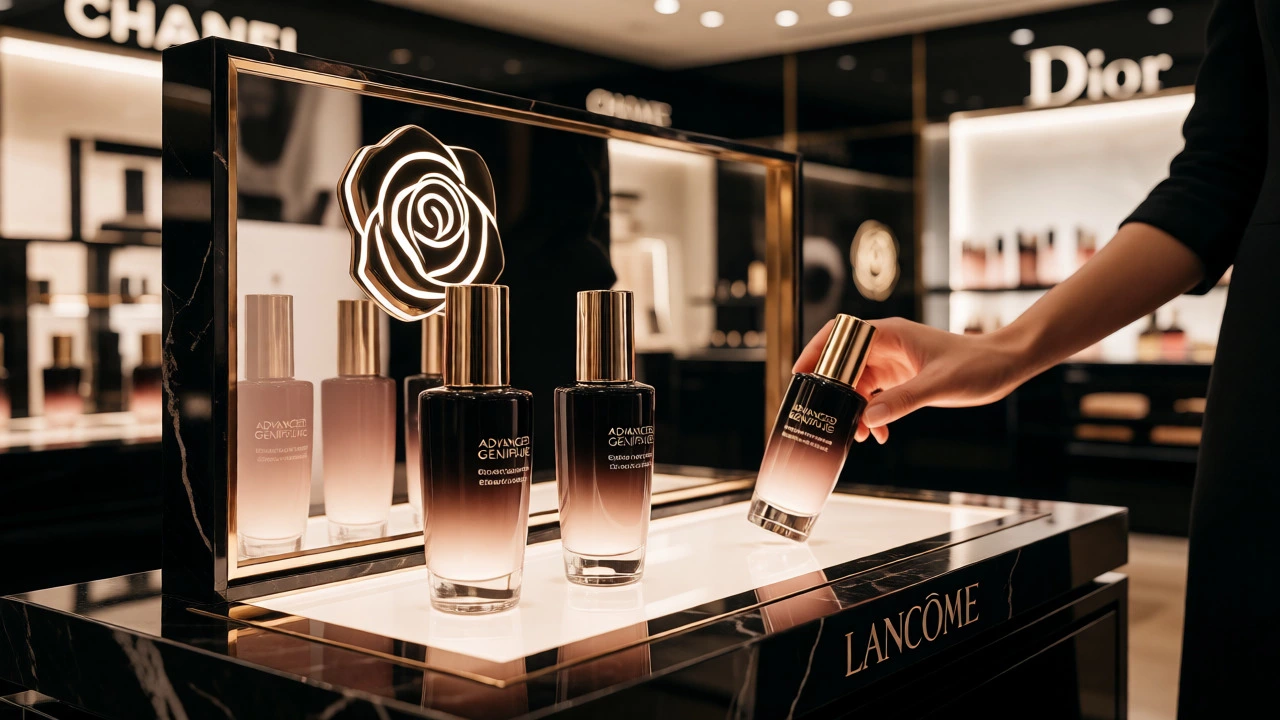
In the specific niche of anti-aging skincare, Lancôme frequently ranks #1 or #2 in Europe and North America. Their Advanced Génifique serum, launched in 2009, remains one of the best-selling individual SKUs in history. So, if your question is about influence and money in the high-end sector, Lancôme is arguably the most successful accessible-luxury brand on the planet.
Brand Equity vs. Market Share: The Perception Game
Sales tell you who has the cash. Brand equity tells you who has the desire. This is where things get subjective. When consumers think of "ultimate luxury," many still point to Hermès or Chanel. Lancôme sits in a slightly different bracket: accessible luxury. It is premium enough to feel special, but priced low enough that a middle-class professional can buy a full routine without taking out a loan.
This positioning is deliberate. Lancôme ranks highest among brands considered "trustworthy" and "scientific." Unlike some heritage fashion houses that dabble in beauty, Lancôme is purely a beauty specialist. Consumers know it for biotech-derived ingredients rather than runway trends. According to various consumer sentiment surveys conducted between 2024 and 2026, Lancôme consistently scores higher on "efficacy" and "value for money" than competitors like Tom Ford or Charlotte Tilbury, which score higher on "status" and "aesthetics."
So, what rank is Lancôme in terms of cool factor? Probably 4th or 5th behind the mega-fashion houses. But in terms of reliability and repeat purchase rate? It is often #1. You don’t buy Lancôme to impress your date; you buy it because it actually works on your skin.
Lancôme vs. The Big Three: A Comparative Breakdown
To really grasp Lancôme’s position, you have to compare it head-to-head with its main rivals. These aren't just random competitors; these are the titans of the industry. Here is how they stack up in the current market landscape.
| Feature | Lancôme | Chanel | Estée Lauder | Dior |
|---|---|---|---|---|
| Parent Company | L’Oréal Group | Private Family Ownership | Estée Lauder Companies | LVMH (Moët Hennessy Louis Vuitton) |
| Primary Strength | Skincare Technology & Accessibility | Brand Prestige & Perfume | Global Distribution & Anti-Aging | Fashion Heritage & Makeup |
| Avg. Serum Price | $85 - $120 | $130 - $160 | $100 - $140 | $110 - $150 |
| Market Position | Mass-Prestige Leader | Ultra-Luxury Icon | Corporate Giant | Trendsetter |
| Key Product | Advanced Génifique Serum | Coco Mademoiselle / Sublimage | Small Brown Bottle Serum | Rouge Dior Lipstick |
Notice the pattern? Lancôme wins on price-performance ratio. Chanel wins on status. Estée Lauder wins on sheer corporate reach. Dior wins on trendiness. If you are looking for the brand that balances science with affordability, Lancôme takes the gold medal. If you want the logo everyone recognizes at the airport duty-free shop, Chanel still leads.

Why Lancôme Holds Its Ground Against Newcomers
The beauty industry is flooded with indie brands. You have got The Ordinary, Drunk Elephant, and dozens of TikTok-famous startups screaming for attention. Why hasn’t Lancôme fallen off the radar? Simple: distribution and R&D budget.
L’Oréal spends roughly 3% of its total sales on research and development. For a brand generating billions, that means hundreds of millions of dollars annually going into labs. Indie brands often white-label products from contract manufacturers. Lancôme develops proprietary molecules. Take Pro-Xylane, for example. It is a patented ingredient found in their Absolue line that stimulates hyaluronic acid production. No small startup can replicate that patent easily.
Furthermore, Lancôme has mastered the art of omnichannel presence. You can find them in Harrods, in Ulta, on Amazon, and in standalone boutiques. This ubiquity keeps the brand top-of-mind. While niche brands rely on viral moments, Lancôme relies on shelf space. And in the physical retail world, shelf space is king.
Is Lancôme Considered "High End" or "Mid-Tier"?
This is the most common confusion. People ask, "Is Lancôme luxury?" The answer is yes, but with caveats. In the US and UK, Lancôme is classified as "Prestige Beauty." This is distinct from "Mass Market" (like Neutrogena) and "Ultra-Luxury" (like La Mer or La Prairie).
Prestige beauty occupies the sweet spot. It offers higher concentrations of active ingredients and better packaging than drugstore brands, but it lacks the exclusivity and astronomical price tags of ultra-luxury lines. Think of it this way: If drugstore skincare is economy class, Lancôme is business class. You get comfort, service, and quality without paying first-class prices. For most consumers, this is the ideal rank. It delivers results without requiring a second mortgage.
However, perception varies by region. In parts of Asia, particularly China, Lancôme is viewed as a highly aspirational Western brand, often ranked alongside Chanel. In Europe, it is seen as a staple household name, less exotic but deeply trusted. Context changes the rank.
How to Decide If Lancôme Belongs in Your Routine
Knowing the rank is academic. What matters is whether it solves your problems. Don’t buy Lancôme because it’s popular. Buy it because it fits your skin profile.
- Choose Lancôme if: You want proven anti-aging technology, you prefer dermatologist-tested formulas, and you want a product that is widely available so you never run out. Their serums are excellent for barrier repair and hydration.
- Skip Lancôme if: You are obsessed with clean-beauty minimalism (their formulas contain preservatives and fragrances), you want exclusive, hard-to-find items, or you are looking for the absolute cheapest option per ounce.
If you are new to the brand, start with the icon: the Advanced Génifique Youth Activating Concentrate. It is entry-level luxury at its finest. It smells nice, absorbs quickly, and provides immediate glow. If that works for you, explore the Visionnaire line for texture issues or Absolue for deep nourishment. Avoid buying the entire range at once; test the core products first.
The Future Outlook: Will Lancôme Stay on Top?
As we move deeper into the 2020s, the pressure on legacy brands is mounting. Gen Z shoppers care about sustainability and transparency. Lancôme has responded by launching refillable options and clearer ingredient lists. They are also investing heavily in AI-driven skin diagnostics in-store, trying to blend tech with tradition.
Will they lose their rank? Unlikely. L’Oréal is too agile. They acquire trendy brands (like CeraVe or Youth To The People) to stay relevant while keeping Lancôme as the stable, profitable anchor. As long as they keep innovating on their patents and maintaining that delicate balance of price and performance, Lancôme will remain a top-tier contender. It might not be the coolest kid on the block, but it’s the one with the best grades and the most friends.
Is Lancôme owned by L’Oréal?
Yes, Lancôme is a subsidiary of L’Oréal Group, the world's largest cosmetics company. It falls under their "Luxury Products" division, which also includes brands like Yves Saint Laurent Beauté and Armani Beauty. This ownership gives Lancôme access to massive R&D budgets and global distribution networks.
Is Lancôme considered a luxury brand?
Lancôme is classified as a "prestige" or "accessible luxury" brand. It is significantly more expensive than drugstore brands but generally more affordable than ultra-luxury houses like La Mer or Clé de Peau Beauté. It bridges the gap between high-quality efficacy and mainstream accessibility.
Which Lancôme product is the most famous?
The Advanced Génifique Youth Activating Concentrate is widely considered their flagship product. Since its launch, it has become one of the best-selling facial serums in the world due to its focus on skin microbiome health and visible radiance. Another iconic item is the Teint Idole Ultra Wear foundation, known for its long-lasting coverage.
Does Lancôme test on animals?
Lancôme does not test finished products on animals, except where required by law (such as in mainland China, though regulations there are shifting). Consequently, it is not certified cruelty-free by organizations like Leaping Bunny or PETA, which require no animal testing anywhere in the supply chain, including for regulatory purposes.
How does Lancôme compare to Estée Lauder?
Both are giants in the prestige skincare market. Estée Lauder often appeals to those seeking classic, rich formulations and strong anti-aging claims. Lancôme tends to appeal to users looking for modern textures, brighter finishes, and slightly lower price points. Estée Lauder has a stronger presence in North America, while Lancôme dominates in Europe and parts of Asia.