

Skin Tightening Vitamin Finder
Not all vitamins do the same thing. Select your primary skin concern below to see which nutrients target it, along with usage tips and safety warnings.
Dullness & Sun Damage
Deep Wrinkles & Sagging
Dryness & Barrier Repair
Overall Resilience
You look in the mirror and notice your jawline isn't as sharp as it used to be. Or maybe those fine lines around your eyes are starting to deepen when you smile. It’s frustrating, right? You’ve tried expensive creams, facials, and even that weird jade roller everyone talks about. But often, the real secret to skin tightening isn’t hidden in a jar with a fancy label-it’s sitting in your kitchen cabinet or on a pharmacy shelf.
Here is the truth: no single vitamin acts like a magic eraser for wrinkles overnight. However, specific vitamins play critical roles in building the structural support of your skin. If you want firmer, tighter-looking skin, you need to understand how these nutrients work together. Let’s break down which ones actually move the needle and how to use them without wasting money.
The Heavy Lifter: Vitamin C
If there is one nutrient dermatologists agree on for firmness, it’s Vitamin C. Technically known as ascorbic acid, this water-soluble antioxidant is the primary cofactor required for collagen synthesis. Think of collagen as the scaffolding of your house. Without enough Vitamin C, your body simply cannot build new collagen fibers effectively.
But it’s not just about building new stuff. Vitamin C protects existing collagen from breaking down. UV rays and pollution create free radicals-unstable molecules that chew up your skin’s structure. Vitamin C neutralizes these attackers before they can do damage. Studies published in journals like *Dermatologic Surgery* have shown that topical application of Vitamin C serums significantly improves skin elasticity and reduces sagging over time.
However, here is the catch: Vitamin C is notoriously unstable. It oxidizes quickly when exposed to light and air, turning brown and losing its potency. If you buy a serum, look for packaging in dark glass bottles or opaque tubes. Avoid clear dropper bottles if possible. Also, pH matters. For penetration, L-ascorbic acid needs an acidic environment (pH below 3.5). If your product feels tingly but not burning, you’re likely using it correctly. Pair it with sunscreen in the morning because while it helps protect against sun damage, it doesn’t replace SPF.
The Gold Standard: Retinoids (Vitamin A)
While technically a derivative of Vitamin A, Retinol is widely considered the most effective ingredient for reversing signs of aging. Unlike other vitamins that primarily protect, retinoids actively communicate with cells. They speed up cell turnover, pushing fresh, plump cells to the surface while encouraging deeper layers to produce more collagen and elastin.
Elastin is the protein responsible for your skin’s ability to snap back into place after being stretched. As we age, elastin degrades, leading to loose, crepey skin. Retinoids help preserve and stimulate the production of both collagen and elastin. Prescription-strength retinoids like Tretinoin are powerful, but over-the-counter retinol works too-it just takes longer. Expect results in 3 to 6 months, not days.
A common mistake people make is starting with a high concentration. This leads to irritation, redness, and peeling, which makes skin look worse temporarily. Start low and slow. Use a pea-sized amount for the entire face. Apply it at night only, as sunlight breaks down retinoids and increases sensitivity. Always follow up with a good moisturizer to repair the skin barrier. If you are pregnant, skip this step entirely, as high doses of Vitamin A derivatives can affect fetal development.
The Protector: Vitamin E
Vitamin E is a fat-soluble antioxidant that lives in the lipid layers of your skin. Its main job is to stabilize cell membranes and prevent oxidative stress. While it doesn’t directly tighten skin the way Vitamin C builds collagen, it plays a crucial supporting role.
Why does this matter for tightness? Because inflammation causes swelling and eventual tissue breakdown. Chronic inflammation accelerates aging. Vitamin E calms this process. More importantly, it works synergistically with Vitamin C. When used together, Vitamin E regenerates Vitamin C after it has neutralized a free radical. This duo is far more effective than either alone. Many high-quality anti-aging serums combine L-ascorbic acid with Tocopherol (the scientific name for Vitamin E) for this exact reason.
You can also find Vitamin E in oils like rosehip or argan oil. These are great for dry skin types who feel tightness due to lack of moisture rather than lack of collagen. If your skin feels tight after washing, it’s probably dehydration, not laxity. In that case, adding a Vitamin E-rich oil to your routine can restore suppleness immediately.

The Structural Support: Vitamin D
We usually think of Vitamin D for bone health, but it is increasingly recognized as vital for skin integrity. It acts more like a hormone than a traditional vitamin. Receptors for Vitamin D are found throughout the skin, influencing cell growth and immune function.
Deficiency in Vitamin D has been linked to premature aging and poor wound healing. While topical application is less common than oral supplementation, some studies suggest that maintaining adequate blood levels of Vitamin D supports overall skin resilience. Since many people are deficient due to indoor lifestyles and sunscreen use, checking your levels via a simple blood test might be worth it. If you are low, supplements may improve skin texture indirectly by reducing systemic inflammation.
How Vitamins Compare: A Quick Breakdown
Not all vitamins do the same thing. Choosing the wrong one for your specific concern wastes time. Here is how the top contenders stack up against each other regarding their impact on skin firmness.
| Vitamin | Primary Mechanism | Best For | Time to See Results | Key Risk |
|---|---|---|---|---|
| Vitamin C | Collagen Synthesis & Antioxidant Protection | Dullness, Fine Lines, Sun Damage | 4-8 Weeks | Irritation, Oxidation |
| Retinol (Vit A) | Cell Turnover & Elastin Production | Deep Wrinkles, Texture, Sagging | 3-6 Months | Peeling, Sun Sensitivity |
| Vitamin E | Membrane Stabilization & Hydration | Dryness, Barrier Repair, Synergy | Immediate (Hydration) | Clogged Pores (if heavy) |
| Vitamin D | Immune Regulation & Cell Growth | Overall Resilience, Deficiency Signs | Variable (Systemic) | Toxicity if Over-supplemented |
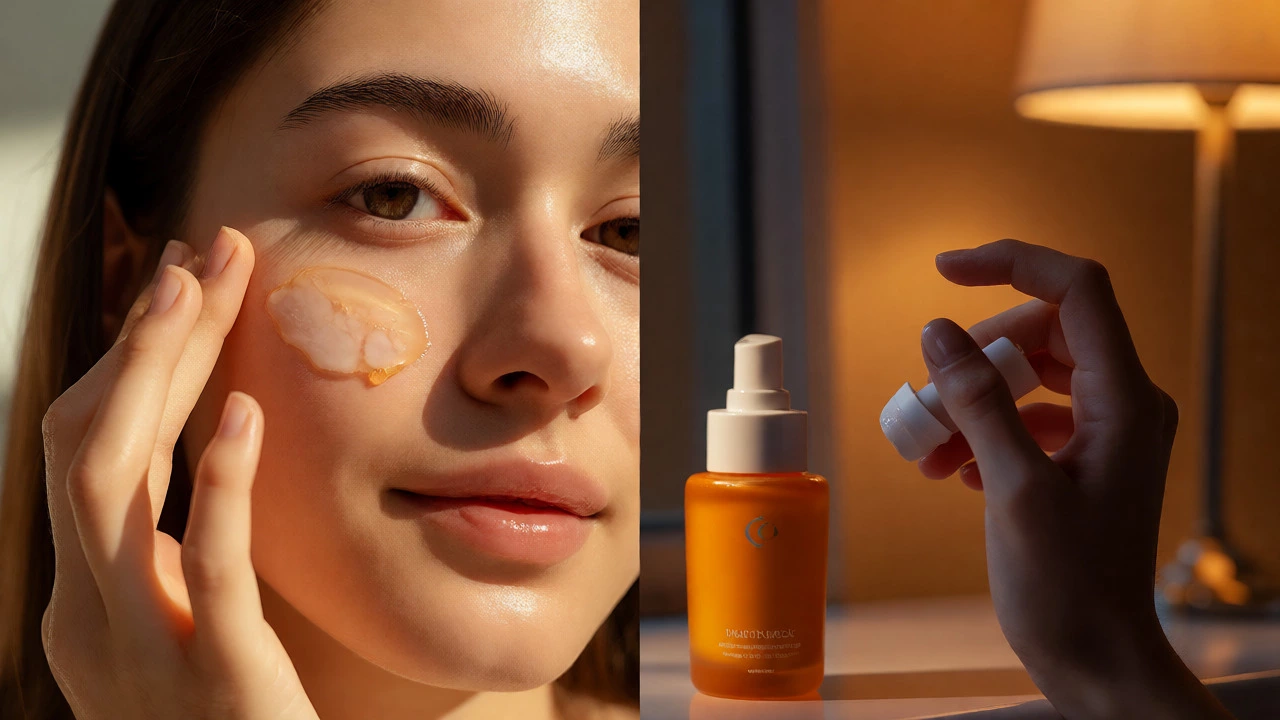
Building Your Tightening Routine
You don’t need ten different products. You need a consistent strategy. Here is a simple framework to integrate these vitamins into your daily life for maximum tightening effects.
- Morning: Cleanse gently. Apply a Vitamin C serum. Follow with a lightweight moisturizer containing Vitamin E. Finish with broad-spectrum SPF 30+. Sunscreen is non-negotiable; without it, UV damage undoes all your hard work.
- Evening: Double cleanse if wearing makeup. Apply a Retinol product. Wait 10 minutes for it to absorb. Follow with a rich moisturizer or facial oil to counteract potential dryness.
- Dietary Boost: Eat foods rich in these nutrients. Citrus fruits, bell peppers, and strawberries provide Vitamin C. Sweet potatoes, carrots, and spinach offer beta-carotene (which converts to Vitamin A). Almonds, sunflower seeds, and avocados are packed with Vitamin E.
Consistency beats intensity. Applying Vitamin C sporadically won’t yield the same results as daily use. Give any new regimen at least three months before judging its effectiveness. Skin cycles take about 28 days, so one month is barely enough to see initial changes.
Pitfalls to Avoid
Many people sabotage their own progress by mixing incompatible ingredients. Do not use strong acids (like glycolic or salicylic acid) at the same time as retinol unless your skin is very tolerant. This combo can destroy your moisture barrier, leading to inflammation and temporary sagging appearance.
Another trap is ignoring hydration. Dehydrated skin looks deflated and wrinkled, mimicking loss of firmness. Drinking water and using humectants like hyaluronic acid helps plump the skin, making it appear tighter instantly. Remember, true tightening comes from structural proteins (collagen/elastin), but visual tightness often starts with hydration.
Finally, manage expectations. Vitamins improve skin quality and reduce the rate of aging. They will not replicate the results of a surgical facelift. If you have significant excess skin due to massive weight loss or genetics, topical vitamins will help texture and glow, but they won’t lift heavy folds.
Can I take Vitamin C supplements instead of using a serum?
Oral supplements are great for overall health and immunity, but they deliver much lower concentrations to the skin compared to topical application. To get therapeutic levels of Vitamin C specifically in the dermis for collagen building, topical serums are generally more effective. Ideally, do both: eat well for general health and apply topically for targeted skin benefits.
Does drinking water tighten skin?
Drinking water prevents dehydration, which makes skin look plumper and smoother. However, it does not increase collagen or elastin production. So, while hydrated skin appears tighter and healthier, it doesn't structurally tighten loose skin caused by aging or weight loss.
Is retinol safe for sensitive skin?
Yes, but proceed with caution. Look for encapsulated retinol formulas, which release slowly and cause less irritation. Start by applying it twice a week, mixed with your moisturizer, and gradually increase frequency as your skin tolerates it. Never skip sunscreen during the day.
How long does it take for Vitamin C to show results?
You may notice brighter skin within 2-4 weeks. Significant improvements in firmness and reduction of fine lines typically require 8-12 weeks of consistent daily use. Patience is key with active ingredients.
Can I use Vitamin C and Retinol together?
It is generally recommended to separate them: use Vitamin C in the morning and Retinol at night. Using them simultaneously can sometimes cause irritation or reduce efficacy due to differing pH requirements. Separating them allows each to work optimally without conflict.