

Skin Aging Factor Calculator
How your lifestyle affects aging
Your skin's appearance changes not just with age, but with daily habits. This calculator estimates how much your lifestyle is accelerating skin aging.
Your Skin Aging Factor
Your skin may age 0% faster than your actual age
Personalized Recommendations
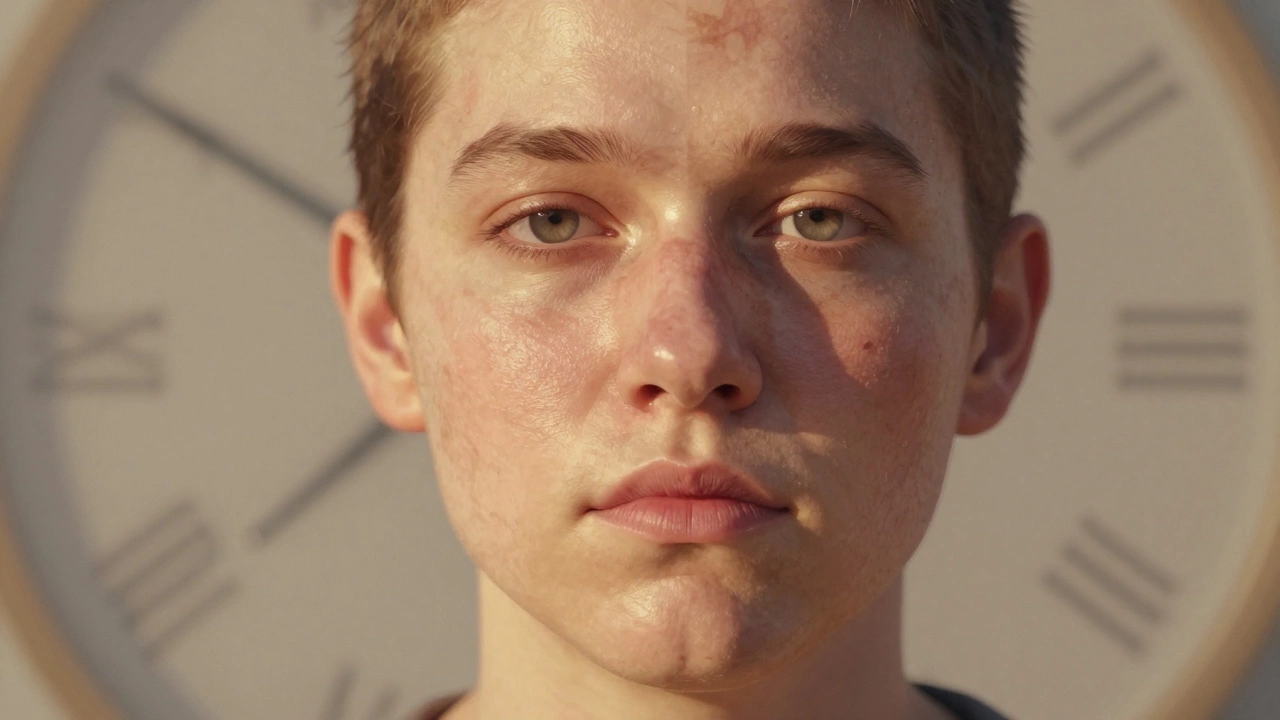
You wake up one morning and stare at your reflection like you don’t recognize yourself. Your cheeks look sunken. Dark circles have dug in like they’re here to stay. Lines around your mouth? Deeper. Your skin? Duller. You didn’t change your routine. You’re sleeping fine. You’re not stressed. So why do you suddenly look so old?
Your skin isn’t broken - it’s responding
There’s no magic switch that flips your face from youthful to aged overnight. What you’re seeing is the result of slow, silent changes that finally caught up with you. Think of it like a car. You didn’t notice the engine wearing down until one day, it just wouldn’t start. Your skin works the same way.
By your mid-to-late 30s, collagen production drops by about 1% every year. That’s not dramatic until you hit your 40s and suddenly notice your jawline isn’t as sharp. Estrogen levels decline too - especially after pregnancy, perimenopause, or even just stress. That drop affects skin thickness, hydration, and elasticity. Your skin loses its plumpness. It doesn’t bounce back like it used to.
And then there’s sun damage. You thought you were careful. You wore sunscreen in summer. But what about that commute? That lunch break outside? Those weekends in the garden? UV exposure adds up. It breaks down collagen, triggers uneven pigmentation, and thins the skin over time. You didn’t get one bad burn - you got 10 years of tiny ones.
It’s not just your skin - it’s your fat
Most people think aging is about wrinkles. It’s not. It’s about volume loss. The fat pads in your cheeks, temples, and under your eyes don’t just disappear - they shift. They drop. That’s why your smile looks different. Why your eyes look tired even when you’re not. Why your jawline seems to melt into your neck.
This isn’t weight gain or loss. It’s redistribution. Your body is moving fat from where it used to be - the upper face - to where it doesn’t help your appearance anymore - the lower face and neck. It’s a natural part of aging, but it happens faster if you’re dehydrated, not sleeping well, or eating too much sugar. Sugar binds to proteins in your skin and creates something called AGEs - advanced glycation end products. They make your skin stiff and yellowed.
Your lifestyle is talking - even if you think it’s quiet
You’re not smoking. You don’t drink much. But are you scrolling in bed at 2 a.m. with the blue light on? Are you drinking three cups of coffee a day? Are you eating takeout five nights a week because you’re too tired to cook?
Chronic stress spikes cortisol. That hormone breaks down collagen and makes your skin more sensitive to inflammation. Poor sleep? Your skin repairs itself while you sleep. No deep sleep? No repair. That’s why your skin looks worse in the morning - even if you slept “enough.”
And hydration. Not just water. Your skin needs electrolytes, healthy fats, and protein to stay plump. A diet full of processed carbs and no omega-3s? Your skin becomes brittle. It cracks. It looks dry even when you’re moisturizing.
What actually works - and what’s a waste
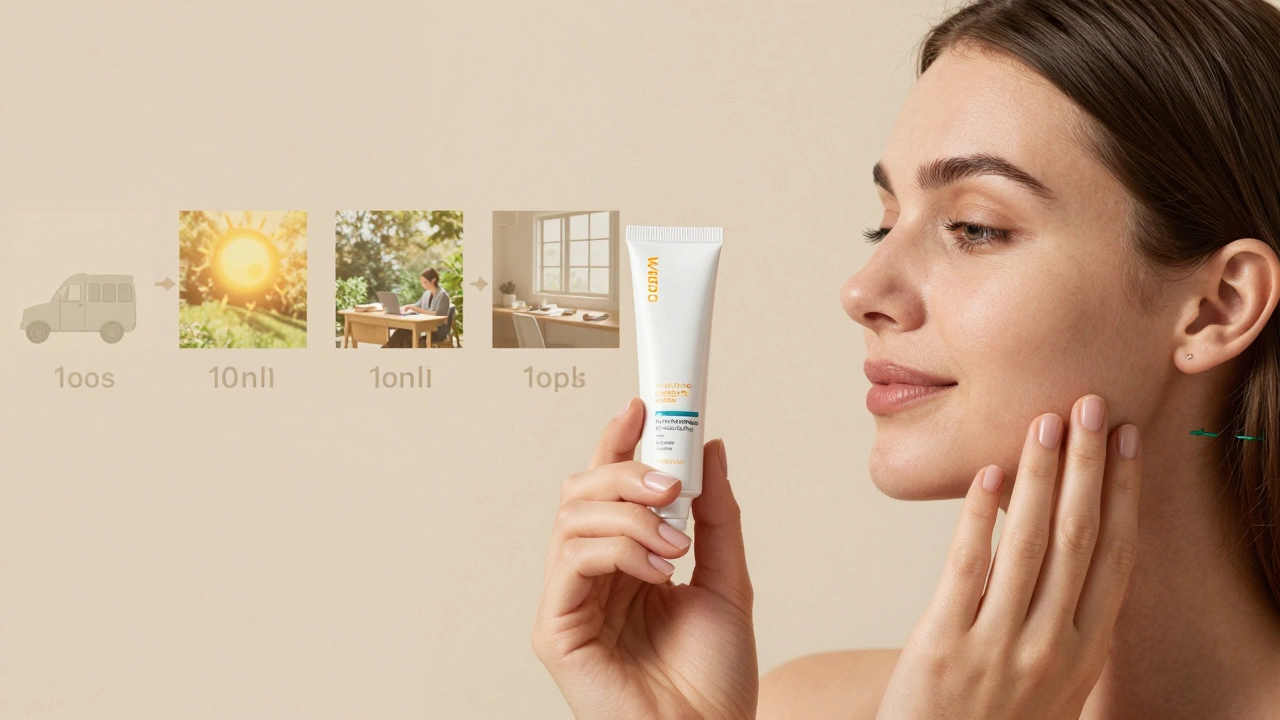
You’ve tried every serum. You’ve bought the expensive creams. You’ve read the blogs. But most of it doesn’t touch the root causes. Here’s what does:
- Retinoids - prescription or OTC. They boost collagen, thicken skin, and fade dark spots. Start with low strength. Use it three nights a week. Build up slowly. This is the most proven anti-aging ingredient out there.
- SPF 30+ every single day - even in winter. Even indoors near a window. UV rays penetrate glass. Use a mineral sunscreen with zinc oxide. Reapply if you’re outside for more than an hour.
- Hydration from the inside - drink water with a pinch of sea salt and lemon in the morning. Eat avocados, nuts, fatty fish. Your skin needs fats to stay supple.
- Professional treatments - if you’re serious, consider a hyaluronic acid filler is a non-surgical treatment that restores lost volume in the face, particularly under the eyes, cheeks, and lips. It lasts 6 to 12 months and requires minimal downtime. Or a lasers like Fraxel is a fractional laser that targets damaged skin layers to stimulate collagen and improve texture. It’s not a quick fix - you need 3 to 5 sessions - but it changes skin quality long-term.
What doesn’t work? Those $200 creams promising “miracle results.” No cream can rebuild lost fat or reverse sun damage. No serum can replace sunscreen. And no overnight mask will fix years of poor sleep.
It’s not too late - but time matters
The good news? You’re not stuck. Your skin still has the ability to heal - if you give it the right conditions. Start with two changes: daily SPF and a retinoid. That’s it. Stick with them for six months. You’ll see a difference.
Don’t wait for your face to look worse before you act. The goal isn’t to look 25 again. It’s to look like your best self - rested, healthy, and confident. That’s still possible. And it starts today.
Why do I look older than my age even though I take care of myself?
You might be doing the basics - washing your face, moisturizing, avoiding sun - but aging is layered. Genetics, hormonal shifts, past sun exposure, and even how you sleep (side-sleeping causes creases) all play a role. You’re not failing - your skin is just responding to decades of small stressors that didn’t show up until now. The key is targeting deeper causes: collagen loss, volume drop, and skin barrier damage - not just surface dryness.
Can diet really change how my skin looks?
Absolutely. Sugar accelerates aging by forming AGEs, which stiffen collagen. Processed foods lack the antioxidants and fats your skin needs to repair itself. Eating more leafy greens, wild salmon, walnuts, and berries gives your skin the tools to rebuild. One study showed people who ate a Mediterranean-style diet had significantly less skin aging over five years. It’s not magic - it’s nutrition.
Is Botox the only solution for deep lines?
No. Botox relaxes muscles that cause dynamic wrinkles - like forehead lines or crow’s feet - but it doesn’t fix sagging skin or volume loss. For deeper folds around the mouth or sunken cheeks, fillers like hyaluronic acid work better. Some people combine both. Others skip injections entirely and use radiofrequency devices or laser treatments to stimulate collagen. There’s no one-size-fits-all. The best approach depends on what’s actually changing in your skin.
How long does it take to see results from skincare?
It varies. Retinoids take 3 to 6 months to show visible collagen improvement. Sunscreen prevents future damage - you won’t see results right away, but you’ll avoid worsening. Hydration and diet changes can show up in 4 to 8 weeks - your skin may look brighter and feel smoother. But real transformation - like firmer skin or reduced fine lines - takes consistent effort over 6 to 12 months. Patience isn’t optional. It’s part of the treatment.
Should I see a dermatologist or just try over-the-counter products?
If you’re noticing sudden changes - like rapid darkening under the eyes, new lumps, or texture changes - see a dermatologist. They can rule out medical causes and prescribe stronger treatments like tretinoin, which is more effective than OTC retinol. If you’re just noticing general dullness or fine lines, start with SPF and a gentle retinoid. But if you’ve tried everything and nothing works, a professional can help you target your specific aging pattern.