
Soap vs Cosmetic Identifier
Is This Product Soap or Cosmetic?
Enter details about the product to determine its legal classification under FDA regulations.
Ask most people what soap is, and they’ll say it’s a cleaning product. But if you ask a regulator, a chemist, or a cosmetic scientist, the answer gets more complicated. Soap isn’t just a cleaning product-it’s legally not a cosmetic, even though it looks like one, feels like one, and does something similar. Why? The answer isn’t about ingredients alone. It’s about how it’s made, what it’s called, and who regulates it.
What Makes a Product a Cosmetic?
The U.S. Food and Drug Administration (FDA) defines a cosmetic as a product intended to cleanse, beautify, promote attractiveness, or alter the appearance. That includes shampoo, lotion, lipstick, deodorant, and even some facial cleansers. If you slap on a product to make your skin glow, hide a blemish, or soften your hair, it’s a cosmetic. But soap? It’s in its own category.
Here’s the key difference: cosmetics are regulated under the Federal Food, Drug, and Cosmetic Act (FDCA) as products that affect appearance. Soap, on the other hand, is regulated under the Federal Hazardous Substances Act (FHSA) as a cleaning agent. The FDA doesn’t treat soap like makeup or moisturizer. It treats it like detergent.
How Soap Is Made Changes Everything
Not all cleansers are soap. True soap is made through a chemical reaction called saponification. That’s when fats or oils-like coconut oil, olive oil, or tallow-are mixed with an alkali, usually sodium hydroxide (lye). The result? Soap molecules and glycerin. The soap molecules have one end that grabs oil and another that grabs water, letting dirt rinse away.
This process is ancient. People have been making soap this way for over 4,000 years. But if you change the method, you change the classification. Modern cleansers like body washes, shower gels, and facial foams don’t use saponification. They use synthetic surfactants-chemicals like sodium lauryl sulfate or cocamidopropyl betaine. These aren’t soap. They’re detergents. And because they’re not made from oils + lye, they are classified as cosmetics.
So here’s the rule: if a product is made by saponification and labeled only as "soap," it’s not a cosmetic. If it’s made with synthetic detergents and marketed as "cleansing lotion," "gentle facial wash," or "moisturizing body cleanser," it is.
Labeling Rules Are Strict
Even if a product is made the old-fashioned way, labeling can push it into cosmetic territory. The FDA says if you add claims like "moisturizing," "anti-aging," "exfoliating," or "nourishing skin," you’re no longer selling soap-you’re selling a cosmetic.
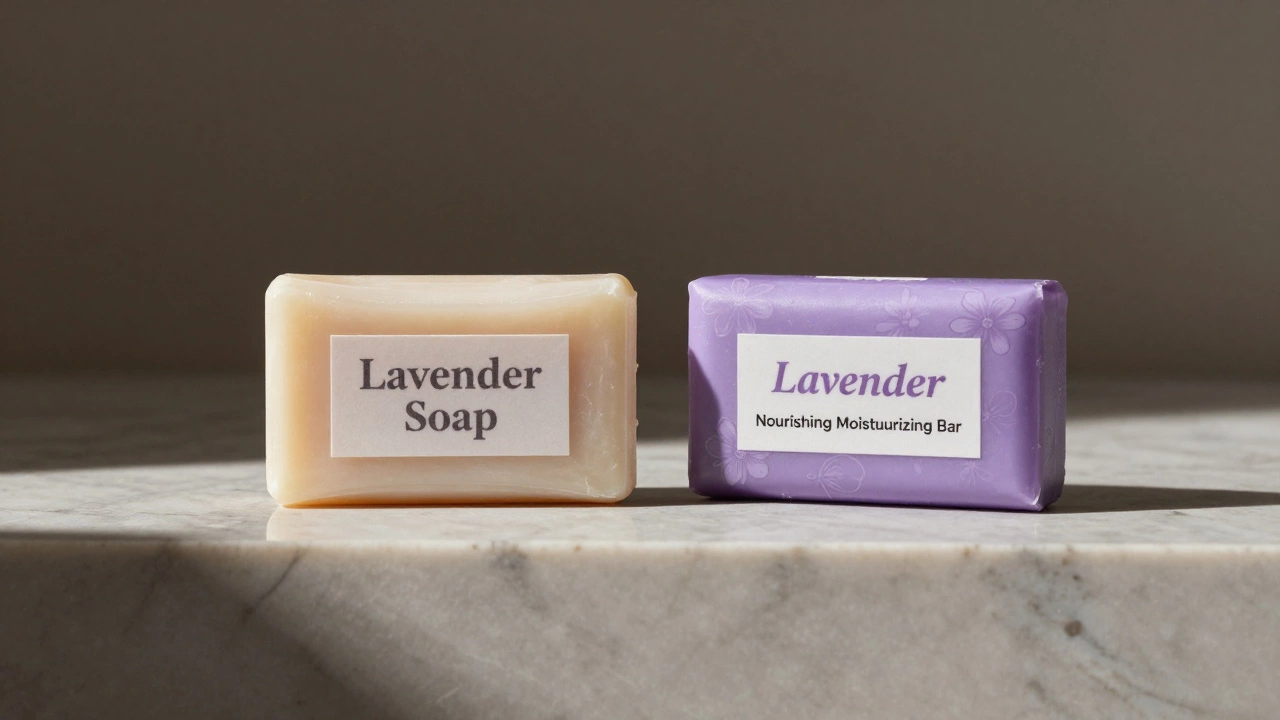
Imagine a bar labeled "Lavender Soap" with no other claims. That’s soap. Now change the label to "Lavender Nourishing Moisturizing Bar" and suddenly it’s a cosmetic. The ingredients might be identical, but the marketing changed the rules. The FDA doesn’t care what you call it in your head. They care what you say on the package.
And here’s the catch: cosmetics must be registered with the FDA’s Voluntary Cosmetic Registration Program (VCRP). Soap doesn’t. Cosmetics need warning labels if they contain certain ingredients. Soap doesn’t. Cosmetics are subject to color additive rules. Soap isn’t. The regulatory gap is real, and it’s based entirely on how the product is defined, not how well it cleans.
Why Does This Matter?
You might think this is just bureaucracy. But it affects safety, pricing, and even product availability.
For manufacturers, soap is cheaper and easier to produce. No registration fees. No ingredient restrictions beyond general safety. No need to prove efficacy. That’s why small businesses often stick to traditional soap formulas-it keeps costs low and compliance simple.
But for consumers, it means confusion. You buy a "natural soap bar" labeled "for sensitive skin" and assume it’s gentle because it’s "natural." But if it’s a true soap, its pH is alkaline-around 9 to 10. That’s higher than your skin’s natural pH of 4.5 to 5.5. Over time, that can dry out skin. A true cosmetic cleanser, made with synthetic surfactants, can be pH-balanced to match your skin. So sometimes, the "cosmetic" version is actually better for your skin, even if it’s not called soap.
And here’s another twist: some products are hybrids. A bar might be made with saponified oils but include added moisturizers like shea butter or aloe vera. The FDA says if those additives are there for more than just texture or scent-if they claim to improve skin condition-then it’s a cosmetic. That’s why you’ll see some brands avoid the word "soap" entirely and call their bars "cleansing bars" or "skin bars." They’re trying to stay in the cosmetic category without triggering the stricter soap rules.
The Global View
The U.S. isn’t alone in this distinction. The European Union treats soap similarly. In EU regulations, soap is considered a detergent, not a cosmetic, unless it makes cosmetic claims. Canada, Australia, and Japan all follow similar logic. The line is drawn at the manufacturing process and the claims made.
But in places like India or Brazil, where regulatory systems are less rigid, soap and cosmetic cleansers often blur together. That’s why you might see "herbal soap" marketed with anti-acne claims overseas-claims that would get a product pulled from shelves in the U.S. or EU.
What Should You Look For?
Here’s how to tell the difference in your own bathroom:
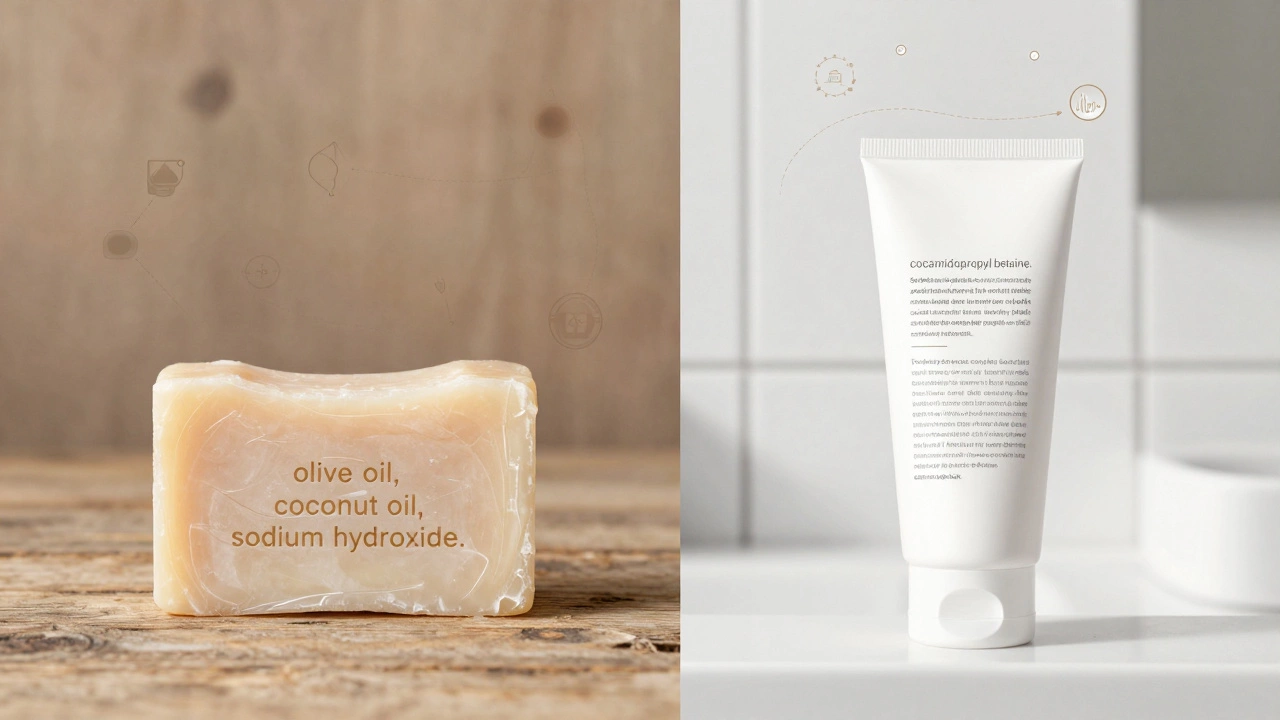
- Check the ingredient list. If it says sodium cocoate, sodium olivate, or sodium tallowate, it’s soap. Those are the salts of fatty acids from saponification.
- If it says sodium lauryl sulfate, ammonium lauryl sulfate, or cocamidopropyl hydroxysultaine, it’s a detergent-based cleanser-a cosmetic.
- Look at the marketing. Words like "hydrates," "revitalizes," "reduces wrinkles," or "balances pH" mean it’s a cosmetic, even if it looks like a bar.
- Check the label. True soap will usually say "soap" on the front. Cosmetics say "cleanser," "gel," "lotion," or "wash."
And remember: soap cleans. Cosmetics clean and claim to improve appearance. That’s the whole point.
Why This Confusion Exists
The reason soap and cosmetics get mixed up is simple: we use them the same way. We wash our hands, faces, and bodies with both. We pick them off the same shelf. We assume they work the same.
But the law doesn’t care about how we use something. It cares about how it’s made and what it says it does. A bar of soap made with olive oil and lye is fundamentally different from a gel cleanser with 12 synthetic ingredients-even if both remove dirt.
It’s like calling a bicycle and an electric scooter both "vehicles." Sure, they both get you from A to B. But one has pedals, one has a battery. The rules for each are different.
Final Thought
Soap isn’t a cosmetic because it doesn’t try to be. It’s a cleaner, pure and simple. It doesn’t promise to make you look younger, smoother, or more radiant. It just removes dirt. And in a world full of products that promise transformation, that’s actually refreshing.
Next time you pick up a bar, read the label. If it says "soap," and lists only oils and lye, you’re holding something ancient, regulated differently, and surprisingly different from everything else on the shelf.
Can soap be organic?
Yes, soap can be made with organic oils-like certified organic coconut or olive oil. But "organic soap" isn’t a regulated term like "organic food." The USDA doesn’t certify soap as organic. So if a product says "organic," it likely means the oils were grown organically, not that the soap itself meets USDA organic standards. Always check the ingredient list for certified organic oils.
Is handmade soap better for skin than commercial soap?
Not necessarily. Handmade soap often retains natural glycerin, which can be moisturizing. But it’s still alkaline, which can disrupt your skin’s pH. Commercial soap-free cleansers (cosmetics) are often pH-balanced and formulated with skin-friendly ingredients. So while handmade soap feels natural, it’s not automatically better. It depends on your skin type and what claims the product makes.
Why do some soap bars list "fragrance" instead of essential oils?
Because if a soap contains fragrance oils (synthetic scents) and is labeled as soap, it doesn’t have to disclose individual ingredients. But if it’s classified as a cosmetic, the FDA requires full ingredient disclosure. Some brands hide synthetic fragrances under "fragrance" to avoid listing them-especially if they’re trying to stay in the soap category without triggering cosmetic regulations.
Can soap be antibacterial?
True soap cannot be labeled as antibacterial. That claim turns it into a drug under FDA rules. If a product claims to kill bacteria, it must be approved as an over-the-counter drug. That’s why antibacterial body washes are sold as cosmetics with drug ingredients like triclosan or benzalkonium chloride-but soap bars with the same ingredients would be illegal unless approved as drugs.
Do I need to use soap-free cleansers if I have sensitive skin?
Often, yes. Traditional soap has a high pH (9-10), which can strip natural oils and irritate sensitive skin. Soap-free cleansers (cosmetic cleansers) are typically pH-balanced (5-7) and formulated with gentle surfactants. Many dermatologists recommend them for eczema, rosacea, or acne-prone skin. Look for products labeled "pH-balanced" or "non-soap cleanser."