

Hair Extension Longevity Calculator
Select Your Extension Type
Usage Frequency
Care Habits
Pro Tips
For keratin bonds: never sleep with wet hair. For sew-ins: remove before 12 weeks to prevent scalp damage.
How long do hair extensions usually last? It’s not a one-size-fits-all answer. The truth is, your extensions could last a few weeks or up to a year - it all depends on what kind you choose, how you care for them, and your natural hair’s health. If you’ve ever spent money on extensions only to see them fall out or tangle after a month, you’re not alone. Most people don’t realize that the installation method and daily habits make the biggest difference.
Clip-in extensions: The short-term fix
Clip-ins are the most popular choice for beginners. They’re easy to put in, easy to take out, and you can wear them only when you want. But they’re not built to last. Most clip-in sets start showing wear after 3 to 6 months of regular use. Why? Because the wefts get stretched, the clips lose tension, and the hair gets tangled from daily brushing and heat styling. If you use them once a week for special occasions, they can last over a year. But if you wear them every day, especially with heat tools, they’ll thin out faster. Heat above 180°C (350°F) damages the cuticle, making the hair brittle and prone to shedding.
Tape-in extensions: The middle ground
Tape-ins are a step up from clips. They’re glued in with double-sided adhesive strips and blend naturally with your hair. They usually last 6 to 8 weeks before needing a repositioning. That’s because your hair grows about half an inch per month, and the tape starts to pull away from the scalp. Most salons recommend a maintenance visit every 6 to 8 weeks. If you wash your hair too often - more than 3 times a week - the adhesive weakens faster. Also, using sulfate shampoos will break down the tape. Stick to sulfate-free formulas and avoid applying conditioner directly to the tape tracks. With good care, a good set of tape-ins can last up to 6 months if you get them redone twice.
Sew-in extensions: Long-lasting but high maintenance
Sew-ins, also called weaves, involve braiding your natural hair into tight cornrows and stitching the extension hair onto the braids. This method is durable. A sew-in can last 6 to 12 weeks, depending on how fast your hair grows and how well you protect it at night. But here’s the catch: if you leave it in longer than 12 weeks, you risk breakage, traction alopecia, and scalp irritation. The weight of the extensions pulls on your roots, especially if you have fine or fragile hair. You also need to wash carefully - too much moisture under the weave can cause mold or odor. Use a spray bottle with diluted shampoo and gently cleanse your scalp. Most women who get sew-ins replace them every 8 weeks to keep their edges healthy.
Keratin bond extensions: The premium option
Keratin bonds (also called fusion extensions) are the most expensive but also the longest-lasting. Small strands of extension hair are attached to your natural hair with a heated keratin tip. When done right, they last 3 to 5 months. The key word here is “done right.” If the bonds are placed too close to the scalp, they’ll show as your hair grows. If they’re too loose, they fall out. A good technician will space them out evenly and use the right amount of heat - too much heat melts the keratin and ruins the bond. You’ll need to avoid oil-based products near the bonds, as they loosen the glue. Also, don’t sleep with wet hair. Moisture trapped around the bonds can cause them to slip. With proper care, a single set of keratin bonds can last up to 5 months before needing a touch-up.
How your lifestyle affects longevity
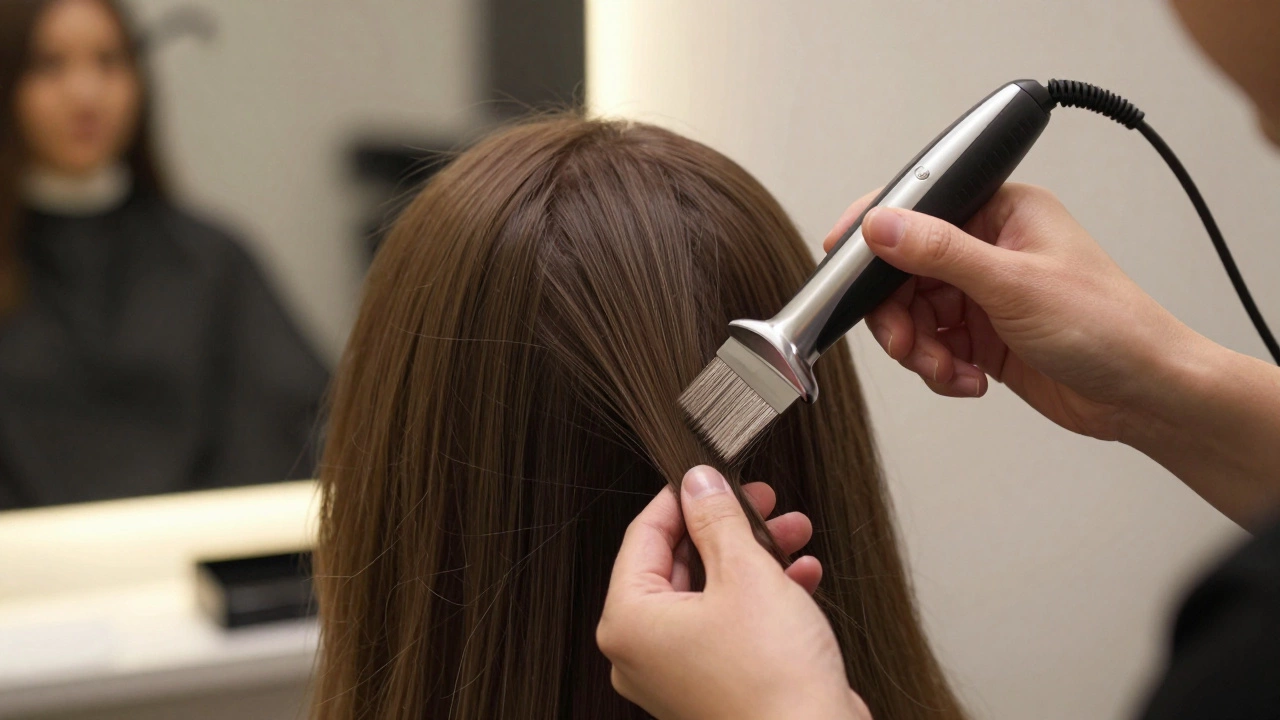
Even the best extensions won’t last if your routine is rough. Swimming in chlorinated or saltwater? Rinse your hair immediately after. Salt and chlorine dry out the hair and weaken bonds. Working out daily? Tie your hair up in a loose bun before sweating - sweat and salt buildup break down adhesives. Using heat tools every day? Lower the temperature and always use a heat protectant. Extensions don’t get nourished from your scalp like natural hair, so they dry out faster. Use a leave-in conditioner twice a week, and avoid brushing them when dry - always detangle from the ends upward with a wide-tooth comb.
Signs it’s time to replace your extensions
Don’t wait until they’re falling out. Watch for these red flags:
- Visible scalp showing through the wefts or bonds
- Excessive tangling that won’t brush out
- Shedding more than 5-10 strands per day
- Extensions look dull, frizzy, or overly processed
- Scalp itching or redness around the attachment points
If you notice any of these, it’s time for a removal and new set. Keeping damaged extensions in too long can damage your natural hair. That’s worse than spending money on a replacement.
Can you extend the life of your extensions?
Yes - but only if you treat them like real hair. Wash them less often. Use silk or satin pillowcases to reduce friction. Store clip-ins in a protective bag when not in use. Never use regular hairbrushes - they tear through extension hair. Use a brush designed for extensions, like a Tangle Teezer or Denman brush. Deep condition every 10-14 days. Avoid heavy styling products like gels or sprays that build up on the bonds. And always get them removed by a professional. DIY removal can yank out your own hair.

What about human vs synthetic hair?
Most professional-grade extensions are made from human hair - usually Remy or virgin hair. These last longer and can be heat-styled. Synthetic extensions are cheaper but don’t last as long. They start to look plastic after 1-2 months, especially with heat. They can’t be colored or washed with hot water. If you’re looking for longevity, go with human hair. Synthetic is fine for occasional use, like costumes or festivals, but not for daily wear.
How much should you budget annually?
Let’s say you get tape-ins every 8 weeks. That’s about 6 sets a year. At $200 per set, you’re spending $1,200 annually. Keratin bonds last longer but cost $500-$800 per installation, and you’ll need 2-3 per year. That’s $1,000-$2,400. Clip-ins are cheaper upfront - $50-$150 - but you’ll replace them every 6-12 months. So over a year, you’re still spending $100-$300. The cheapest option isn’t always the most cost-effective. Investing in quality human hair and proper care saves you money long-term.
What’s the longest anyone’s kept extensions?
Some clients with very slow hair growth and perfect care have kept keratin bonds for 7 months. But that’s rare. Most stylists won’t recommend going beyond 5 months because of the risk to your natural hair. Even if the extensions still look good, your scalp needs a break. Healthy hair growth is the real goal - extensions should enhance, not harm.
Do hair extensions damage your natural hair?
They can, if they’re installed poorly or left in too long. Tight braids, heavy bonds, and constant tension can cause traction alopecia - permanent hair loss around the hairline. The key is professional installation, regular maintenance, and giving your scalp breaks between sets. Never wear extensions for more than 12 weeks straight without removing them.
Can I wash my hair with extensions every day?
You can, but you shouldn’t. Washing daily strips moisture and weakens adhesives. For tape-ins and keratin bonds, aim for 2-3 times a week. Use lukewarm water, gentle shampoo, and avoid scrubbing near the bonds. Always rinse thoroughly and pat dry - never rub with a towel.
Which type of extension lasts the longest?
Keratin bond extensions last the longest - typically 3 to 5 months. They’re bonded directly to your hair strands, so they move naturally and aren’t held by clips or tape that can fail. Sew-ins can also last up to 12 weeks, but they require more upkeep. Clip-ins are the shortest-lived because they’re removed daily and exposed to more friction.
Can I color my hair extensions?
Only if they’re made from 100% human hair and haven’t been processed before. Most extensions are already colored, so adding more color can cause uneven results. If you want to change the shade, consult a professional. Never bleach extensions - it destroys the cuticle and makes them brittle. Tinting with semi-permanent color is safer.
Why do my extensions tangle so fast?
Tangling happens when the cuticle layer is damaged or when hair isn’t detangled properly. Always brush extensions from the ends upward, starting with a wide-tooth comb. Use a leave-in conditioner or detangling spray. Avoid sleeping with wet extensions. Also, cheap synthetic hair tangles more easily than human hair because the cuticle is stripped or artificial.