
Haircut Tip Calculator
Recommended Tip
Tipping Breakdown
| Scenario | Percentage | Tip Amount |
|---|---|---|
| Minimum Standard | 15% | $2.25 |
| Good Service | 20% | $3.00 |
| Generous / Excellent | 25%+ | $3.75+ |
Picture this: You walk out of the shop looking sharp. The cut is clean, the fade is crisp, and you’re ready to face the world. But then comes the moment that makes your stomach drop. The total on the receipt is $20. You have two twenties in your wallet. Do you hand over one bill and hope the extra $5 covers everything? Or do you dig deeper into your pockets?
This isn’t just about math. It’s about social contracts, respect, and the unwritten rules of service industries. Specifically, we need to answer the burning question: Is $5 a good tip for a $15 haircut? The short answer? It depends on where you are, who cut your hair, and what else happened during those twenty minutes.
The Golden Rule of Tipping
In most Western countries, particularly the United States, the baseline expectation for personal care services like haircuts is between 15% and 20%. This range exists because barbers and stylists often don’t keep the full price of the service. In many shops, they pay a "rent" or a percentage of their earnings to the salon owner. Your tip goes directly to them.
If you apply the standard 20% rule to a $15 haircut, the calculation is simple:
- 10% of $15 = $1.50
- 20% of $15 = $3.00
So, strictly speaking, a $5 tip is actually above the standard 20% rate. It represents roughly a 33% tip. If the service was decent, $5 is not just "good"-it’s generous. However, money isn't the only variable here. Context changes everything.
When $5 Is a Perfect Tip
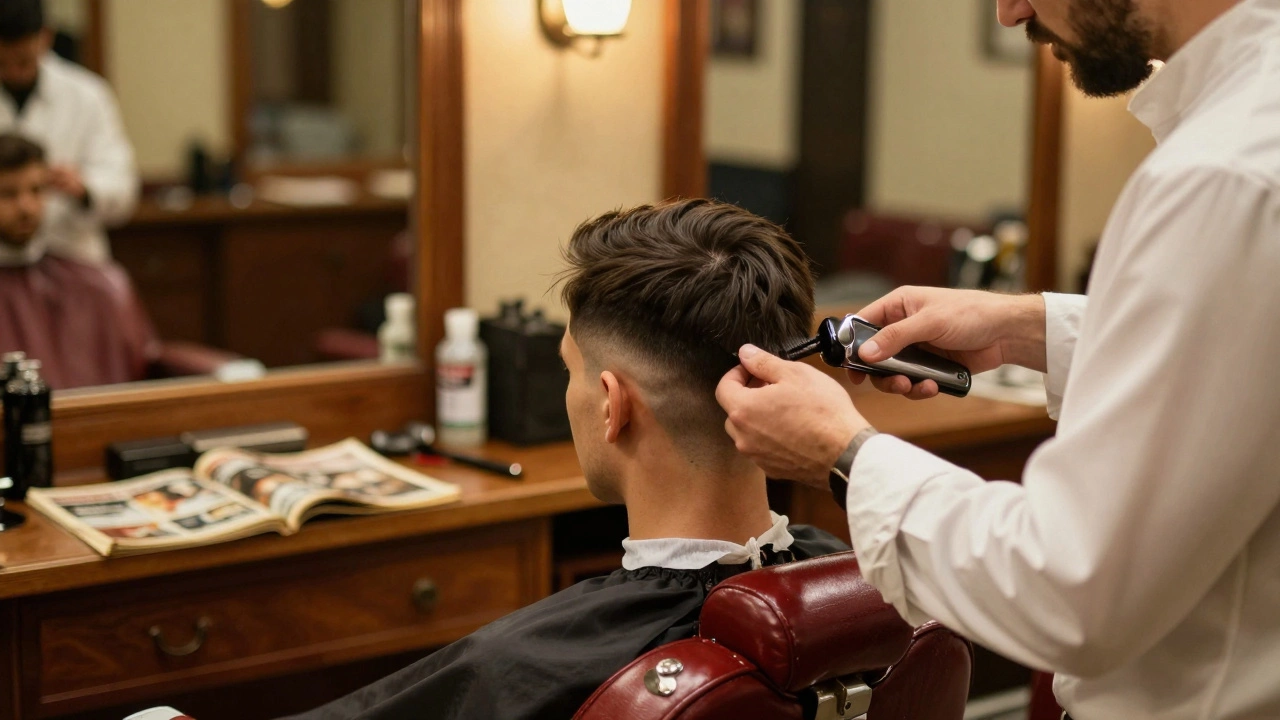
There are specific scenarios where handing over a five-dollar bill is exactly right. Think about a quick, no-frills trim at a local neighborhood barbershop. Maybe it’s a place with vinyl chairs and old magazines. The barber knows you by name, he gives you a straight razor shave, and he’s efficient. He doesn’t try to upsell you on expensive products. He just does his job well.
In this case, $5 signals appreciation without being excessive. It says, "I value your time and skill." It also respects the low cost of the service. If the haircut was cheap because it’s a community-focused business or a student-run clinic, a massive tip might even feel awkward. $5 strikes a balance between gratitude and realism.
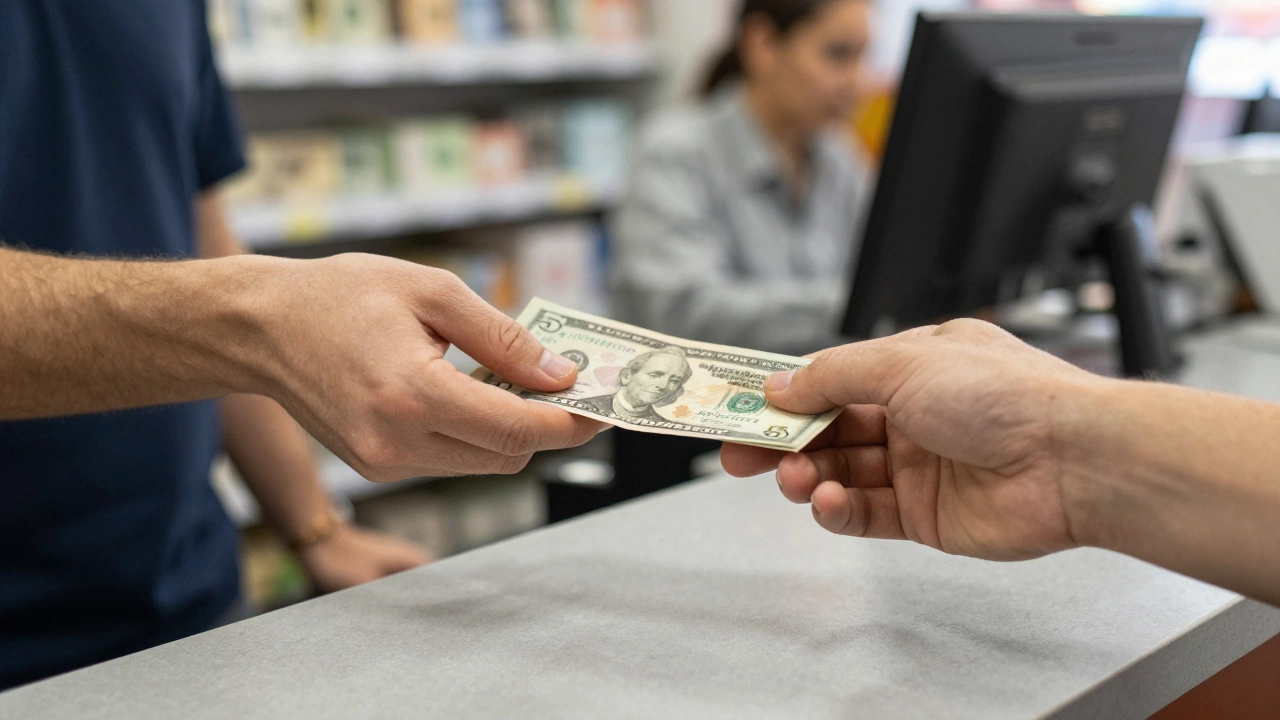
Also, consider the convenience factor. If you’re paying cash, having a few small bills handy is crucial. Many people forget that barbers rarely carry change for large bills. If you hand over a $20 bill for a $15 cut, you’re expecting $15 back plus a tip. If you only have a $20, you’re essentially forced to tip $5 unless you want to look petty asking for exact change. In that light, $5 becomes the practical default.
When $5 Might Fall Short
Now, let’s flip the script. Imagine you went to a high-end salon in a major city. The stylist spent forty-five minutes washing, cutting, blow-drying, and styling your hair. They used premium products and gave you a consultation on home care. Even if the base price was discounted to $15 (perhaps due to a first-time customer promo), the effort involved was high.
In luxury settings, the culture of tipping shifts slightly. While percentages still matter, the absolute dollar amount can signal status. A $5 tip on a $15 bill might be seen as "low effort" by some high-end professionals who are accustomed to larger gratuities from clients spending $100+. Here, rounding up to $10 or adding an extra token might be more appropriate to match the vibe of the establishment.
Additionally, if the stylist provided exceptional service-saving a bad haircut, dealing with difficult hair textures, or offering emotional support while you talked through life problems-the monetary value of the interaction exceeds the ticket price. In these moments, $5 feels transactional rather than relational. You might want to add another bill to acknowledge the extra care.

The Psychology Behind the Bill
Why do we stress over tips? Because tipping is a performance of character. We worry about being perceived as cheap or rude. But here’s a secret: Most barbers and stylists prefer consistency over generosity. They’d rather have a client who always tips 20% reliably than someone who tips 50% once and then disappears for six months.
Let’s look at the numbers again. If you get a haircut every month: - At 20% ($3 tip): $36/year - At 33% ($5 tip): $60/year
That’s a difference of $24 a year. For many freelancers, that extra $24 helps cover gas, tools, or continuing education. So, while $5 isn’t mandatory, it builds goodwill. It creates a relationship where the barber remembers your preferences and prioritizes your appointment when the shop is busy.
Interestingly, studies on consumer behavior suggest that people tip higher when they feel a personal connection. If your barber asks about your kids or your weekend plans, you’re likely to tip more. It’s not just about the hair; it’s about the human interaction. If the interaction was cold or rushed, $5 might feel like too much. If it was warm and engaging, $5 feels like a thank-you note in cash form.
Cultural Differences and Global Norms
Tipping norms vary wildly around the world. If you’re traveling, assuming the US standard can lead to embarrassment or confusion. In the UK, Australia, and parts of Europe, tipping is less rigid. Service charges are often included, or tips are smaller tokens of appreciation (rounding up to the nearest pound or euro). In Japan, tipping can actually be considered rude, as excellent service is expected as part of the job. However, since the question specifies dollars ($), we’re likely operating in a US-centric context. In the US, the service industry relies heavily on tips to make a living wage. Unlike some European models where servers and stylists receive a high base salary, American workers often depend on gratuities to bridge the gap between minimum wage and a livable income.
This economic reality reinforces the importance of the 15-20% floor. Below that, you’re not just saving money; you’re potentially undermining their ability to pay rent. Above that, you’re rewarding excellence. $5 sits comfortably in the "rewarding" zone for a $15 service.
Practical Tips for the Awkward Moment
To avoid the mental gymnastics of calculating percentages in your head, here are some easy heuristics:
- The Round-Up Method: For cuts under $20, round up to the nearest convenient number. If it’s $15, $20 total is a nice gesture. If it’s $18, $20 is fair.
- The Cash Carry: Always keep a few $5 and $10 bills in your wallet specifically for services. It removes the friction of waiting for change.
- The Card Swipe: When tipping via credit card, the machine usually suggests 15%, 20%, and 25%. Don’t hesitate to select 20% as your default. It’s the safest bet for maintaining good relations.
- The Frequency Factor: If you see this person weekly, a consistent $5 is better than a sporadic $10. Consistency builds trust.
And remember, if you’re unsure, you can always ask. A simple, "What’s the usual tip here?" shows respect and curiosity. Most professionals will appreciate the honesty.
Speaking of navigating different types of service directories and understanding local norms, whether you're looking for a reliable barber in your neighborhood or checking out specialized listings like those found on this directory, knowing the local customs is key to a smooth experience. Just as you wouldn't assume every salon operates the same way, different services have different expectations regarding privacy, booking, and compensation.
Conclusion: What Should You Do?
So, is $5 a good tip for a $15 haircut? Yes. It’s above average, respectful, and financially sensible. It acknowledges the work done without breaking the bank. If the service was mediocre, stick to $3 (20%). If it was fantastic, $5 is perfect. If it was life-changing, maybe throw in a tenner.
Ultimately, tipping is a conversation without words. It tells the provider how you felt about the experience. By choosing $5, you’re saying, "I enjoyed this, I value your craft, and I’ll be back." And in the world of beauty and grooming, repeat customers are the best currency of all.
Is it rude to tip only $5 for a $15 haircut?
No, it is not rude. A $5 tip on a $15 haircut is approximately 33%, which is significantly higher than the standard 15-20% expectation. It demonstrates appreciation for the service.
Should I tip more if the stylist uses expensive products?
If the products were included in the $15 price, the tip should remain based on the service quality. If you purchased additional products separately, tipping on the service fee alone is standard practice.
What if I only have a $20 bill?
Hand over the $20 and say "Keep the change." This results in a $5 tip. It is a common and accepted practice, especially in cash-only shops where making change for large bills can be difficult.
Does tipping differ for barbers vs. salons?
The percentage remains similar (15-20%), but the culture may vary. Barbershops often have a more casual, regular-client dynamic, while salons may involve longer appointments and multiple staff members (washers, colorists), requiring split tips.
Is it okay to tip in cash instead of on the card?
Yes, many stylists prefer cash tips because they receive them immediately and don't have to wait for the salon owner to distribute tips from card transactions. It ensures the full amount goes directly to the worker.