
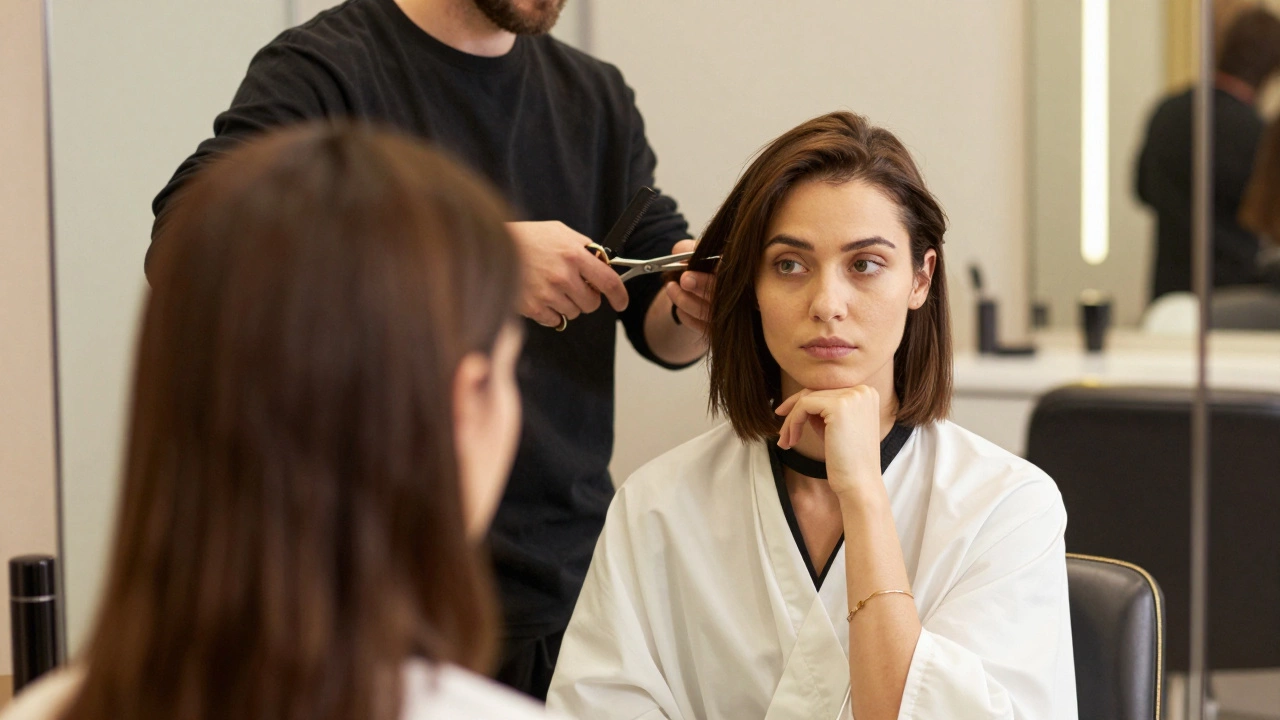
Salon Tip Calculator (US Etiquette)
You sit in the chair. The hairdresser spends an hour cutting, coloring, or styling your hair. You look in the mirror, you’re happy with the result, and then comes the moment that makes everyone’s stomach drop: payment. Do you hand over the exact amount on the invoice, or do you add extra cash? The question isn’t just about money; it’s about social norms, respect, and whether you are being rude by not tipping.
The short answer depends entirely on where you are standing. If you are in the United States, not tipping is widely considered rude and can even impact your relationship with the stylist. If you are in the United Kingdom, Australia, or most of Europe, tipping is optional and often seen as a bonus for exceptional service rather than a mandatory fee. Understanding this difference saves you from awkward moments and ensures your hair professional is treated fairly.
Why Tipping Exists in the Beauty Industry
To understand why people argue about tipping, we need to look at how beauty professionals get paid. In many countries, particularly the US, salons operate on a commission-based model. A stylist might keep only 40% to 60% of the price you pay for a haircut. The rest goes to the salon owner for rent, utilities, and supplies. Because their base wage is often low (sometimes close to minimum wage), tips make up a significant portion of their income-often 30% to 50% of their total earnings.
In contrast, in the UK and many other parts of Europe, hairdressers are usually salaried employees or self-employed contractors who charge higher upfront prices to cover their costs. Their hourly rate reflects their skill level directly. When you pay £40 for a cut in Brighton, that £40 covers the stylist’s time, the product cost, and the salon overhead. There is no hidden expectation that you will top up their salary.
This structural difference changes the definition of "rude." In a system where tips are essential for survival, withholding them feels like theft. In a system where prices are all-inclusive, withholding a tip is simply choosing not to give a bonus.
The United States Rule: Tips Are Expected
If you are visiting a salon in the US, the social contract is clear. Tipping is not optional; it is part of the service cost. Here is the standard breakdown that most Americans follow:
- Haircuts: 15% to 20% of the total bill.
- Coloring and Chemical Services: 20% is standard because these services take longer and require more expertise.
- Blowouts and Styling: 15% to 20%.
- Barbers: $5 to $10 or 20%, depending on the shop’s prestige.
What happens if you don’t tip? Most stylists won’t say anything in the moment. They are trained to maintain professionalism regardless of the client’s behavior. However, word travels fast in small communities. A stylist may remember clients who consistently under-tip. You might find yourself assigned to a junior stylist next time, or you might notice the vibe changing. In extreme cases, some high-end salons have policies where they refuse service to clients with a history of zero-tipping, though this is rare.
It is also worth noting that online booking platforms in the US often include a tipping prompt. This digital nudge reinforces the expectation. If you skip it, you are consciously opting out of the norm.
The United Kingdom and Europe: Tips Are Bonuses
Living in Brighton, I see this dynamic play out daily. In the UK, service charges are rarely included in beauty bills unless you are dining at a restaurant. For a haircut, the price quoted is the price you pay. If you love your stylist and want to show appreciation, leaving 10% is generous and appreciated. Leaving nothing is perfectly normal and not considered rude.
However, there are exceptions. During the holiday season, it has become more common for British clients to leave a small cash gift or a larger tip for their regular stylist. It’s a way of saying "thank you for looking after me all year." Similarly, if a stylist goes above and beyond-perhaps staying late to fix a disaster from another salon or providing exceptional customer care-a tip is a nice gesture.
In continental Europe, such as France or Germany, tipping is similarly casual. Rounding up to the nearest euro or leaving a few coins is sufficient. The focus is on the quality of the service, not the transactional obligation.
When Is It Actually Okay Not to Tip?
Even in tipping-heavy cultures like the US, there are scenarios where withholding a tip is justified. Service industry experts agree that tips reward good service. If the service was poor, you are not obligated to tip. Consider these situations:
- Lateness: If the stylist is significantly late without warning, it disrupts your schedule. A reduced tip (e.g., 10% instead of 20%) acknowledges the work done but penalizes the lack of punctuality.
- Poor Communication: If you asked for a specific length or color and the stylist ignored your instructions, the result is flawed. Discuss the issue before paying. You might pay the full price for the labor but tip less because the outcome wasn’t what you ordered.
- Rudeness: If the staff is dismissive, unhygienic, or disrespectful, you owe them nothing. In fact, you should provide feedback to the salon manager.
The key here is communication. Don’t just leave without tipping and hope they guess why. Say, "I’m not happy with how long this took," or "This isn’t what I asked for." This gives the stylist a chance to correct the mistake. If they fix it, you can adjust your tip accordingly.
How Much Should You Tip? A Practical Guide
Calculating percentages in your head while holding a credit card can be stressful. Here is a quick cheat sheet for different service types in a typical US salon setting:
| Service Type | Standard Tip | Exceptional Service | Poor Service |
|---|---|---|---|
| Basic Haircut | 15-20% | 25% | 0-10% |
| Color/Balayage | 20% | 25-30% | 0-10% |
| Blowout/Styling | 15-20% | 25% | 0-10% |
| Nail Technician | 15-20% | 25% | 0-10% |
If multiple people worked on you-for example, one person washed and blew out your hair, and another did the color-you should tip both. Usually, the colorist gets the larger percentage (20%) because they did the complex work, and the assistant/shampoo station gets a smaller tip ($5-$10 or 10%).

Digital Payments and the Loss of Cash Tips
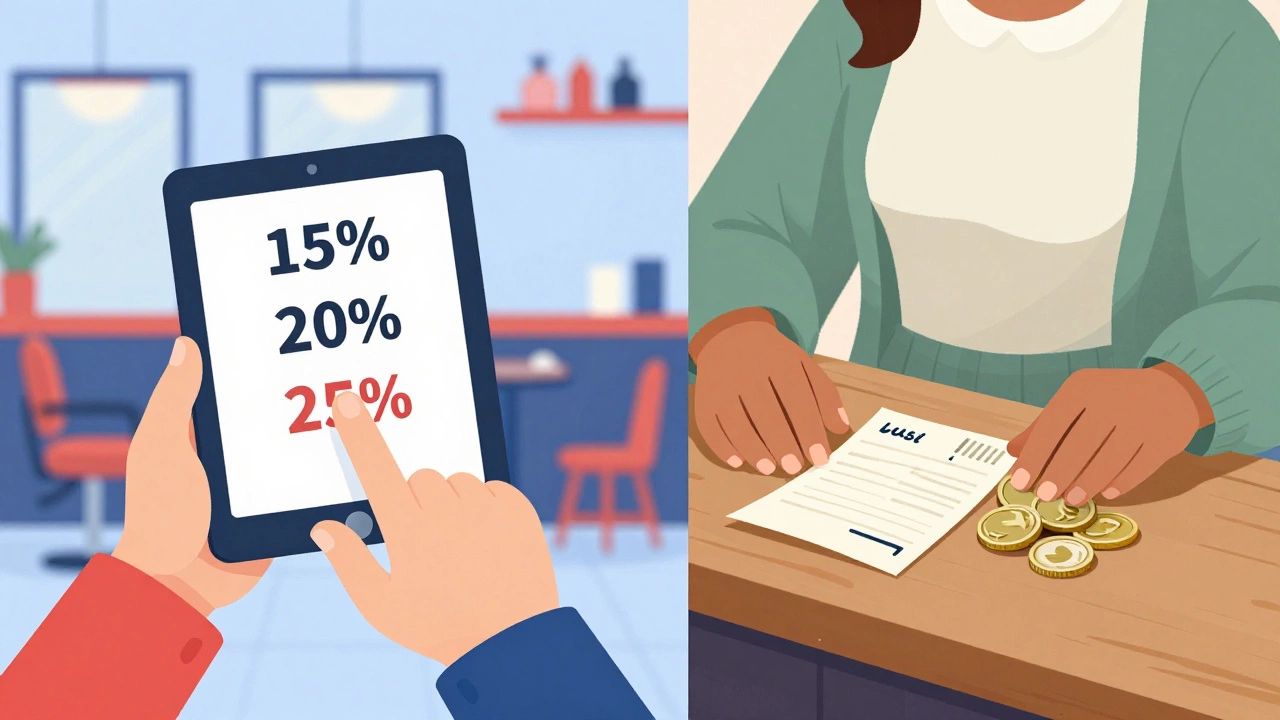
A major shift in 2025 and 2026 is the move toward contactless payments. Many salons now use apps like Square or Toast where you sign on a tablet. These systems often have pre-set tip buttons: 15%, 20%, 25%. This makes tipping easier but also creates "tip fatigue." People feel pressured to hit the highest button even if the service was average.
Some clients prefer to write a custom amount. If you are using a card, you can always type in a specific number. Don’t let the preset buttons dictate your generosity. If the service was great, 20% is fair. If it was mediocre, 15% is acceptable. You are not required to tip 25% just because the button is there.
Cash tips are still king in some traditional shops. If you have cash, handing it directly to the stylist ensures they receive the full amount immediately. Some salons deduct fees from card tips, though this is becoming less common due to regulations. Cash is instant and guaranteed.
Alternatives to Monetary Tipping
If you are short on cash or simply prefer not to tip, there are other ways to show appreciation that are highly valued by hairdressers:
- Book Regularly: Consistency helps stylists manage their schedules and income. Being a reliable client is worth more than a one-off large tip.
- Leave Reviews: A glowing review on Google, Yelp, or Instagram helps the salon attract new clients. Tag your stylist and mention them by name.
- Refer Friends: Word-of-mouth referrals are the best marketing tool for a salon. Bringing in a new client is a huge favor.
- Be Punctual and Flexible: Showing up on time and being flexible with last-minute openings shows respect for their time.
These actions build a relationship. A stylist who knows you are a loyal, respectful client will often go the extra mile for you, regardless of the tip size.
Conclusion: Respect Over Rules
Ultimately, whether it is rude to not tip depends on local customs and the quality of service. In the US, tipping is a cultural expectation tied to the economic structure of the industry. Not tipping there sends a negative message. In the UK and Europe, tipping is a voluntary expression of gratitude.
The best approach is to educate yourself before you visit. Check the salon’s website or ask when booking. If you are unsure, a small tip is never rejected. But remember, kindness, punctuality, and clear communication are just as important as the money you leave on the counter. Treat your hairdresser with respect, and they will treat your hair with care.
Is it rude to not tip a hairdresser in the UK?
No, it is not considered rude in the UK. Tipping is optional and viewed as a bonus for exceptional service. The price you pay usually covers the stylist's wages and the salon's overhead. However, leaving 10% or rounding up is appreciated if you are very happy with the result.
What percentage should I tip my hairdresser in the US?
The standard tip in the US is 15% to 20% of the total service cost. For complex services like coloring or balayage, 20% is the expected norm. If the service was exceptional, you might tip 25% or more.
Should I tip if I'm unhappy with my haircut?
If the service was poor, you are not obligated to tip. However, it is best to speak to the stylist or manager before paying to explain your dissatisfaction. They may offer to fix the cut. If they do not resolve the issue, you can choose to tip less or not at all.
Do I need to tip the shampoo assistant separately?
Yes, in the US, it is customary to tip the shampoo assistant or receptionist who helped you. A standard tip is $5 to $10, or 10% of the total bill. This acknowledges their contribution to your experience.
Is it better to tip in cash or on the card?
Cash is often preferred because the stylist receives it immediately and avoids any potential processing fees deducted by the salon. However, tipping on the card is convenient and widely accepted. Both methods are polite as long as the tip is given.