
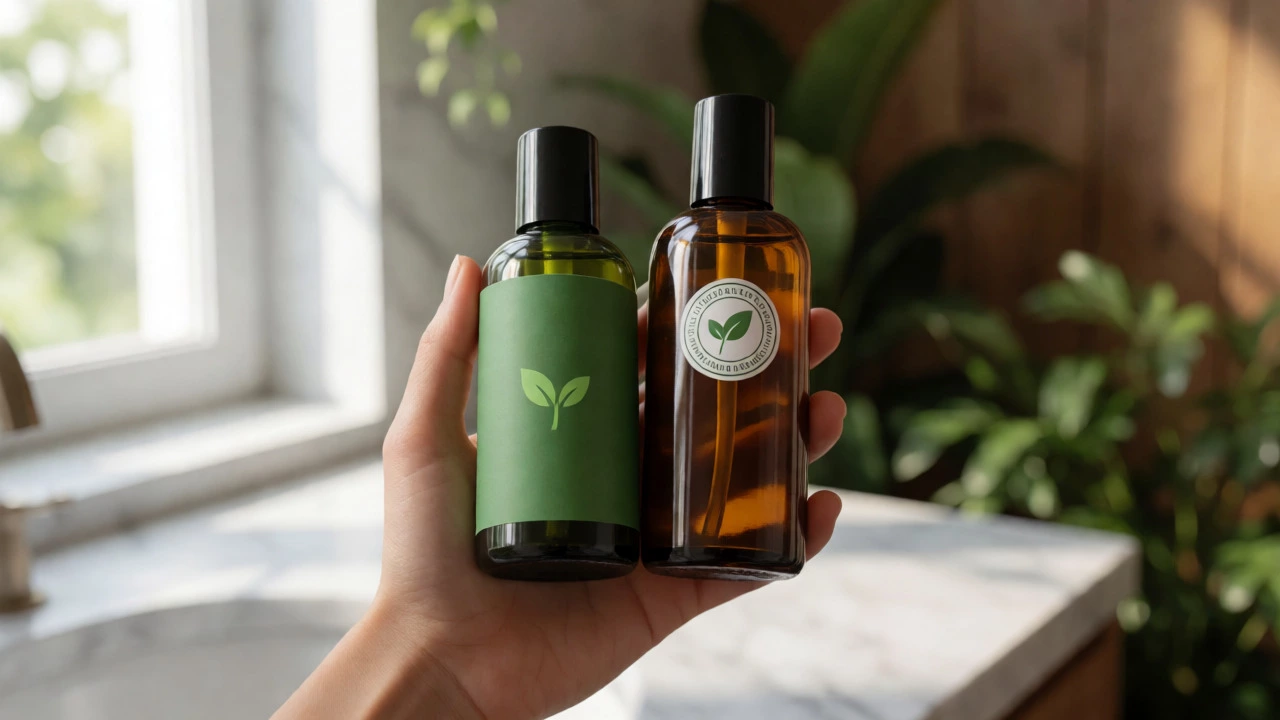
Skincare Label Decoder
Confused by "All-Natural" vs. "Certified Organic"? Use this tool to decode the label. Enter a few details about the product you are looking at to see if it's truly organic or just cleverly marketed.
Select options on the left and click "Decode Label" to analyze your skincare product.
You’re standing in the aisle, holding two bottles of face cream. One says "All-Natural," the other says "Certified Organic." They look similar, cost about the same, and promise glowing skin. But are they actually doing the same thing? If you’ve ever felt confused by these terms, you’re not alone. The truth is, there is a massive gap between them, and understanding it can save your wallet-and your skin.
Here’s the quick reality check: "Natural" means ingredients come from nature. It doesn’t guarantee safety, purity, or how those ingredients were grown. "Organic" means the ingredients were grown without synthetic pesticides, fertilizers, or GMOs, and usually requires third-party certification. Think of it this way: all organic ingredients are natural, but not all natural ingredients are organic. A wildflower picked from a roadside contaminated with car exhaust is natural. That same flower grown on a certified organic farm is organic. See the difference?
The Wild West of "Natural" Claims
Let’s be honest: the word "natural" has been hijacked by marketing teams. In many countries, including the US and parts of Europe, there is no strict legal definition for "natural" in cosmetics. This loophole allows brands to slap the label on products that contain mostly water, synthetic preservatives, and just a sprinkle of plant extract.
Imagine buying a product labeled "100% Natural Coconut Oil." If it’s refined using chemical solvents like hexane, stripped of its scent, and bleached, is it still truly natural? Technically, yes, because it came from a coconut. But it lacks the nutrients of cold-pressed, unrefined oil. When you buy natural skincare, you’re often paying for a vibe, not a verified standard. You might get parabens, sulfates, or synthetic fragrances hiding behind that green leaf logo.
Why "Organic" Has Teeth
Organic skincare plays by different rules. To call a product "organic," it usually needs certification from bodies like USDA (United States), COSMOS (Europe), or Soil Association (UK). These organizations don’t just guess; they audit supply chains.
For a product to be labeled "Certified Organic," at least 95% of its agricultural ingredients must be organically produced. If it says "Made with Organic Ingredients," that number drops to 70%. This isn’t just about farming methods; it’s about what’s not in the bottle. No synthetic pesticides. No sewage sludge. No irradiation. No genetic engineering. This rigorous testing means organic products generally have fewer hidden irritants and higher concentrations of active botanical compounds.
| Feature | Natural Skincare | Organic Skincare |
|---|---|---|
| Source | Derived from plants, minerals, or animals. | Grown without synthetic chemicals or GMOs. |
| Regulation | Loose or non-existent definitions. | Strict third-party certification required. |
| Synthetic Additives | Can include preservatives and fragrances. | Limited to approved mild preservatives. |
| Pesticides | May contain residue from conventional farming. | Grown without synthetic pesticide use. |
| Price Point | Variable; often cheaper due to scale. | Higher due to farming costs and certification. |
Decoding the Labels Like a Pro
Don’t trust the front of the bottle. Flip it over. The ingredient list (INCI names) tells the real story. Here’s a simple heuristic: if the first five ingredients are water, glycerin, and synthetic emulsifiers, the "organic" claim might be limited to a tiny percentage of the formula.
Look for specific seals. In the UK, the Soil Association logo is gold standard. In the EU, look for COSMOS Organic. In the US, the USDA Organic seal is key. If a brand claims to be organic but has no seal, ask why. Often, they’re using organic ingredients but processing them with synthetic methods, or they haven’t paid for the expensive certification process. That doesn’t make them bad, but it makes their claim less verifiable.

Does Organic Actually Work Better?
This is where science meets skepticism. Do organic ingredients penetrate better? Not necessarily. A molecule is a molecule. However, organic plants often produce more antioxidants as a defense mechanism against pests since they aren’t sprayed with chemicals. Studies suggest that organically grown crops can have up to 69% higher levels of certain antioxidants compared to conventionally grown ones. More antioxidants mean potentially better protection against free radicals for your skin.
But here’s the catch: concentration matters more than origin. A high-quality synthetic hyaluronic acid might outperform a low-concentration organic aloe vera gel. Don’t discard effective lab-created ingredients just because they aren’t farmed. The best routine often mixes both: organic oils for nourishment and scientifically proven synthetics for targeted treatment.
The Cost Factor: Why Is Organic So Expensive?
You’ll notice organic creams cost more. Why? Farming without chemicals is labor-intensive. Weeding is done by hand or mechanical tools, not herbicides. Yields are lower. Then add the cost of certification audits, which can run thousands of dollars per year per facility. Finally, organic products often use shorter shelf-life preservation systems, leading to higher waste rates for retailers.
Are you paying for quality or just branding? Sometimes, it’s both. But often, you’re paying for a cleaner supply chain. If budget is tight, prioritize organic status for leave-on products like serums and moisturizers that stay on your skin all day. For rinse-off cleansers, the benefit of organic sourcing is minimal since you wash most of it away.

Sensitive Skin and Irritation Risks
If you have sensitive skin, eczema, or rosacea, the distinction becomes critical. "Natural" fragrances can be potent allergens. Lavender oil is natural, but it contains linalool and limonene, known sensitizers for many people. Synthetic fragrance is also a common irritant, but at least it’s consistent. Organic certifications restrict many of these volatile essential oils, favoring gentler extracts.
However, "organic" does not equal "non-allergenic." Poison ivy is organic. If you’re allergic to nuts, an organic almond oil serum will still trigger a reaction. Always patch test new products, regardless of their label. The main advantage for sensitive skin is the absence of harsh synthetic detergents and heavy metals that sometimes contaminate conventional crops.
Making the Switch: A Practical Guide
Ready to update your routine? Don’t throw everything away at once. Start with the products that touch your skin the longest. Replace your night cream and facial oil first. These are your highest exposure points.
- Check the Seal: Look for COSMOS, USDA, or Soil Association logos.
- Read the Top 5: Ensure organic ingredients appear near the top of the INCI list.
- Avoid "Greenwashing": Be wary of vague terms like "botanical," "earth-friendly," or "pure" without backing data.
- Prioritize Leave-Ons: Spend your budget on serums and moisturizers, not body washes.
Remember, skincare is personal. What works for your friend might clog your pores. The goal isn’t to buy the most expensive jar; it’s to understand what you’re putting on your body. Once you grasp the difference between natural and organic, you stop being a passive consumer and start making informed choices for your skin’s health.
Is natural skincare always safe?
No. "Natural" refers to the source, not safety. Many natural substances, like poison ivy or certain essential oils, can cause severe irritation or allergic reactions. Furthermore, natural products can be contaminated with bacteria if not properly preserved.
Can a product be both natural and organic?
Yes, and ideally, it should be. All organic ingredients are natural, but not all natural ingredients are organic. A product labeled "Certified Organic" meets stricter standards regarding how the ingredients were grown and processed, ensuring they are free from synthetic pesticides and GMOs.
Why do organic products expire faster?
Organic standards limit the use of strong synthetic preservatives. Instead, they rely on milder alternatives like vitamin E or rosemary extract. This often results in a shorter shelf life, typically 6-12 months after opening, compared to 18-24 months for conventional products.
Does organic skincare work for anti-aging?
It can, but results vary. Organic ingredients rich in antioxidants (like sea buckthorn or pomegranate) help protect against environmental damage. However, for deep wrinkle reduction, clinically proven synthetic ingredients like retinol or peptides may offer more predictable results than some botanical alternatives.
What is greenwashing in skincare?
Greenwashing is when a brand uses misleading packaging or terminology to appear eco-friendly or natural without substantiating the claim. Examples include using images of leaves on a plastic bottle or claiming a product is "chemical-free" (everything is made of chemicals).