
Cosmetics Industry Comparison Tool
Compare key metrics of leading cosmetics companies to understand why L'Oréal dominates the industry. See how revenue, number of brands, global presence, and R&D investment differ between industry leaders.
Key Metrics Comparison
Select Metric to Compare
| Company | L'Oréal | Estée Lauder | Unilever (Beauty) | P&G (Beauty) |
|---|---|---|---|---|
| Annual Revenue | $40.7B | $17.5B | $15.3B | $7.8B |
| Number of Brands | 36 | 24 | 18 | 7 |
| Global Presence | 150+ countries | 130+ countries | 190+ countries | 120+ countries |
| R&D Budget | $1.1B | $650M | $400M | $250M |
Revenue Calculator
Revenue Calculator
Calculate what each company earns in your selected time period
Key Insight: L'Oréal generates more revenue in one year than the next three competitors combined. Its $40.7B annual revenue is equivalent to nearly $111 million per day.
When people ask, "What is the most successful cosmetics company?" they’re not just looking for a name. They want to know which brand dominates the global market, shapes trends, and keeps growing even when the economy dips. The answer isn’t about popularity on social media or viral TikTok products. It’s about scale, revenue, reach, and staying power.
Meet L'Oréal - The Undisputed Leader
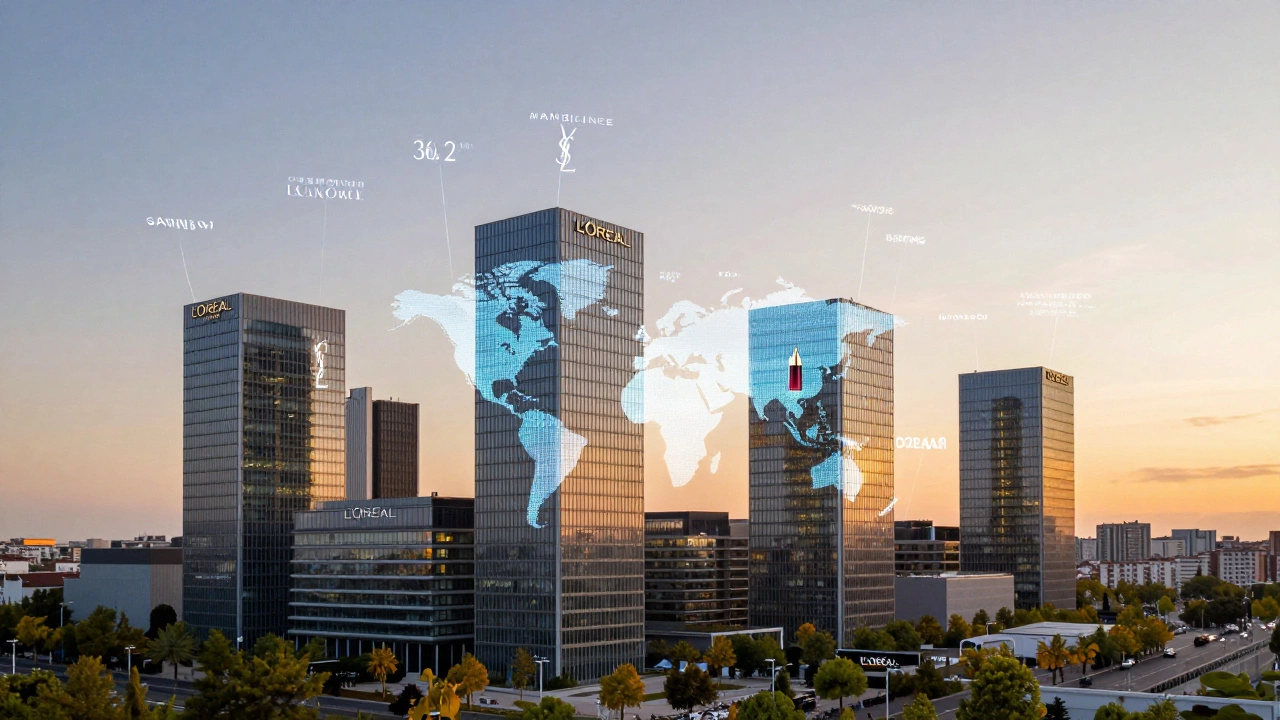
L'Oréal is the largest cosmetics company in the world by revenue, with $40.7 billion in sales in 2024. That’s more than the next three competitors combined. Headquartered in Clichy, France, it operates in over 150 countries and owns 36 brands - from luxury names like YSL Beauty and Lancôme to mass-market staples like Maybelline and Garnier.What makes L'Oréal different isn’t just how many products it sells, but how deeply it understands local markets. In India, it launched a line of foundations specifically for darker skin tones. In China, it partnered with local influencers to build trust. In Brazil, it created haircare products tailored to curly textures. This isn’t global branding - it’s hyper-local innovation at scale.
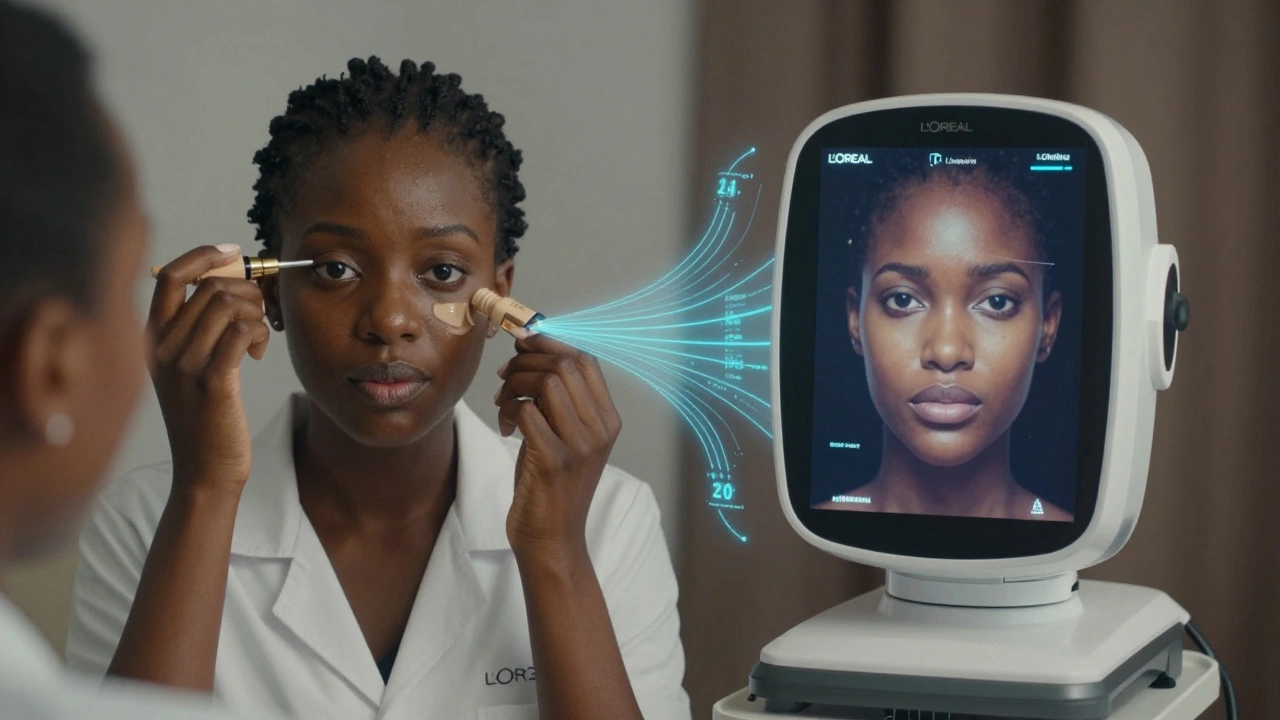
Its R&D budget alone exceeds $1 billion annually. That’s more than the entire annual revenue of most standalone beauty brands. L'Oréal has 15 research centers worldwide, including one in Silicon Valley focused on AI-driven skin analysis. It’s not just selling lipstick - it’s building technology that predicts how skin will age based on lifestyle data.
Who Else Is in the Top Tier?
L'Oréal isn’t alone at the top. The beauty industry has a handful of giants that shape how we buy makeup, skincare, and haircare.- Estée Lauder Companies - With $17.5 billion in revenue in 2024, it owns Clinique, MAC, Bobbi Brown, and La Mer. It leads in premium skincare and has the strongest presence in North American department stores.
- Unilever (Dove, Pond’s, Nivea) - At $15.3 billion, it dominates the value segment. Dove alone sells over 1.5 billion bars of soap annually. Its strength? Everyday products with science-backed claims like "24-hour hydration" and "pH-balanced formulas."
- Procter & Gamble (Olay, SK-II) - At $7.8 billion, it’s the quiet giant behind mass-market skincare. Olay’s Regenerist line has sold over 300 million units since 2005. Its secret? Affordable, dermatologist-tested formulas with proven ingredients like niacinamide and retinol.
None of these companies come close to L'Oréal’s revenue, but each controls a different piece of the market. Estée Lauder owns the luxury space. Unilever owns the drugstore aisle. P&G owns the value-driven consumer. L'Oréal owns them all.
Why Success Isn’t Just About Sales
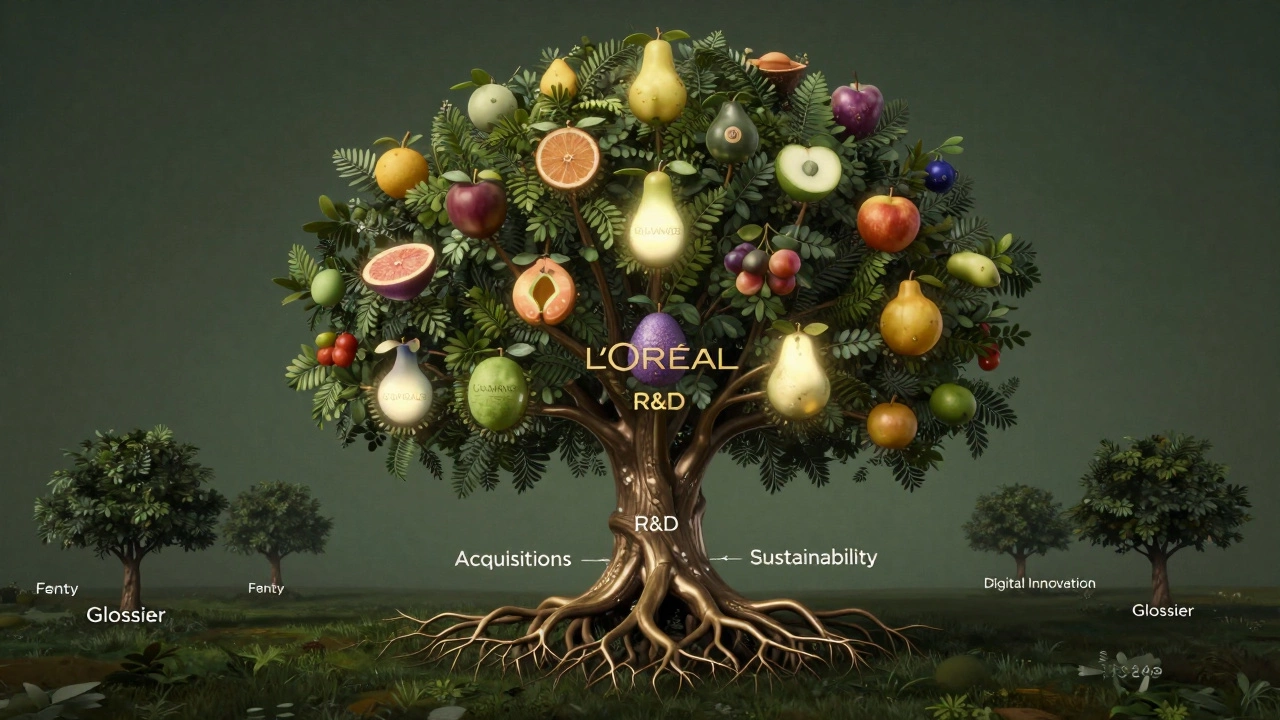
Success in cosmetics isn’t just about how much money you make. It’s about influence, innovation, and resilience.L'Oréal’s acquisition strategy is unmatched. Since 2000, it has bought over 40 brands - from indie darlings like Kiehl’s to digital-native brands like NYX and The Ordinary. Each acquisition brings new customers, fresh R&D, and cultural relevance. The Ordinary, for example, was a tiny Canadian brand with a cult following. L'Oréal bought it in 2021 and scaled it globally without changing its formula or tone. That’s rare.
It also leads in sustainability. By 2025, L'Oréal plans to have 100% of its plastic packaging recyclable or refillable. Its factories run on 100% renewable energy. That’s not just PR - it’s a supply chain overhaul that costs billions. Competitors are catching up, but L'Oréal set the standard.
And then there’s digital. L'Oréal’s ModiFace app uses augmented reality to let users try on 2,000 different lipsticks in real time. It’s integrated into over 100 retailer websites, including Sephora and Amazon. That app alone drives $1.2 billion in annual sales through virtual try-ons.
What About DTC Brands? Are They Winning?
You’ve probably heard of Glossier, Fenty Beauty, or Drunk Elephant. They made headlines. They built empires on Instagram. But here’s the truth: none of them are in the top 10 by revenue.Fenty Beauty, launched by Rihanna in 2017, hit $550 million in sales within its first year. Impressive? Absolutely. But that’s less than 1.5% of L'Oréal’s annual revenue. Glossier peaked at $180 million before scaling back. Drunk Elephant was bought by L'Oréal in 2019 for $845 million - and now operates as a subsidiary.
DTC brands win in buzz, not volume. They’re great at creating community, launching viral products, and speaking directly to Gen Z. But they lack the manufacturing capacity, global distribution, and R&D depth to compete on scale. L'Oréal doesn’t fear them - it buys them.
The Real Measure of Success
So, what does "most successful" mean? If you mean "biggest revenue," it’s L'Oréal. If you mean "most innovative," it’s still L'Oréal. If you mean "most culturally influential," it’s L'Oréal - because it’s the only company that can launch a $200 cream in Paris and a $3 shampoo in Lagos on the same day.Its success isn’t accidental. It’s built on decades of strategic acquisitions, relentless R&D, localized product development, and digital-first retail. No other company has its reach, its depth, or its ability to adapt so quickly.
Other brands can win in niches. L'Oréal wins everywhere. That’s why it’s not just the most successful cosmetics company - it’s the only one that truly defines the modern beauty industry.
Key Metrics That Define the Leader
| Company | Annual Revenue | Number of Brands | Global Presence | R&D Budget |
|---|---|---|---|---|
| L'Oréal | $40.7 billion | 36 | 150+ countries | $1.1 billion |
| Estée Lauder | $17.5 billion | 24 | 130+ countries | $650 million |
| Unilever (Beauty Division) | $15.3 billion | 18 | 190+ countries | $400 million |
| Procter & Gamble (Beauty) | $7.8 billion | 7 | 120+ countries | $250 million |
Why L'Oréal Wins Where Others Fail
Most beauty brands focus on one thing: making a great product. L'Oréal focuses on making a great system.It controls everything - from the raw ingredients sourced in the French countryside to the AI-powered skin diagnostics in Shanghai. It has its own labs, its own factories, its own logistics network, and its own digital storefronts. It doesn’t just sell makeup - it runs the entire pipeline.
When a new trend emerges - like clean beauty or skinimalism - L'Oréal doesn’t wait. It creates a brand for it. The Ordinary was born from the demand for transparency. Youth to the People was acquired to tap into eco-conscious millennials. It doesn’t chase trends. It builds them.
That’s why, even as independent brands rise and fall, L'Oréal keeps growing. It doesn’t need to be the coolest brand. It just needs to be everywhere.
Is L'Oréal the most popular cosmetics brand globally?
L'Oréal isn’t necessarily the "most popular" in every country - local brands often win in personal preference. But it’s the most widely available. You’ll find L'Oréal products in pharmacies in Nigeria, department stores in Japan, and online retailers in the U.S. Its brands cover every price point and skin type, making it the most accessible global beauty company.
Why doesn’t Fenty Beauty rank higher if it’s so popular?
Fenty Beauty’s popularity is real - especially for inclusivity and social media impact. But its annual sales are around $1.2 billion, which is less than 3% of L'Oréal’s revenue. Popularity doesn’t equal scale. L'Oréal sells 3.2 billion units annually. Fenty sells about 50 million. One is a global infrastructure. The other is a breakout star.
Can a new brand ever overtake L'Oréal?
It’s extremely unlikely. L'Oréal’s size, supply chain, R&D, and brand portfolio create a barrier no startup can match. Even if a new brand becomes a billion-dollar success, it would still be a fraction of L'Oréal’s footprint. The company also absorbs threats by buying them - as it did with The Ordinary and Drunk Elephant.
What makes L'Oréal different from Estée Lauder?
Estée Lauder focuses on luxury and prestige - think La Mer and Clinique. L'Oréal covers everything: luxury, mass-market, drugstore, and professional. Estée Lauder has 24 brands. L'Oréal has 36. Estée Lauder’s revenue is less than half of L'Oréal’s. L'Oréal is a diversified empire. Estée Lauder is a premium specialist.
Does L'Oréal own Maybelline?
Yes. Maybelline is one of L'Oréal’s oldest and most profitable brands. Launched in 1915, it’s now sold in over 100 countries and generates over $3 billion annually. It’s the #1 mascara brand in the U.S. and the top-selling makeup brand in Latin America.
What’s Next for the Beauty Industry?
The future of cosmetics belongs to companies that combine science, personalization, and sustainability. L'Oréal is already there. It’s testing AI-powered skin diagnosis tools in clinics. It’s launching refillable lipstick cases in Europe. It’s training dermatologists in rural India to recommend its products.Other brands are trying to keep up. But they’re playing catch-up. L'Oréal set the rules. And for now, no one else has figured out how to rewrite them.