Coconut Oil for Hair: Benefits, Uses, and What Actually Works
When it comes to coconut oil for hair, a natural, plant-based oil extracted from the meat of mature coconuts, widely used for its moisturizing and protective properties in hair care. Also known as virgin coconut oil, it’s one of the few oils that can actually penetrate the hair shaft—not just sit on top like many conditioners. That’s why people with dry, frizzy, or damaged hair turn to it—it doesn’t just add shine, it helps rebuild strength from within.
What makes coconut oil, a saturated fat rich in lauric acid, which has a unique molecular structure that allows it to bind to hair proteins so effective? Unlike mineral oil or silicone-based products, coconut oil reduces protein loss in both undamaged and damaged hair, according to studies published in the Journal of Cosmetic Science. It also acts as a natural barrier against humidity, which is why it’s a go-to for curly or coily hair types that struggle with frizz. And because it’s antimicrobial, it helps keep the scalp healthy—reducing dandruff and irritation that can slow hair growth.
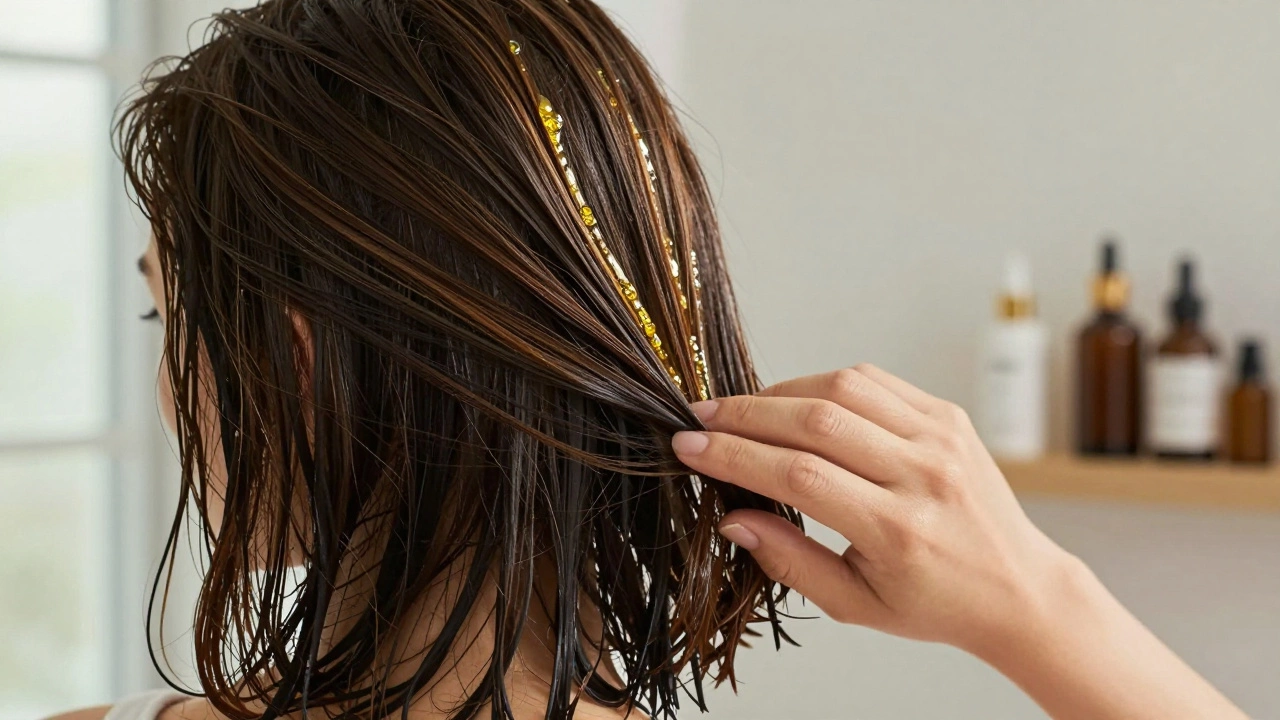
But it’s not magic. hair care with coconut oil, a simple, low-cost method that involves applying the oil to damp or dry hair, leaving it on for 30 minutes to overnight, then washing out only works if you use it right. Too much can weigh hair down, especially if you have fine or thin strands. And if you have low porosity hair, it might not absorb well—leading to buildup. The key is testing small amounts, applying mostly to ends, and always following up with shampoo to remove excess.
People often ask if coconut oil can grow hair faster. The answer? Not directly. But by protecting hair from breakage, improving scalp health, and locking in moisture, it creates the ideal environment for hair to grow longer and stronger over time. That’s why it shows up in so many routines—from DIY masks to overnight treatments to pre-wash conditioning.
There’s also the question of heat. Some use it as a heat protectant before blow-drying or flat-ironing. While it does offer some thermal protection, it’s not as strong as commercial products. For high heat, it’s better as a pre-treatment than a standalone shield.
And while coconut oil is natural, that doesn’t mean it’s for everyone. If your hair feels greasy after using it, or if you notice more shedding, it might not be the right fit. Try it for two weeks, track how your hair feels, and adjust. There’s no one-size-fits-all in hair care—even with something as simple as oil.
Below, you’ll find real guides on how to use coconut oil for hair, what to mix it with, how often to apply it, and what alternatives work better for certain hair types. No fluff. No hype. Just what actually helps.