
Facial Treatment Recommendation Tool
Find Your Ideal Facial Treatment
Select your primary skin concern to get personalized recommendations from science-backed treatments
Everyone wants to look younger, but not everyone wants surgery or downtime. The truth is, there are several proven facial treatments that can turn back the clock without going under the knife. These aren’t magic tricks-they’re science-backed procedures used by dermatologists and licensed aestheticians every day. And the results? Real. Noticeable. Lasting.
Hydrafacial: The Quick Glow-Up
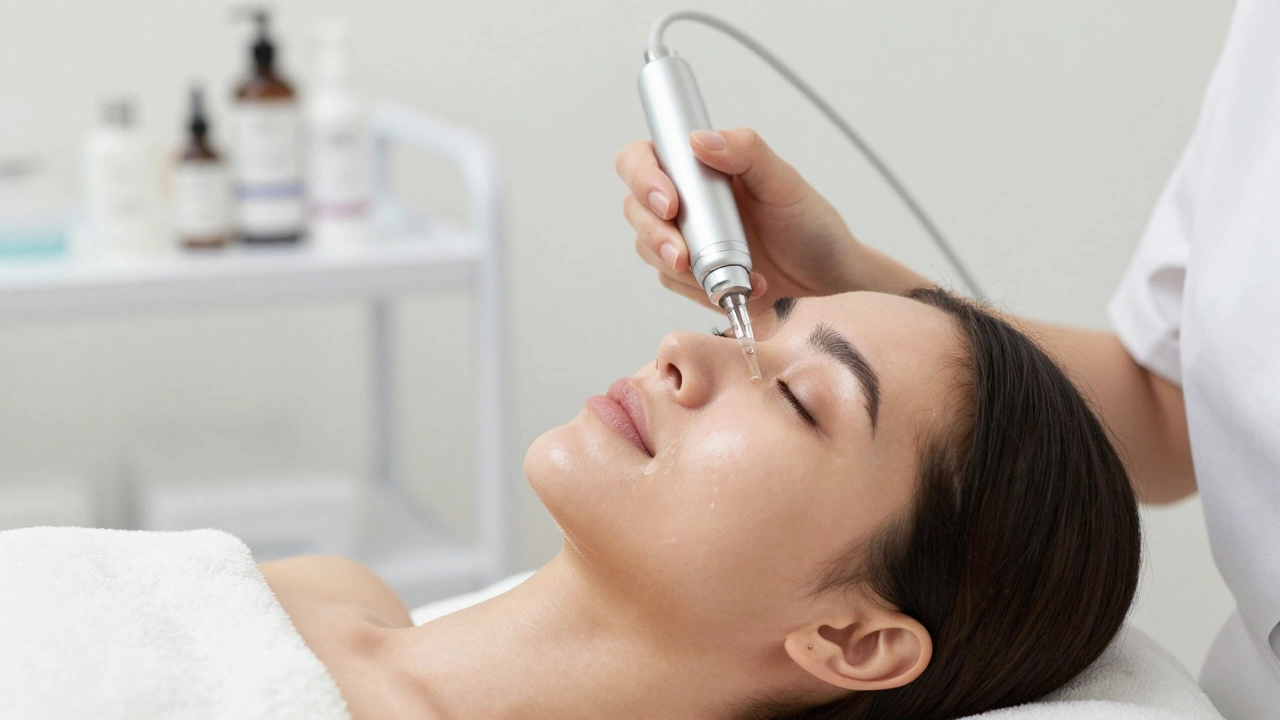
If you’ve ever walked out of a spa with glowing skin and no redness or peeling, you’ve probably had a Hydrafacial. This non-invasive treatment combines cleansing, exfoliation, extraction, hydration, and antioxidant protection-all in one 30-minute session. It uses a special wand to gently remove dead skin and extract impurities while simultaneously bathing your skin in serums packed with hyaluronic acid, peptides, and antioxidants.
Unlike chemical peels that can leave your skin flaky for days, Hydrafacial delivers immediate results with zero recovery time. People report smoother texture, brighter tone, and reduced pore size after just one session. For best results, dermatologists recommend monthly treatments. A 2024 clinical study showed participants saw a 25% improvement in skin elasticity after six sessions, with no adverse effects.
Radiofrequency Microneedling: Tightening from Within
Loose skin around the jawline and neck is one of the first signs of aging. Radiofrequency microneedling (RF microneedling) tackles this by combining two powerful technologies: tiny needles that create micro-injuries in the skin, and radiofrequency energy that heats the deeper layers.
This controlled injury triggers your body’s natural healing response. Collagen and elastin production ramps up over the next few weeks, tightening skin from the inside out. Unlike lasers that only target the surface, RF microneedling reaches the dermis where structural support lives.
Results show up gradually-most people notice firmer skin after 4-6 weeks. A 2023 study in the Journal of Clinical and Aesthetic Dermatology found that 92% of patients saw visible lifting in the lower face after three treatments spaced four weeks apart. Side effects are mild: slight redness for 24 hours, maybe tiny scabs that fall off naturally.
Profhilo: The Hydration Revolution
Most people think wrinkles come from dryness. But it’s not just about adding moisture-it’s about restoring your skin’s structure. That’s where Profhilo comes in. It’s not a filler. It’s not a serum. It’s a patented injectable made of high-purity hyaluronic acid that spreads under the skin like a hydration network.
Unlike dermal fillers that add volume in specific spots, Profhilo works across broad areas: cheeks, jawline, neck, even hands. It stimulates four types of collagen and elastin, rebuilding your skin’s foundation. The treatment requires just two sessions, four weeks apart. No needles for volume. No downtime. Just smoother, tighter, more radiant skin.
Real-world results? Patients report skin that feels plumper, looks more luminous, and holds makeup better. One 52-year-old patient told her clinician, “I stopped using concealer under my eyes after Profhilo. My skin just didn’t look tired anymore.”
Laser Resurfacing: The Deep Reset
For deeper wrinkles, sun damage, or uneven texture, laser resurfacing remains one of the most effective options. Two main types exist: ablative (like CO2 or Erbium) and non-ablative (like Fraxel).
Ablative lasers remove thin layers of skin, triggering aggressive healing. They deliver dramatic results-think years of sun damage erased in one go-but require 7-10 days of downtime. Non-ablative lasers work deeper without removing skin. They’re gentler, with only 1-3 days of redness, but need 3-5 sessions for full effect.
A 2025 review of 1,200 patients showed that ablative laser resurfacing improved skin tone and texture by an average of 70%, with results lasting up to five years. The trade-off? You need to avoid sun exposure for months afterward. If you’re disciplined about sunscreen, this is one of the most permanent anti-aging tools you can use.
PRP Facial (Vampire Facial): Blood as a Beauty Tool
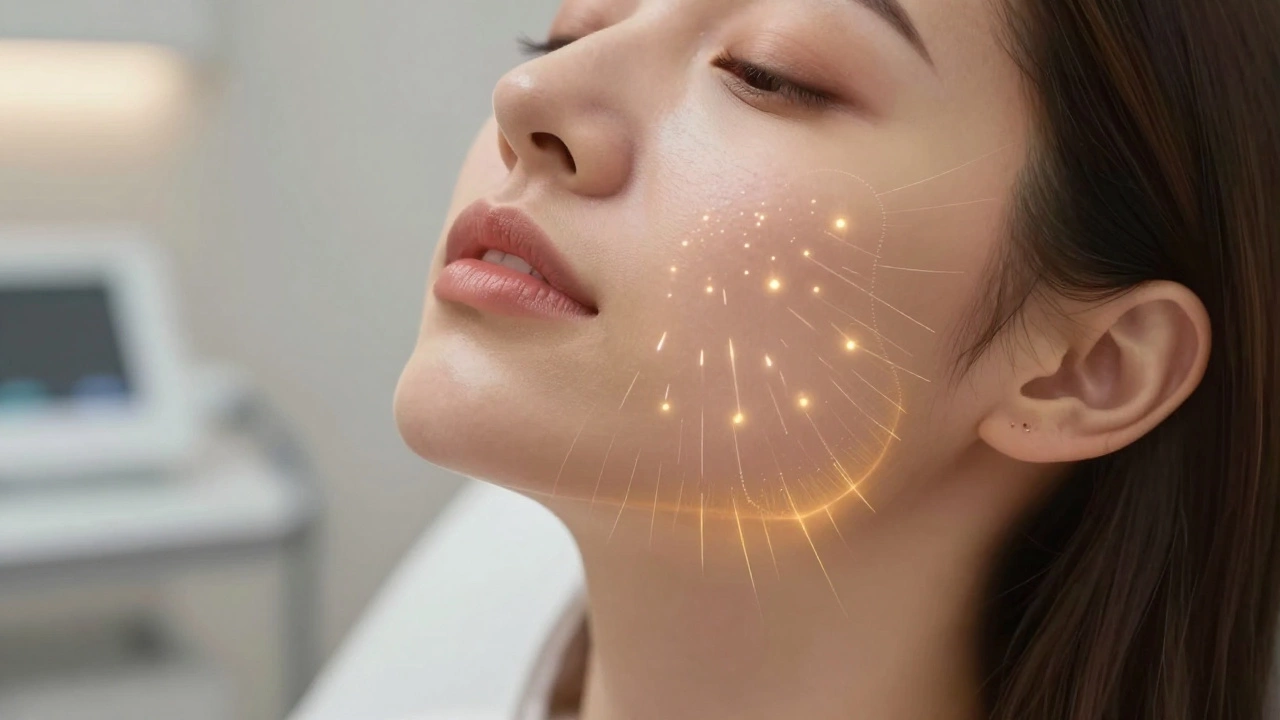
It sounds wild, but your own blood can help your skin look younger. Platelet-rich plasma (PRP) facial involves drawing a small amount of your blood, spinning it in a centrifuge to isolate the platelets, then injecting or applying the concentrated plasma to your face.
Platelets contain growth factors that signal your skin cells to repair and regenerate. When applied after microneedling, PRP boosts collagen production even further. It’s not a quick fix-it takes 4-8 weeks to see results-but it’s incredibly natural. No synthetic ingredients. No foreign substances.
Studies show PRP improves skin thickness, reduces fine lines, and enhances overall radiance. A 2024 trial with 80 women found that PRP combined with microneedling outperformed microneedling alone in reducing wrinkles around the eyes and mouth. Results lasted 12-18 months. It’s ideal for people who want a holistic, body-friendly approach.
Ultherapy: The Non-Surgical Lift
Want a lifted brow or tighter jawline without incisions? Ultherapy uses focused ultrasound energy to heat tissue at precise depths-exactly where your skin’s support structures live. Think of it like an internal ultrasound that tightens without cutting.
It’s FDA-cleared for lifting skin on the brow, neck, and under the chin. Most people need just one treatment. Results develop slowly over 2-3 months as new collagen forms. Many report their face looks more defined, like they’ve lost weight without dieting.
A 2025 survey of 500 Ultherapy patients found that 87% were satisfied with their results. The most common complaint? Mild discomfort during treatment. But no swelling, no bruising, no recovery time. You can walk out and go to work.
What Doesn’t Work (And Why)
Not every “anti-aging” treatment lives up to the hype. At-home devices like LED masks and microcurrent rollers? They might give a temporary glow, but they don’t stimulate enough collagen to make a lasting difference. Over-the-counter creams with “miracle” peptides? Unless they contain proven concentrations (like 10% niacinamide or 2% retinol), they’re mostly moisturizers with fancy labels.
And don’t fall for “laser hair removal for skin tightening.” That’s not a real thing. Same with cryotherapy facials-chilling your skin might feel refreshing, but it won’t rebuild collagen.
The key? Stick to treatments backed by peer-reviewed studies and performed by licensed professionals. If a clinic promises instant results with no downtime and no follow-up, walk away.

Choosing the Right Treatment for You
There’s no one-size-fits-all. Your best option depends on your skin type, concerns, and lifestyle.
- For dull, tired skin: Hydrafacial or PRP
- For loose skin and jowls: Ultherapy or RF microneedling
- For deep wrinkles and sun damage: Laser resurfacing
- For overall plumpness and glow: Profhilo
Start with a consultation. A good provider will examine your skin, ask about your goals, and recommend a plan-not push you into the most expensive option.
Aftercare Matters Just as Much
No matter which treatment you choose, your results depend on what you do afterward. Sunscreen is non-negotiable. Use SPF 30 or higher daily-even on cloudy days. UV exposure breaks down collagen faster than anything else.
Also, avoid harsh scrubs or retinoids for at least a week after procedures like microneedling or lasers. Your skin is healing. Let it breathe. Drink water. Sleep well. These aren’t just nice-to-haves-they’re part of the treatment.
How Long Do Results Last?
Hydrafacial: 1-4 weeks (best with monthly maintenance)
Profhilo: 6-12 months (two sessions, then one top-up every 6-9 months)
RF Microneedling: 12-18 months
Ultherapy: 1-2 years
Laser Resurfacing: 3-5 years (if protected from sun)
PRP Facial: 12-18 months
There’s no permanent fix. Aging doesn’t stop. But with the right treatments and consistent care, you can slow it down-and look like the best version of yourself.
What facial treatment gives the most dramatic results?
For the most dramatic, long-lasting results, ablative laser resurfacing (like CO2) is the strongest option. It removes damaged skin layers and rebuilds collagen deeply. Results can look like you’ve turned back the clock by 10 years-but it requires serious downtime (7-10 days) and strict sun protection afterward. If you want big changes and can handle recovery, this is it.
Are at-home devices worth it for looking younger?
Most at-home devices-LED masks, microcurrent tools, radiofrequency wands-offer mild, temporary improvements. They might make your skin look brighter for a day or two, but they don’t trigger the same collagen response as professional treatments. They’re great for maintenance between sessions, but not a replacement for clinical procedures if you want real change.
Can I combine multiple treatments?
Yes, and many people do. A common combo is Profhilo for overall hydration and RF microneedling for tightening. Or Hydrafacial before Ultherapy to prep the skin. But timing matters. Never do laser and microneedling in the same week. Always space treatments 4-6 weeks apart. A qualified provider will create a safe, effective sequence.
Which treatment is safest for sensitive skin?
Hydrafacial and Profhilo are the safest for sensitive skin. Both are non-ablative, non-irritating, and don’t rely on heat or deep penetration. PRP is also gentle since it uses your own blood. Avoid lasers or strong chemical peels unless your skin has been tested and cleared by a dermatologist first.
How much do these treatments cost?
Prices vary by location and provider. On average: Hydrafacial ($150-$300), Profhilo ($700-$1,200 per session), RF microneedling ($800-$1,500 per session), Ultherapy ($1,500-$3,000), laser resurfacing ($1,200-$2,500), PRP facial ($500-$1,000). Always ask what’s included-consultation, numbing cream, follow-up visits. Cheaper doesn’t mean better if the provider isn’t licensed.
Next Steps: What to Do Today
Start by writing down your top three concerns: Are your cheeks sagging? Do you have deep lines around your mouth? Is your skin dull even after sleep? Then, find a board-certified dermatologist or licensed medical aesthetician. Ask them which of these treatments they recommend for your skin type. Don’t settle for a sales pitch. Ask for before-and-after photos of real patients-not models. And if they don’t mention sunscreen as part of the plan, find someone else.
Looking younger isn’t about chasing trends. It’s about choosing the right science-and sticking with it.