
Organic Skincare Risk & Suitability Analyzer
Your Profile
Analysis Result
Select options on the left to analyze your risk profile.
We have all seen the marketing. The jars with minimalist labels, the claims of "100% natural," and the promise that if it comes from a plant, it must be safe for your face. The organic skincare movement has exploded in recent years, driven by a desire to avoid synthetic chemicals like parabens and sulfates. But here is the uncomfortable truth that brands rarely highlight: just because an ingredient is derived from nature does not mean it is harmless. In fact, switching to purely organic products can introduce new risks to your skin barrier, especially if you do not understand what you are putting on your face.
It is easy to fall into the trap of thinking "natural" equals "gentle." This is a cognitive bias known as the appeal to nature. However, poison ivy is natural. So is arsenic. When we talk about skincare, the lack of rigorous regulation around the term "organic" means you might be buying products that are less stable, less effective, or even more irritating than their conventional counterparts. Before you throw out your current routine, let’s look at the real downsides.
The Preservation Problem: Why "Clean" Can Mean "Dirty"
One of the biggest hidden costs of organic skincare is stability. Conventional skincare relies on broad-spectrum preservatives like phenoxyethanol or parabens to keep bacteria, mold, and yeast at bay. These ingredients have a long track record of safety when used within regulated limits. Organic formulations, however, often avoid these powerful synthetics. Instead, they use "natural" preservatives like grapefruit seed extract, rosemary oil, or benzoic acid.
Natural preservatives are generally weaker. They require higher concentrations to be effective, which can irritate the skin. More importantly, they often fail to cover the full spectrum of microbes. If a product is water-based (like a toner or a lotion), it is a breeding ground for bacteria. Without robust preservation, your jar of "clean" moisturizer could harbor harmful pathogens within weeks of opening. This is why many organic products come in airless pumps or small packaging-not just for aesthetics, but because the formula cannot survive long-term exposure to air and hands.
- Shorter Shelf Life: Unpreserved or lightly preserved organic creams may spoil faster than conventional ones.
- Contamination Risk: Weaker preservatives increase the chance of bacterial growth during use.
- Packaging Constraints: You may need to buy smaller sizes more frequently, driving up the cost.
Allergens Are Everywhere in Nature
If you have sensitive skin, the switch to organic can be a nightmare. Synthetic ingredients are often single molecules, meaning you know exactly what you are applying. Natural extracts, on the other hand, are complex cocktails. A single drop of lavender essential oil contains over 300 different chemical compounds. While some are soothing, others are potent allergens.
Common organic ingredients like tea tree oil, lemon juice, and citrus peels are notorious sensitizers. They contain terpenes and limonene, which oxidize upon exposure to air and light, becoming highly irritating. Studies have shown that contact dermatitis linked to essential oils is rising, largely due to their popularity in "natural" beauty products. If you are prone to eczema or rosacea, introducing a raw botanical extract to your face is far riskier than using a lab-created hydrator like hyaluronic acid, which is identical to the molecule already in your skin.
Furthermore, organic farming does not eliminate environmental allergens. Plants pollinate. If you are allergic to ragweed, you might react to chamomile, which is in the same botanical family. Conventional manufacturing processes filter and refine ingredients to remove these protein triggers. Organic processes often leave them intact to maintain the "whole food" integrity of the product.

Efficacy Gaps: Not All Naturals Work
Skincare is chemistry. To change how your skin looks-whether by reducing wrinkles, fading dark spots, or unclogging pores-you need active ingredients that penetrate the stratum corneum and trigger specific biological responses. Many of the most proven actives are either synthetic or semi-synthetic.
Retinol, for example, is the gold standard for anti-aging. While you can find "natural retinol" alternatives like bakuchiol, clinical data supporting bakuchiol’s efficacy is limited compared to decades of research on retinoids. Bakuchiol is gentler, yes, but it is also significantly less potent. If your goal is significant collagen production, organic alternatives often fall short.
Vitamin C is another case study. Pure L-ascorbic acid is unstable and requires precise pH levels and encapsulation technology to remain effective. Organic brands often use sodium ascorbyl phosphate or vitamin C derivatives found in plants, which are more stable but convert poorly in the skin. You might be paying a premium for a serum that delivers only a fraction of the antioxidant protection you expect.
| Attribute | Organic/Natural | Conventional/Synthetic |
|---|---|---|
| Preservation | Weaker, shorter shelf life, higher contamination risk | Robust, longer shelf life, lower risk |
| Allergen Profile | High complexity, many hidden allergens (essential oils) | Lower complexity, purified single molecules |
| Efficacy | Variable, often gentler but less potent | Highly targeted, clinically proven potency |
| Regulation | Lax, "organic" label varies by region/brand | Strict FDA/EMA regulations on drug-like actives |
| Cost | Higher due to sourcing and smaller batch sizes | Lower due to economies of scale |
The Greenwashing Maze
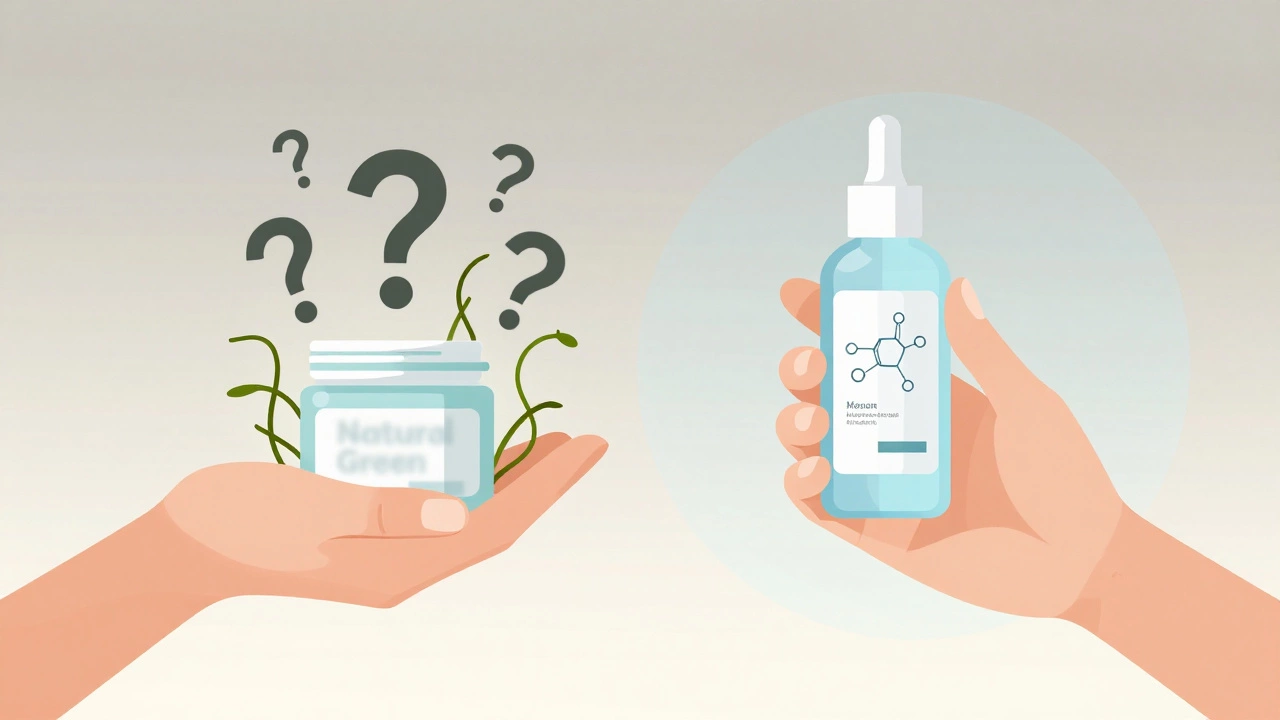
Perhaps the most frustrating disadvantage of organic skincare is the confusion caused by labeling. Unlike food, where "USDA Organic" has strict legal definitions, skincare regulations are fragmented. In many regions, a product can claim to be "organic" if it contains just a tiny percentage of organic ingredients. The rest can be synthetic fillers, fragrances, and preservatives.
Brands use terms like "clean," "green," "botanical," and "eco-friendly" without any regulatory oversight. This is greenwashing. You might buy a product labeled "100% Natural" only to find it contains formaldehyde-releasing preservatives disguised under obscure chemical names. Decoding these labels requires a chemistry degree or hours of research, turning a simple self-care routine into a detective game.
This lack of transparency extends to supply chains. Organic certification ensures no synthetic pesticides were used on the farm, but it does not guarantee ethical labor practices or sustainable harvesting methods. Some "wild-harvested" ingredients contribute to deforestation or biodiversity loss. So, while you are avoiding microplastics, you might inadvertently be supporting unsustainable agricultural practices.
For those seeking verified information beyond skincare, understanding how directories verify listings can offer a parallel lesson in transparency. For instance, resources like this directory demonstrate how verification processes work in other industries, highlighting the importance of trust signals in consumer choices.
Texture and Sensory Trade-offs
Let’s be honest: some organic products just feel bad. Synthetic emulsifiers and silicones provide that silky, non-greasy finish that modern consumers expect. Organic alternatives rely on plant waxes and oils, which can leave a heavy, occlusive film on the skin. If you have oily or acne-prone skin, this heaviness can clog pores, leading to breakouts.
Fragrance is another sensory minefield. Synthetic fragrances allow for consistent, subtle scents. Organic brands often use essential oils for fragrance. These scents are strong, pervasive, and linger for days. For people with migraines or respiratory issues, this intensity is a major drawback. Moreover, essential oil scents fade quickly as they oxidize, meaning the smell changes over time, sometimes becoming rancid.
How to Navigate the Risks
You do not need to choose between toxic synthetics and risky naturals. The best approach is a hybrid one. Look for brands that use "cosmeceuticals"-products that combine the safety of synthetic delivery systems with the benefits of natural actives. Check for third-party certifications like COSMOS or Ecocert, which have stricter standards than vague marketing terms.
Always patch test new organic products. Because of the complex allergen profile, wait 48 hours before applying a new serum to your entire face. Pay attention to the INCI list (International Nomenclature of Cosmetic Ingredients). If "fragrance" or "parfum" is listed, it likely contains essential oils or undisclosed synthetics. Prioritize products with clear expiration dates and airless packaging to mitigate preservation issues.
Remember, your skin is an organ, not a canvas for ideological purity. It needs hydration, protection, and repair. Whether those come from a lab or a leaf matters less than whether they work safely for your unique biology.
Is organic skincare better for sensitive skin?
Not necessarily. Organic products often contain essential oils and botanical extracts that are common allergens. Synthetic ingredients are usually purified single molecules, making them less likely to cause reactions. Patch testing is crucial regardless of the type.
Why do organic skincare products expire faster?
They use weaker, natural preservatives that do not kill bacteria and mold as effectively as synthetic ones. This makes them more susceptible to contamination once opened, requiring shorter shelf lives and careful storage.
Are there any effective anti-aging ingredients in organic skincare?
Yes, but they are generally less potent. Ingredients like bakuchiol (a retinol alternative) and certain plant peptides show promise, but they lack the extensive clinical data and immediate results associated with synthetic retinoids and pure Vitamin C.
What does "USDA Organic" mean for skincare?
It means the agricultural ingredients in the product were grown without synthetic pesticides or fertilizers. However, it does not regulate the processing aids or synthetic preservatives allowed in the final cosmetic formulation, so check the full ingredient list.
Can I mix organic and conventional skincare?
Absolutely. Many dermatologists recommend a hybrid approach. Use gentle, well-preserved cleansers and moisturizers (which can be conventional) and incorporate targeted actives based on your skin's needs, choosing organic options only if they fit your tolerance and efficacy goals.