

Ponytail Facelift Eligibility & Recovery Estimator
Answer the questions below to see if you might be an ideal candidate for a ponytail facelift and what your recovery timeline might look like.
Candidate Score: 0%
Estimated Recovery Timeline
You know that feeling when you pull your hair back into a tight ponytail and suddenly look ten years younger? Your jawline sharpens, the sagging around your mouth lifts, and those annoying jowls seem to vanish. That’s the exact visual effect surgeons aim for with a ponytail facelift, also known as a mini facelift or a limited-incision surgical procedure designed to lift the mid-face and lower face without the extensive recovery time of a traditional full facelift. It’s not magic, but it is one of the most requested procedures in modern cosmetic dermatology because it offers high impact with minimal downtime.
If you’re considering this procedure, you’re likely looking for a solution that doesn’t require weeks of hiding from the world. You want to know if it actually works, how long the results last, and whether you’ll look like you’ve had work done. Let’s break down exactly what happens under the knife, who qualifies for it, and why this specific technique has become a favorite among patients in their 40s and 50s.
The Core Concept: Why It’s Called a Ponytail Lift
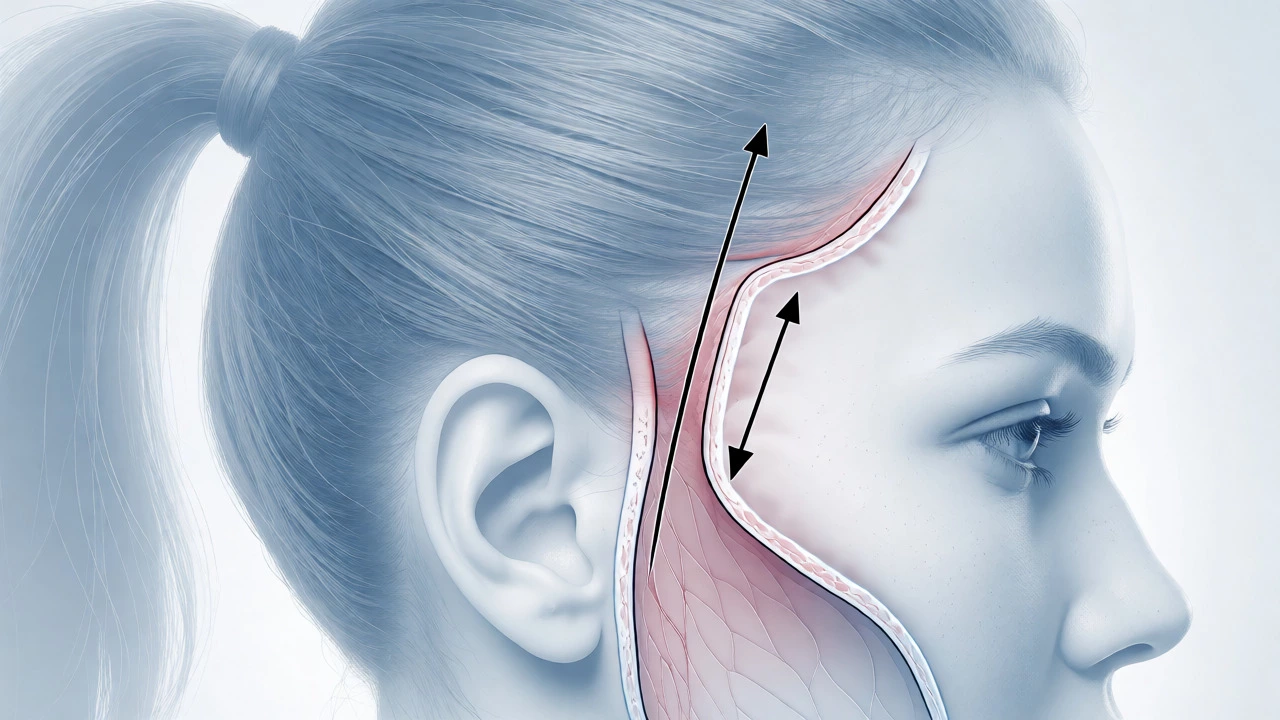
The name isn’t just marketing fluff; it describes the vector of correction. In a standard full facelift, surgeons often reposition skin horizontally or diagonally across the face. This can sometimes lead to that dreaded "windblown" look where the ears appear pulled backward. A ponytail facelift takes a different approach. The surgeon uses an incision hidden within the hairline at the temple area. They then lift the underlying tissue vertically and slightly backward, mimicking the way a tight ponytail pulls the skin taut.
This vertical lift targets the midface and the lower face. By anchoring the deep facial tissues (the SMAS layer) rather than just pulling the skin, the result looks natural. The skin drapes over the lifted structure, smoothing out nasolabial folds (smile lines) and reducing jowls. Because the tension is placed on the deeper structures, the skin itself isn’t stretched too tightly, which preserves your natural facial expressions.
Who Is the Ideal Candidate?
Not everyone needs-or should have-a full facelift. The ponytail lift is specifically designed for people experiencing early-to-moderate signs of aging. If you are in your late 30s to mid-50s, you might be noticing that gravity is starting to win the battle against your collagen production.
- Mild to Moderate Jowling: You see some softening of the jawline, but it hasn’t collapsed completely.
- Nasolabial Folds: Those lines running from your nose to the corners of your mouth are becoming permanent even when you aren’t smiling.
- Brow Drooping: Your outer eyebrows may be sitting lower than they used to, giving you a tired appearance.
- Good Skin Elasticity: Since this procedure relies on lifting existing tissue, you need enough skin quality to snap back into place. If your skin is very thin or crepey, other treatments might be better.
If you have severe neck laxity or significant excess skin in the lower face, a ponytail lift might not be enough. In those cases, a full SMAS facelift or a neck lift would provide more comprehensive correction. Be honest with your surgeon about your goals. Do you want a subtle refresh or a dramatic change? The ponytail lift sits comfortably in the middle.
The Procedure Step-by-Step
Wondering what actually happens in the operating room? It’s less invasive than you might fear. Most surgeons perform this under local anesthesia with sedation, meaning you’re awake but relaxed, or under general anesthesia depending on your preference and the surgeon’s protocol. The entire process typically takes two to three hours.
- Incision Placement: The surgeon makes a small cut along the hairline near the temple. This location is crucial because it hides the scar within your hair, making it virtually invisible once healed.
- Tissue Dissection: Instead of just peeling back the skin, the surgeon carefully separates the skin from the underlying muscle and fat layers. They identify the superficial musculoaponeurotic system (SMAS), which is the structural framework of your face.
- Vertical Repositioning: Here is the key difference. The surgeon lifts the SMAS layer vertically and posteriorly (up and back). This restores volume to the cheekbones and defines the jawline.
- Skin Redraping: Once the deep structures are secured with sutures, the skin is gently redraped over the new contours. Excess skin is trimmed away, but only a small amount compared to a full facelift.
- Closure: The incision is closed with fine sutures or staples. Some surgeons use dissolvable stitches, while others remove them after five to seven days.
Recovery: What to Expect Day by Day
Let’s talk about the part nobody wants to hear about: recovery. But here’s the good news-the downtime for a ponytail facelift is significantly shorter than for a traditional facelift. While a full facelift might keep you home for two weeks, many patients return to social activities within seven to ten days.
| Timeframe | Status | Action Required |
|---|---|---|
| Days 1-3 | Peak Swelling/Bruising | Rest with head elevated; apply cold compresses; take prescribed pain medication. |
| Day 5-7 | Stitch Removal | Visit surgeon for suture removal; bruising turns yellowish/greenish; wear compression garment. |
| Week 2 | Public Appearance Ready | Most swelling subsides; makeup can cover remaining discoloration; return to light desk work. |
| Week 4+ | Final Healing | Resume exercise; scars begin to fade; final results become apparent. |
You will feel tightness in the treated areas, which is normal. Avoid bending over, heavy lifting, or straining for the first two weeks, as increased blood pressure can cause bleeding under the skin (hematoma). Sleeping with your head propped up on extra pillows helps reduce morning puffiness.
Ponytail Lift vs. Traditional Facelift vs. Non-Surgical Options
How does this stack up against other options? It’s helpful to view these procedures on a spectrum of invasiveness and longevity.
| Feature | Ponytail Facelift | Traditional Full Facelift | Thread Lift |
|---|---|---|---|
| Invasiveness | Low to Moderate | High | Minimal |
| Anesthesia | Local/Sedation or General | General Anesthesia | Local Anesthesia |
| Downtime | 7-10 Days | 2-4 Weeks | 1-3 Days |
| Results Duration | 5-10 Years | 10+ Years | 1-2 Years |
| Best For | Mid-face/Jawline Laxity | Severe Aging/Neck Issues | Preventative/Mild Sagging |
A thread lift is non-surgical and uses barbed sutures to physically pull the skin up. It’s great for younger patients wanting prevention, but the results fade quickly. A traditional facelift addresses the neck and provides a more dramatic, long-lasting transformation but requires significant recovery. The ponytail lift hits the sweet spot for those who want real surgical results without the drastic lifestyle disruption.

Risks and Considerations
No surgery is risk-free. While complications are rare with experienced surgeons, you need to be aware of potential issues. Hematomas (collections of blood under the skin) are the most common complication, occurring in about 1-3% of cases. If this happens, it usually needs to be drained promptly to prevent pressure on the healing tissues.
Other risks include infection, poor scarring, or nerve injury. Temporary numbness or weakness in the facial muscles is possible but typically resolves within a few weeks. Permanent nerve damage is extremely uncommon with the limited dissection required for a ponytail lift. Always choose a board-certified plastic surgeon or facial plastic surgeon who specializes in these techniques. Ask to see before-and-after photos of patients with similar anatomy to yours.
Cost Factors
Price varies widely based on geography, surgeon expertise, and facility fees. In the UK, for example, you might expect to pay between £4,000 and £8,000 for a ponytail facelift. In the US, costs can range from $6,000 to $12,000. Remember that this price usually includes the surgeon’s fee, anesthesia, and facility costs. Insurance rarely covers this procedure unless it’s deemed medically necessary, which is uncommon for cosmetic enhancements.
Don’t let price be the sole deciding factor. A cheaper option might mean less experience or outdated techniques. Look for value in terms of safety, aesthetic outcome, and post-operative care.
Frequently Asked Questions
Does a ponytail facelift change your ear shape?
Generally, no. Because the incisions are placed higher up in the hairline and the lift vector is vertical rather than horizontal, the ear position remains unchanged. This is a major advantage over older facelift techniques that often pulled the earlobes downward, creating a distorted look.
Can I combine a ponytail facelift with other procedures?
Yes, absolutely. Many patients combine it with eyelid surgery (blepharoplasty) to address tired eyes, or with fat grafting to restore volume in the cheeks and temples. Combining procedures can enhance overall harmony, though it may slightly extend recovery time.
Will I look like I had surgery?
The goal of a skilled surgeon is subtlety. Since the ponytail lift focuses on lifting deep tissues rather than stretching skin, the results tend to look natural. Friends and family might notice you look refreshed or rested, but they won’t necessarily pinpoint exactly what changed.
How long do the results last?
While you continue to age naturally, the effects of a ponytail facelift typically last between 5 and 10 years. Lifestyle factors like sun exposure, smoking, and weight fluctuations can influence longevity. Maintaining a healthy skincare routine helps preserve the results.
Is the pain manageable?
Most patients report mild to moderate discomfort, often described as soreness or tightness rather than sharp pain. Over-the-counter pain relievers are usually sufficient after the first 48 hours. Surgeons often prescribe stronger medication for the initial recovery period.