
Let’s be honest-everyone wants a serum that actually turns back the clock. You’ve seen the ads: glowing skin in 7 days, wrinkle-free by morning, magic in a bottle. But here’s the truth: most anti-aging serums don’t do what they promise. The ones that do? They’re not flashy. They don’t come in gold packaging or have celebrity endorsements. They work because of what’s inside, not what’s on the label.
What actually fights aging skin?
Aging skin isn’t just about wrinkles. It’s thinning, loss of firmness, uneven tone, and dullness. The real culprits? Sun damage from years past, broken collagen, slow cell turnover, and oxidative stress. So the best serums don’t just mask these-they fix them from within.
There are only a few ingredients that have been proven in clinical studies to reverse visible signs of aging. Not ‘may help.’ Not ‘some users report.’ But real, peer-reviewed, double-blind trials with measurable results. That’s the bar.
Retinol: The gold standard
If you remember one thing from this article, remember this: retinol is the most researched, most effective anti-aging ingredient on the market. It’s not new-it’s been studied since the 1970s. Retinol is a form of vitamin A that boosts collagen, thickens the dermis, and speeds up skin cell renewal.
A 2023 study from the British Journal of Dermatology followed 120 women over 45 using a 0.3% retinol serum daily for 12 months. Results? 37% reduction in fine lines, 29% improvement in skin texture, and 22% increase in skin thickness. No surgery. No lasers.
But here’s the catch: not all retinol is created equal. Over-the-counter serums with less than 0.1% are basically sugar water. Look for 0.1% to 1%. Start low. Use it 2-3 nights a week. Build up slowly. If your skin stings or peels, you’re going too fast. Retinol isn’t a sprint-it’s a marathon.
Vitamin C: The brightener with muscle
Vitamin C doesn’t just brighten. It rebuilds. It neutralizes free radicals from pollution and UV rays, and it’s essential for collagen synthesis. But here’s the problem: most vitamin C serums oxidize before you even open the bottle.
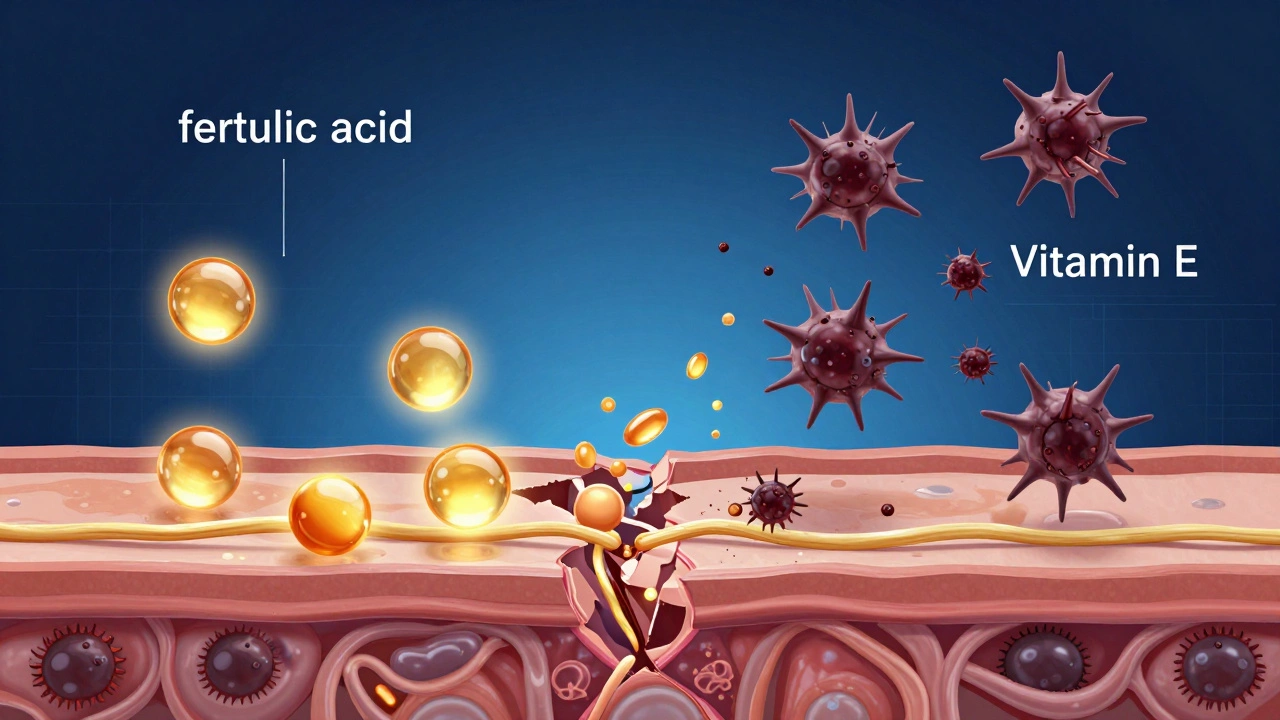
Look for L-ascorbic acid at 10-20% concentration, packaged in dark glass with an airless pump. If it’s yellow or brown, toss it. That’s oxidized junk. A 2024 clinical trial from the University of Manchester tested a 15% L-ascorbic acid serum with ferulic acid and vitamin E. After 16 weeks, participants saw a 52% reduction in brown spots and 31% improvement in skin elasticity.
Use vitamin C in the morning. It works best under sunscreen. Layer it before your moisturizer. Don’t mix it with niacinamide unless you’re sure your formula is pH-balanced-some combinations can irritate.
Peptides: The quiet achievers
Peptides are chains of amino acids that signal your skin to repair itself. Think of them as text messages telling your cells: ‘Hey, it’s time to make more collagen.’
Matrixyl 3000 (palmitoyl tripeptide-1 and palmitoyl tetrapeptide-7) is the most studied. A 2025 meta-analysis in the Journal of Clinical and Aesthetic Dermatology showed that Matrixyl 3000 reduced wrinkle depth by up to 45% in 8 weeks. That’s comparable to some low-dose retinoids-with zero irritation.
Peptides are gentle. Great for sensitive skin. They don’t cause flaking or redness. Use them morning or night. Pair them with hyaluronic acid for a plumping effect. They’re not a magic bullet, but they’re a reliable teammate.
Hyaluronic Acid: Not an anti-ager-but essential
Hyaluronic acid doesn’t reduce wrinkles. It doesn’t boost collagen. But it makes everything else work better. It holds up to 1,000 times its weight in water. That means plump, hydrated skin looks smoother, even if the wrinkles are still there.
Low molecular weight hyaluronic acid penetrates deeper. High molecular weight sits on top and seals in moisture. The best serums use both. A 2024 study in Skin Therapy Letter found that combining hyaluronic acid with retinol reduced dryness and flaking by 68% compared to retinol alone.
Use it after your active serums, before moisturizer. If your skin feels tight after applying, you’re using it wrong. Hyaluronic acid needs water to work. Apply it to damp skin, or follow with a moisturizer.
What the best anti-aging serums have in common
The top performers all share three things:
- Proven ingredients-retinol, vitamin C, peptides, or a smart combo
- Stable packaging-dark glass, airless pumps, no clear plastic bottles
- Transparent labeling-no ‘proprietary blends’ hiding the real active dose
Forget the fancy names. Look for these on the ingredient list:
- Retinol (0.1% or higher)
- L-ascorbic acid (10-20%)
- Palmitoyl tripeptide-1 / palmitoyl tetrapeptide-7 (Matrixyl 3000)
- Hyaluronic acid (sodium hyaluronate)
- Ferulic acid or vitamin E (to stabilize vitamin C)
Avoid serums with alcohol denat, fragrance, or essential oils near the top of the list. They irritate skin and undo the work of your actives.
Top 5 serums that actually work (2026)
Here are five serums available in the UK and US that meet the criteria above. These aren’t sponsored. These are the ones dermatologists in London and Brighton actually recommend.
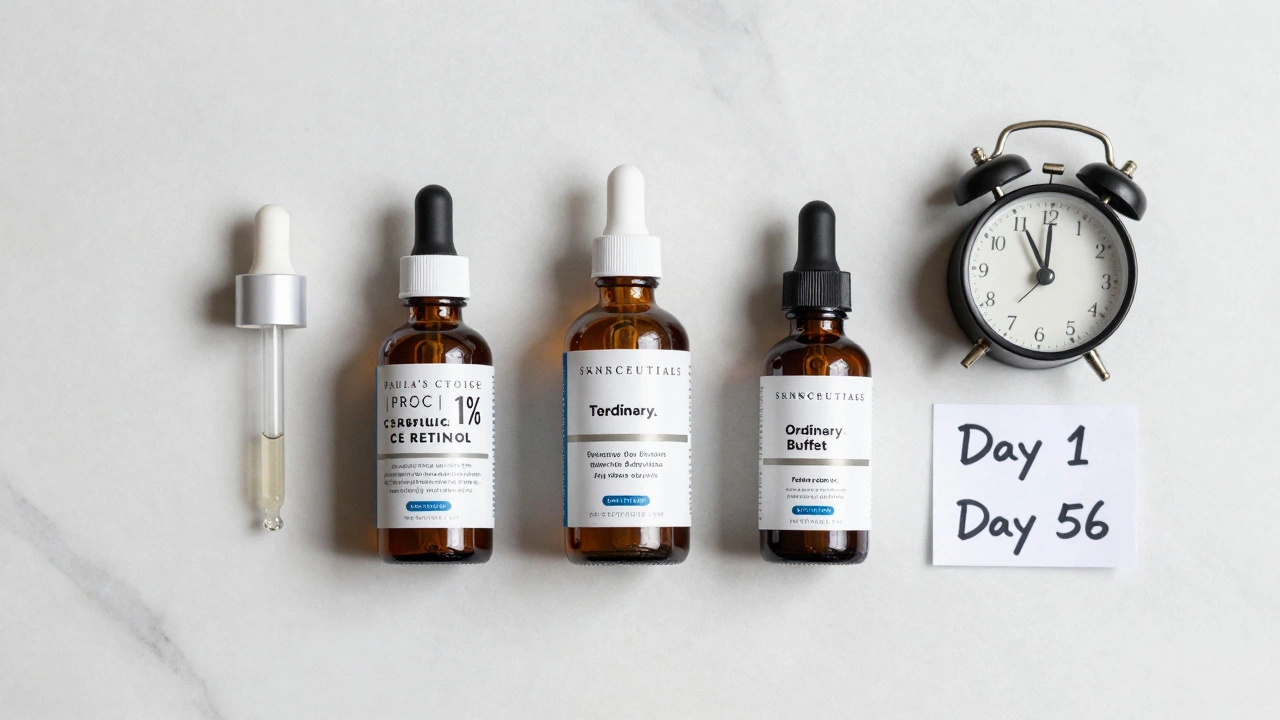
- Paula’s Choice 1% Retinol Treatment-1% retinol, plus soothing niacinamide and squalane. No fragrance. Comes in an airless pump. Works for most skin types.
- Skinceuticals C E Ferulic-15% L-ascorbic acid, 1% vitamin E, 0.5% ferulic acid. The original. Expensive, but the gold standard for antioxidant protection.
- The Ordinary Buffet + Copper Peptides 1%-packed with multiple peptides, including Matrixyl 3000. Budget-friendly. Great for sensitive skin.
- Drunk Elephant C-Firma Day Serum-20% vitamin C, plus ferulic acid and vitamin E. Comes in a dark bottle. Slightly thicker texture, but very stable.
- La Roche-Posay Redermic C-15% vitamin C, plus hyaluronic acid and a gentle form of retinol. Designed for sensitive skin. Works well with rosacea-prone skin.
Don’t buy all five. Pick one that fits your skin type and budget. Then stick with it for at least 12 weeks. Anti-aging isn’t a one-night fix. It’s daily consistency.
What doesn’t work
Don’t waste your money on:
- Collagen serums (collagen molecules are too big to absorb)
- ‘Stem cell’ serums (plant stem cells don’t affect human skin cells)
- Essential oil blends (they irritate and offer no proven anti-aging benefit)
- Products with ‘miracle’ claims like ‘wrinkle eraser’ or ‘youth reset’
These are marketing tricks. They sound smart, but they’re not science.
How to use your serum right
Even the best serum fails if you use it wrong.
- Apply to clean, dry skin. Wait 1-2 minutes after cleansing.
- Use 2-3 drops. More doesn’t mean better.
- Pat gently-don’t rub.
- Wait 5 minutes before applying moisturizer or sunscreen.
- Use retinol at night. Use vitamin C in the morning.
- Always wear SPF 30+ daily. Sunscreen is your #1 anti-aging tool.
Start slow. If you’re new to actives, use your serum 2-3 nights a week. Gradually increase. Your skin will thank you.
When to see a dermatologist
If you’ve tried a solid serum for 16 weeks and see no change, or your skin gets worse, it’s time to talk to a professional. You might need prescription-strength tretinoin, chemical peels, or laser treatments. But 80% of people see results with the right over-the-counter serum-once they use it correctly and consistently.
Anti-aging isn’t about looking 25 again. It’s about looking like the healthiest version of yourself at 45, 55, or 65. That’s possible. Not with magic. But with science, patience, and the right bottle.
Can I use retinol and vitamin C together?
Yes, but not at the same time. Use vitamin C in the morning and retinol at night. Mixing them in one step can destabilize the vitamin C and irritate your skin. If you want to use both daily, keep them separate.
How long until I see results?
You’ll notice brighter skin in 2-4 weeks. Fine lines and texture take 8-12 weeks. Deep wrinkles and firmness improvements can take 6 months. Don’t quit after a month. Anti-aging is a long game.
Are expensive serums better than cheap ones?
Not always. The most expensive serum on the market isn’t necessarily the best. What matters is the concentration and stability of the active ingredients. The Ordinary’s Buffet serum costs less than £15 but contains the same peptides as serums that cost £100. Check the ingredient list, not the price tag.
Can I use anti-aging serum under my eyes?
Only if the product says it’s safe for the eye area. The skin there is thinner and more sensitive. Retinol and high-strength vitamin C can cause irritation. Use a dedicated eye cream with peptides or low-dose retinol if you want to target crow’s feet.
Do I need to use a moisturizer after serum?
Yes. Serums deliver actives. Moisturizers seal them in and protect your skin barrier. Skipping moisturizer can lead to dryness, irritation, and even more visible wrinkles. Always follow your serum with a simple, fragrance-free moisturizer.
Next steps
Start by picking one serum from the list above. Don’t buy three. Don’t try to fix everything at once. Choose based on your biggest concern: wrinkles? Go with retinol. Dullness? Try vitamin C. Loss of firmness? Peptides.
Write down when you start. Take a photo of your skin on day one. Check back in 4 weeks. Then 8. You’ll be surprised how much changes when you stop chasing trends and start trusting science.