

Non-Surgical Face Lift Cost Calculator
Compare Your Options
See how different non-surgical treatments stack up against each other and surgical options over time
Cost Comparison
| Treatment | Cost per Session | 1 Year | 2 Years | 3 Years |
|---|---|---|---|---|
| Ultherapy | $1,500 - $2,500 | $1,500 - $2,500 | $3,000 - $5,000 | $4,500 - $7,500 |
| RF Microneedling | $800 - $1,200 | $800 - $1,200 | $1,600 - $2,400 | $2,400 - $3,600 |
| Thread Lift | $1,200 - $2,000 | $1,200 - $2,000 | $2,400 - $4,000 | $3,600 - $6,000 |
| Surgical Face Lift | $7,000 - $15,000 | $7,000 - $15,000 | $7,000 - $15,000 | $7,000 - $15,000 |
Key Findings
Based on your selections, here's what you need to know:
Treatment Comparison
Results: 1-2 years
Downtime: None
No DowntimeResults: 1-2 years
Downtime: 1 day
Minimal DowntimeResults: 12-18 months
Downtime: 3-5 days
Moderate DowntimeWhen people ask about the least expensive face lift, they’re usually not looking for a scalpel. They want to look more rested, tighter, or younger - without spending thousands or taking weeks off work. The truth? There’s no such thing as a true surgical face lift for under $2,000 in the U.S. or U.K. But that doesn’t mean you’re stuck. There are real, science-backed options that deliver noticeable results for a fraction of the cost - and they’re getting better every year.
What a real face lift actually costs
A traditional surgical face lift - the kind that pulls skin tight, repositions fat, and tightens underlying muscles - typically runs between $7,000 and $15,000 in the U.S., and £5,000 to £12,000 in the U.K. That’s before anesthesia, facility fees, or post-op care. Even in countries like Mexico or Thailand where medical tourism is popular, you’re still looking at $4,000-$6,000 for a full procedure. Recovery takes 2-4 weeks. Swelling, bruising, and numbness are normal. It’s major surgery.
So if you’re trying to avoid that price tag and downtime, you’re not being unrealistic. You’re being smart.
The cheapest options that actually work
Here are the top three least expensive, clinically proven alternatives that deliver visible lifting without surgery:
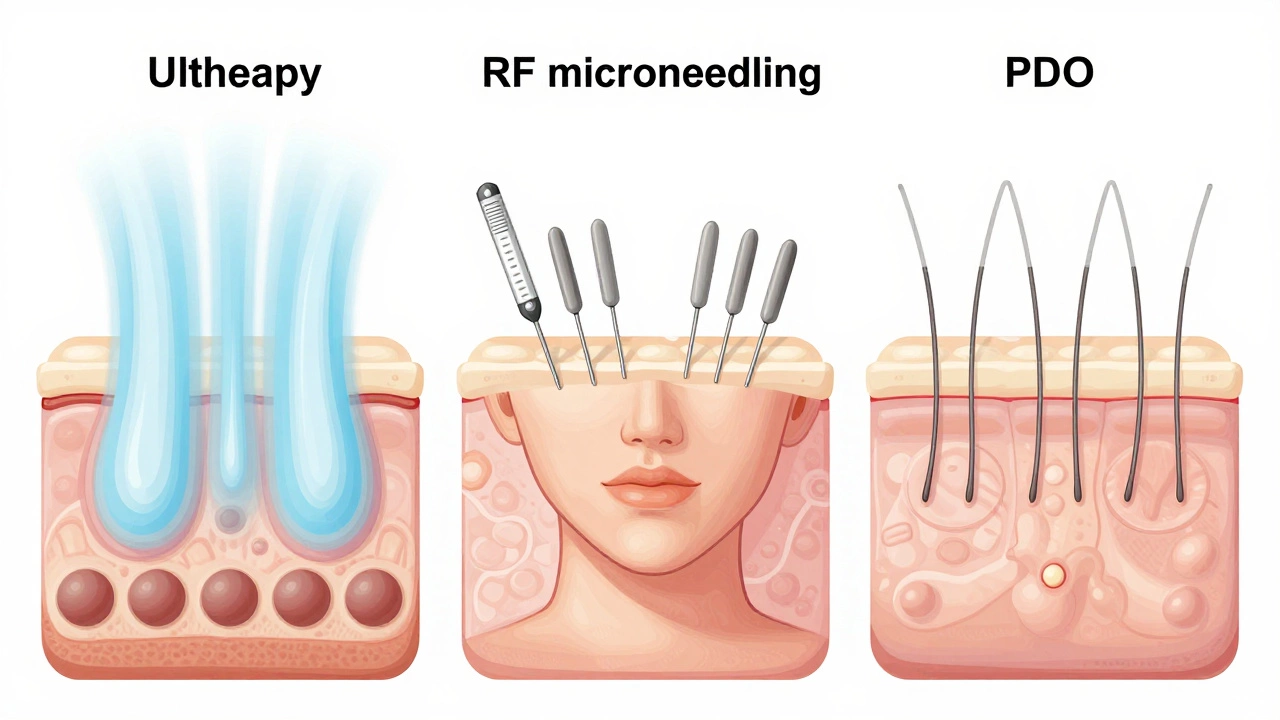
- Ultherapy - Uses focused ultrasound energy to stimulate collagen deep in the skin. It’s FDA-cleared for lifting the brow, neck, and under-chin area. One session costs $1,500-$2,500. Results appear over 2-3 months and last 1-2 years. No downtime. You might feel a slight tingling or warmth during treatment, but it’s tolerable.
- Radiofrequency (RF) microneedling - Combines tiny needles with heat energy to tighten skin and boost collagen. Popular devices include Morpheus8 and Infini. One session runs $800-$1,200. Most people need 2-3 sessions for full effect. It’s especially good for sagging jawlines and mild neck laxity. You’ll be red for a day, but can return to work immediately.
- Thread lifts - Biodegradable threads (usually PDO) are inserted under the skin to lift tissue. It’s minimally invasive. A full thread lift in the U.K. starts at £1,200 ($1,500). Results last 12-18 months. There’s some swelling for a few days and you’ll need to avoid sleeping on your face. Not for severe sagging, but perfect for early signs of aging.
These aren’t magic tricks. They don’t give you the same dramatic change as surgery. But they do give you noticeable improvement - and they’re repeatable. Think of them as maintenance, not a one-time fix.
Why cheaper isn’t always better
You’ll see ads for “$299 face lifts” on social media. Maybe it’s a cream, a home device, or a “laser” treatment at a mall kiosk. These rarely do anything beyond temporary hydration or mild redness. The skin doesn’t tighten. The muscles don’t lift. The collagen doesn’t rebuild. You’re paying for marketing, not medicine.
Real results come from devices approved by the FDA (U.S.) or MHRA (U.K.). Look for clinics that use branded machines - Ulthera, Morpheus8, PDO threads from reputable brands like Silhouette or Aptos. Ask for before-and-after photos of real patients, not models. Check reviews on Trustpilot or Google. If a clinic won’t tell you exactly what device they’re using, walk away.
What about creams and serums?
Topical products can’t lift skin. No cream, no matter how expensive, can reverse gravity or rebuild lost collagen structure. But they can help your other treatments work better. Look for ingredients with proven lifting support:
- Retinoids - Prescription tretinoin or OTC retinol. Boosts collagen production over time. Use nightly.
- Vitamin C - Antioxidant that brightens and strengthens skin. Use in the morning.
- Peptides - Signal skin to produce more collagen. Found in many affordable serums.
Pair these with sun protection (SPF 30+ daily) and you’re setting yourself up for long-term improvement. You won’t get a lift overnight, but your skin will hold its shape better over time.
Who should skip these treatments?
These non-surgical options work best for people in their late 30s to early 60s with mild to moderate sagging. If you have:
- Severe jowls or deep neck bands
- Loose skin hanging off the chin
- Significant volume loss in the cheeks
Then a surgical lift might still be your best option. But even then, you can combine it with non-surgical treatments afterward to extend results.
If you’re under 30 and worried about early signs of aging - you don’t need a lift. Focus on prevention: sunscreen, hydration, sleep, and a simple skincare routine. You’re not behind. You’re ahead.
Real cost comparison: Surgical vs. Non-surgical
| Method | Cost (USD) | Downtime | Results Last | Best For |
|---|---|---|---|---|
| Surgical Face Lift | $7,000-$15,000 | 2-4 weeks | 7-10 years | Severe sagging, deep wrinkles |
| Ultherapy | $1,500-$2,500 | None | 1-2 years | Brow, neck, chin lift |
| RF Microneedling | $800-$1,200 per session | 1 day | 1-2 years | Jawline, texture, mild laxity |
| Thread Lift | $1,200-$2,000 | 3-5 days | 12-18 months | Early jowls, mild lift |

How to find a reputable provider
Not all clinics are equal. Here’s how to avoid scams:
- Check if the practitioner is a licensed dermatologist, plastic surgeon, or certified aesthetic nurse.
- Ask to see the device serial number - it should match the manufacturer’s database.
- Request a consultation before paying. A good provider will assess your skin, not just sell you a package.
- Watch for pressure tactics. If they say “this deal ends today,” run.
- Look for before-and-afters from real patients with similar skin tone and concerns.
In Brighton, clinics like DermaCare Clinic and SkinScience London offer transparent pricing and free consultations. Even if you’re not local, many clinics offer virtual consultations.
What to expect after treatment
After Ultherapy or RF microneedling, your skin might feel tight or slightly sore for a day. Redness fades quickly. You’ll start seeing changes around 6 weeks as collagen rebuilds. Full results take 3 months. Thread lifts show immediate lift, but swelling can mask it at first. The real improvement comes after 2 weeks, once swelling drops.
Don’t expect overnight miracles. These treatments work with your body’s natural healing - not against it.
Final thought: It’s not about the cheapest - it’s about the smartest
The least expensive face lift isn’t the one with the lowest price tag. It’s the one that gives you real, lasting results without risking your health or wasting money. For most people, a combination of RF microneedling and Ultherapy - done once a year - costs less than $3,000 total over two years. That’s still less than one surgical lift. And you’ll look naturally refreshed, not pulled or unnatural.
Invest in your skin like you would invest in your car: regular maintenance beats waiting for a breakdown.
Is there a face lift under $1,000 that actually works?
No. Any treatment advertised as a "face lift" under $1,000 is either a temporary skin treatment (like a facial or microcurrent device) or a scam. Real skin tightening requires energy-based devices (ultrasound, radiofrequency, or threads) that cost at least $800 per session. You can’t buy collagen regeneration for less than that.
Do at-home devices like NuFace or Tripollar really lift skin?
They can improve tone and circulation, but they don’t lift. These devices use low-level electrical currents or mild radiofrequency. They’re great for maintenance between professional treatments, but they won’t move sagging skin or redefine your jawline. Think of them as a daily moisturizer - helpful, but not a replacement for medical-grade treatments.
How long do non-surgical lifts last?
Results last between 1 and 2 years, depending on the treatment and your skin. Ultherapy and RF microneedling stimulate collagen, which naturally breaks down over time. Thread lifts dissolve after 12-18 months. Maintenance sessions every 12-18 months keep results looking fresh.
Can I do a thread lift and Ultherapy together?
Yes - and many clinics recommend it. Thread lifts give immediate structure, while Ultherapy builds long-term collagen. Doing them 4-6 weeks apart is common. This combo is especially effective for the jawline and neck. It’s more expensive than one treatment alone, but still far cheaper than surgery.
Are non-surgical lifts safe for darker skin tones?
Yes, when done by experienced providers. Ultherapy and RF microneedling are safe for all skin types because they target deeper layers without affecting surface pigment. Avoid laser-based treatments unless the provider specifically has experience with darker skin. Always ask about their track record with your skin tone.