
CeraVe Product Finder
Find Your Perfect Match
Answer a few questions about your skin to see which dermatologist-recommended formula is right for you.
The Secret Sauce: What are Ceramides?
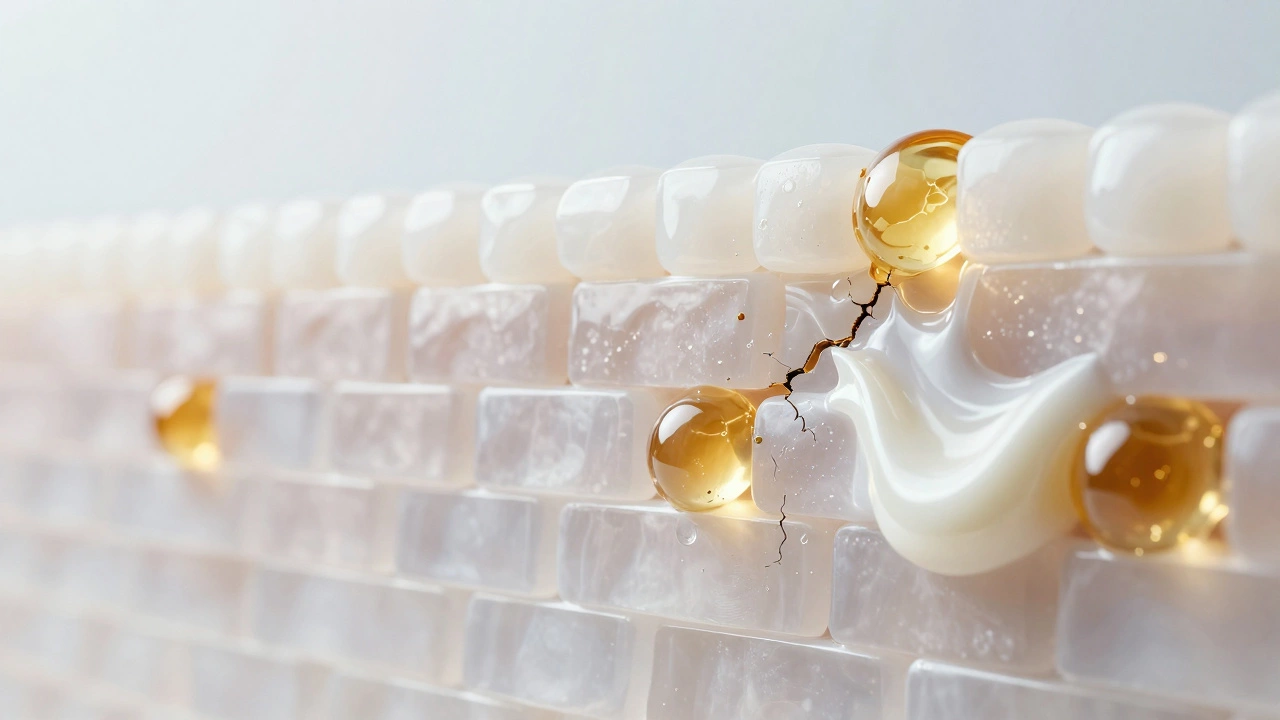
To understand why doctors love this stuff, you first have to understand the "glue" that holds your skin together. Your skin is basically a brick wall. The skin cells are the bricks, and the mortar holding them in place is made of lipids.The MVE Technology Trick
Most moisturizers give you a burst of hydration the moment you put them on, but then the effect fades after a few hours. You end up reapplying three times a day. CeraVe solved this with something they call MVE Technology, which is basically a slow-release system. Instead of dumping all the ingredients onto your skin at once, MVE (MultiVesicular Emulsion) releases the ceramides and hyaluronic acid slowly over 24 hours. Imagine it like a time-release capsule for your face. This is a huge deal for people with sensitive skin because it provides a steady stream of moisture without overwhelming the skin or causing a sudden reaction. It's the difference between drinking a gallon of water in one minute versus sipping it throughout the day.Hyaluronic Acid and the Hydration Balance
While ceramides fix the "wall," you still need something to keep the "bricks" hydrated. That's where Hyaluronic Acid comes in. This molecule is a humectant, meaning it acts like a sponge that can hold up to 1,000 times its weight in water. In a typical CeraVe lotion, the hyaluronic acid pulls water into the skin, and the ceramides lock it there. Without the ceramides, the hyaluronic acid might actually pull moisture *out* of the deeper layers of your skin if the air is too dry. Together, they form a powerhouse duo that prevents dehydration. If you've ever used a hydrating serum and still felt dry an hour later, it's probably because you didn't have a lipid-rich moisturizer on top to seal it in.| Feature | CeraVe Formulation | Standard Generic Brand |
|---|---|---|
| Lipid Content | 3 Essential Ceramides | Usually just Petrolatum or Mineral Oil |
| Delivery Method | MVE Time-Release | Immediate absorption/evaporation |
| Fragrance | Generally Fragrance-Free | Often contains synthetic scents |
| Primary Goal | Barrier Repair | Surface Hydration |

Why Doctors Prefer It Over Luxury Brands
If you go into a high-end department store, you'll find creams that cost £80 for 50ml. They smell like a botanical garden and come in gold jars. But dermatologists aren't looking for a sensory experience; they're looking for clinical outcomes. Many luxury creams use heavy fragrances, essential oils, and complex botanical extracts. While these smell great, they are common triggers for Contact Dermatitis (an itchy rash caused by a reaction to a substance). When a doctor is treating someone with a compromised skin barrier, the last thing they want is to introduce a fragrance that might cause a flare-up. CeraVe is intentionally "boring." It doesn't have dyes or scents that irritate the skin. For a doctor, a product that is predictably safe for 99% of patients is much more valuable than a fancy cream that might cause a reaction in 10% of them.Choosing the Right Version for Your Skin Type
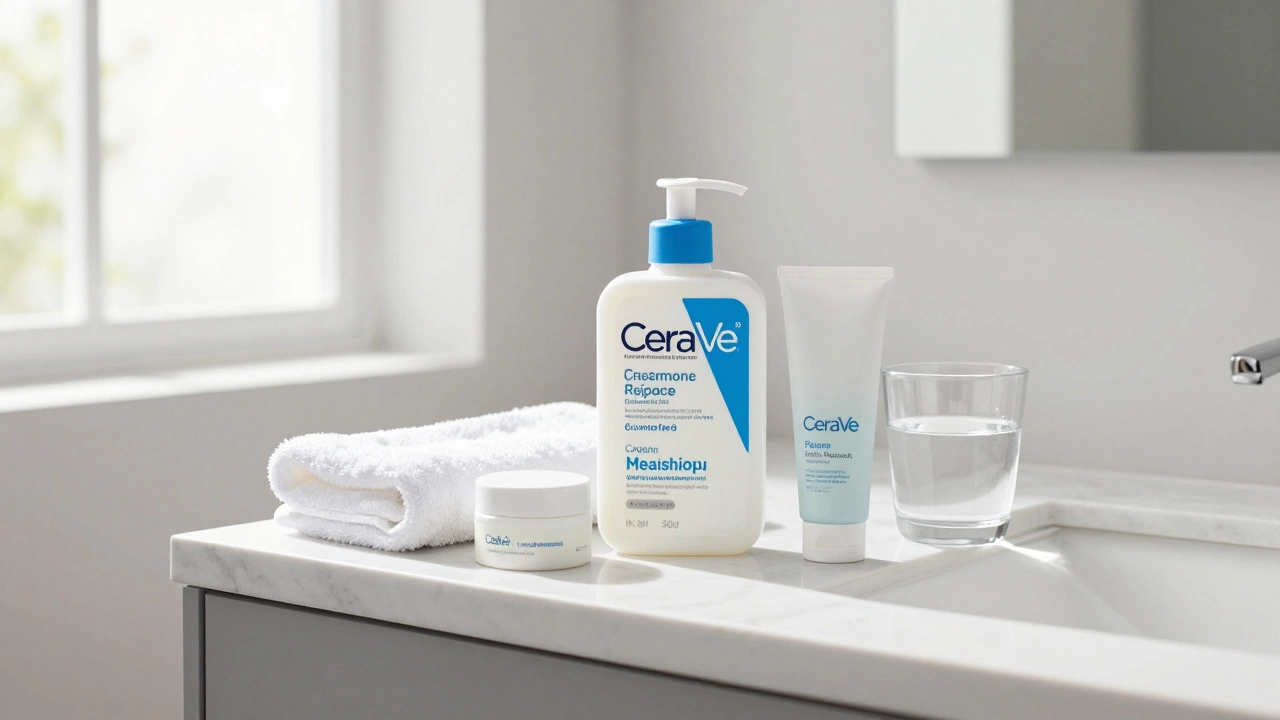
One common mistake people make is buying the wrong CeraVe product. Not all their creams are the same, and using a heavy cream on oily skin can lead to breakouts.- The Moisturizing Cream (The Tub): This is a thick, rich formula. It's a lifesaver for very dry skin, eczema, or for use on the body. If you have oily skin, this might feel too heavy for your face.
- The Moisturizing Lotion (The Bottle): This is a lightweight, oil-free version. It's perfect for those with normal to oily skin who want hydration without a greasy residue.
- The PM Facial Moisturizing Lotion: This one contains Niacinamide, a form of vitamin B3 that helps calm redness and regulate oil production while you sleep.
- The AM Facial Moisturizing Lotion: This includes broad-spectrum SPF. Since UV rays destroy ceramides in the skin, wearing sunscreen is actually a part of barrier repair.
The Role of Niacinamide in Barrier Support
In many of their face-specific products, CeraVe adds Niacinamide. This isn't just a buzzword. Niacinamide stimulates the skin to produce its own ceramides. So, while the cream provides external ceramides to patch the holes in your skin, the niacinamide encourages your body to start building its own wall again. This dual-action approach-providing a temporary fix and a long-term solution-is exactly why the results feel more permanent than with basic lotions.Common Pitfalls and What to Watch Out For
Is CeraVe perfect? Not always. Some people find that the creams can "pill" (roll up into little balls) if they apply too many serums underneath. This usually happens because of the MVE emulsion interacting with other thick gels. The trick is to wait a few minutes after applying your serums before putting on your CeraVe moisturizer. Another thing to note is that while it's great for maintenance, it's not a "treatment" for severe acne. If you have active cystic breakouts, a basic moisturizing lotion won't clear them up. You'll need active ingredients like Salicylic Acid or Benzoyl Peroxide. However, since those acne treatments often dry out the skin, doctors recommend CeraVe *alongside* them to prevent the skin from peeling and becoming irritated.Can I use CeraVe if I have very oily skin?
Yes, but choose the Moisturizing Lotion rather than the Cream. The lotion is oil-free and lightweight, meaning it won't clog your pores or make your face look like a grease pan. Look for the "Daily Moisturizing Lotion" version for the best balance.
Does CeraVe actually cure eczema?
It doesn't "cure" eczema because eczema is a chronic condition, but it manages it incredibly well. By repairing the skin barrier, it prevents the triggers (like dust or wind) from getting into the skin, which reduces the frequency and severity of flare-ups.
Is CeraVe better than Vaseline?
They do different things. Vaseline (pure petrolatum) is an occlusive; it creates a physical seal to stop water from leaving. CeraVe is an emollient and humectant; it actually adds lipids and hydration back into the skin. For most people, CeraVe is better for daily use, while Vaseline is better for extremely cracked lips or tiny wounds.
Can I use the CeraVe cream on my face and body?
Absolutely. The Moisturizing Cream in the tub is designed for both. Just be mindful of your skin type-if your body is dry but your face is oily, you might want the tub for your legs and the lotion for your face.
Why do some people still break out using CeraVe?
While rare, some people are sensitive to specific ingredients like polyglyceropolystyrene or certain alcohols used as solvents. Additionally, using a heavy cream on acne-prone skin can sometimes trap sebum, leading to congestion. Switching to the lighter lotion usually fixes this.