
Dermatologist Brand Finder
Select the option that best describes your current skin condition to get a personalized recommendation.
Dry & Flaky
Needs moisture lockRedness & Sensitivity
Reactive or RosaceaExtremely Fragile
Eczema or Baby SkinOily or Acne-Prone
Excess sebumResilient
Handles actives wellReactive
Stings or burns easilyNeutral
No major reactionsBarrier Repair
Restoring healthSoothing Calm
Reducing inflammationSimple & Gentle
Minimal ingredientsWhy this brand?
Walk into any pharmacy or browse the top results on Amazon, and you will see a sea of colorful bottles promising instant miracles. But if you ask a dermatologist what they actually trust with their own skin-and the skin of their patients-the answer is rarely the loudest brand in the aisle. The truth is, there isn't one single "No. 1" brand that rules them all. Instead, a tight group of clinical-grade labels dominates professional recommendations because they prioritize science over hype.
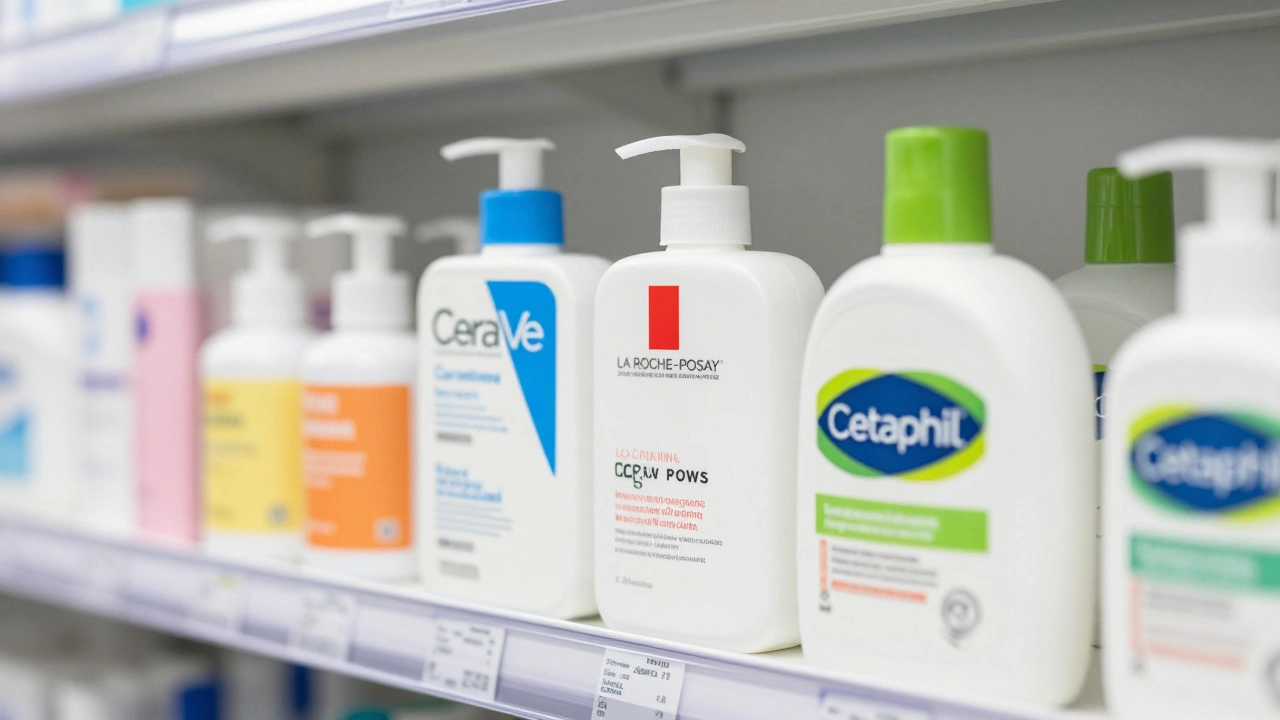
In 2026, the consensus among board-certified dermatologists points to three major players: CeraVe, La Roche-Posay, and Cetaphil. These brands don't rely on influencer marketing; they rely on decades of clinical data, simple ingredient lists, and formulations that repair the skin barrier rather than irritate it. If you are looking for the gold standard in medical skincare, these are the names you need to know.
The Science Behind the Recommendation
Why do dermatologists consistently steer patients away from trendy indie brands and toward these specific companies? It comes down to formulation philosophy. Most commercial skincare products are designed to look good on Instagram, often packing them with fragrances, essential oils, and high concentrations of active ingredients that can compromise the skin barrier. Dermatologists, however, are trained to protect and restore that barrier.
The leading recommended brands share a common DNA: they use ceramides, which are lipids naturally found in the skin that hold water in and keep irritants out. When your skin barrier is damaged-whether from acne treatments, aging, or environmental stress-it leaks moisture and lets bacteria in. Brands like CeraVe and La Roche-Posay formulate their cleansers and moisturizers to mimic the skin’s natural lipid matrix. This approach, known as biomimicry, ensures that the product integrates seamlessly with your biology rather than sitting on top of it like a heavy coat.
Furthermore, these brands undergo rigorous patch testing and clinical trials. Unlike many cosmetic companies that test on small groups, these pharmaceutical-backed brands often publish peer-reviewed studies showing efficacy for conditions like eczema, rosacea, and post-procedure recovery. For a doctor, evidence is everything. They recommend what has been proven safe for sensitive, compromised skin.
CeraVe: The Barrier Repair Specialist
If you had to pick just one brand that defines the modern dermatologist recommendation, it would likely be CeraVe is a skincare brand owned by L'Oréal that focuses on restoring the skin barrier using patented MVE technology and essential ceramides. Since being acquired by L'Oréal, CeraVe has become ubiquitous in waiting rooms across the UK and US. Its rise wasn't accidental; it was built on the endorsement of Dr. George Cockerill, a dermatologist who co-founded the brand with the specific goal of creating affordable, effective care for patients with dry and sensitive skin.
The secret sauce here is the combination of three essential ceramides (1, 3, and 6-II) and hyaluronic acid. Ceramides make up about 50% of the skin's composition, yet most people lose them as they age or due to harsh cleansing. CeraVe replenishes them. The brand also uses Multivesicular Emulsion (MVE) technology, which allows ingredients to release slowly over time. This means a single application of moisturizer can hydrate your skin for up to 24 hours, rather than needing constant reapplication.
For most people, the starting point is the CeraVe Hydrating Cleanser for normal to dry skin, or the Foaming Facial Cleanser for oily types. Both are non-foaming (or low-foaming), fragrance-free, and non-comedogenic. They clean without stripping. If you struggle with rough texture, the SA Smoothing Cleanser uses salicylic acid to gently exfoliate, making it a favorite for those with mild acne or keratosis pilaris.
La Roche-Posay: The Thermal Water Powerhouse
While CeraVe focuses on barrier repair through ceramides, La Roche-Posay is a French pharmacy brand renowned for its use of thermal spring water rich in selenium and antioxidants. This brand holds a special place in the hearts of European dermatologists, particularly in France where it originated. The key differentiator here is the source water itself. Sourced from a single spring in La Roche-Posay, France, this water contains high levels of selenium, a potent antioxidant that helps neutralize free radicals caused by UV exposure and pollution.
La Roche-Posay is often the go-to recommendation for patients dealing with reactive skin conditions like rosacea, perioral dermatitis, or severe sensitivity. Their formulations are incredibly minimalist. Take the Toleriane Double Repair Face Moisturizer; it combines niacinamide to calm redness with prebiotic thermal water to balance the skin microbiome. It’s gentle enough for post-laser treatment care but effective enough for daily maintenance.
Another standout is their sunscreen line. In the UK, where we spend significant time outdoors despite the weather, sun protection is non-negotiable. La Roche-Posay’s Anthelios range is frequently cited as one of the most cosmetically elegant and protective sunscreens available. They use advanced filters that provide broad-spectrum coverage without leaving a white cast, making them suitable for all skin tones. For anyone struggling with hyperpigmentation or melasma, this level of protection is critical.
Cetaphil: The Gentle Giant
You might recognize Cetaphil is a longstanding skincare brand known for its ultra-gentle, soap-free formulas ideal for sensitive and dry skin. from childhood. For decades, it was the default prescription for babies and the elderly. While it has faced competition from newer entrants like CeraVe, Cetaphil remains a top-tier recommendation, especially for those with extremely fragile skin or conditions like atopic dermatitis.
Cetaphil’s strength lies in its simplicity. The original Gentle Skin Cleanser is virtually inert. It doesn’t foam, it doesn’t sting, and it doesn’t contain preservatives that can irritate compromised barriers. It works by emulsifying dirt and oil without disrupting the skin’s natural pH. For many dermatologists, this is the safest bet when a patient’s skin is so irritated that even "gentle" products cause flare-ups.
However, Cetaphil has evolved. Recognizing the demand for more active ingredients, they launched lines targeting acne (Cetaphil PRO) and anti-aging. The Daily Facial Moisturizer with SPF is a staple for patients who want a no-fuss morning routine. It offers lightweight hydration and sun protection in one step, appealing to those who skip steps in their regimen. While it may not have the cutting-edge delivery systems of CeraVe, its reliability is unmatched.
Comparing the Top Contenders
| Feature | CeraVe | La Roche-Posay | Cetaphil |
|---|---|---|---|
| Key Ingredient | Ceramides + Hyaluronic Acid | Thermal Spring Water + Niacinamide | Glycerin + Dimethicone |
| Best For | Dry, dehydrated, and textured skin | Sensitive, reactive, and rosacea-prone skin | Extremely sensitive, baby, or eczema-prone skin |
| Price Point | Affordable ($) | Moderate ($$) | Affordable ($) |
| Texture | Rich but non-greasy | Lightweight and fluid | Simple and basic |
| Availability | Widely available (Supermarkets, Pharmacies) | Pharmacies and Online | Widely available (Supermarkets, Pharmacies) |
How to Choose the Right Brand for You
Knowing which brand is "No. 1" is less important than knowing which brand is right for *your* skin type. Here is a quick decision guide based on common concerns:
- If you have dry, flaky skin: Go with CeraVe. The ceramides will help lock in moisture and smooth out rough patches. Start with the Hydrating Cleanser and Moisturizing Cream.
- If you have sensitive, red, or rosacea-prone skin: Choose La Roche-Posay. The thermal water soothes inflammation, and the niacinamide reduces redness. Look for the Toleriane line.
- If you have extremely fragile or eczema-prone skin: Stick with Cetaphil. Its minimal ingredient list reduces the risk of allergic reactions. Use the Gentle Skin Cleanser and Moisturizing Lotion.
- If you have oily or acne-prone skin: CeraVe’s Foaming Cleanser paired with their PM Facial Moisturizing Lotion (which contains niacinamide) is a great balance. La Roche-Posay’s Effaclar line is also excellent for controlling excess sebum.
Pitfalls to Avoid
Even with the best brands, you can still damage your skin. One common mistake is over-exfoliating. Just because a brand is dermatologist-recommended doesn't mean you should use every product in the line simultaneously. If you’re using a retinol serum, stick to a gentle cleanser and a basic moisturizer. Don’t add acids, scrubs, and strong actives all at once.
Another trap is ignoring sunscreen. No amount of expensive moisturizer will fix sun damage. Whether you choose CeraVe, La Roche-Posay, or Cetaphil, ensure your morning routine includes a broad-spectrum SPF 30 or higher. In the UK, where UV rays penetrate clouds, this is crucial year-round.
Finally, consistency beats intensity. A simple routine done twice a day for six months will yield better results than a complex ten-step routine abandoned after two weeks. Pick one brand, stick with it for at least 8-12 weeks, and let your skin adjust.
Is CeraVe really the number one dermatologist recommended brand?
While there is no official single "number one" title, CeraVe is frequently cited as the top choice by dermatologists in surveys and clinical settings due to its affordability, accessibility, and focus on barrier repair with ceramides. However, La Roche-Posay and Cetaphil are equally highly recommended depending on specific skin needs.
Can I use CeraVe and La Roche-Posay products together?
Yes, you can mix products from different brands as long as they complement each other. For example, you could use a CeraVe cleanser with a La Roche-Posay moisturizer. Just avoid combining multiple strong active ingredients (like retinol and AHAs) unless advised by a professional.
Are these brands cruelty-free?
This varies by region. La Roche-Posay and CeraVe (owned by L'Oréal) sell in mainland China, where animal testing may be required by law for certain imported cosmetics. Therefore, they are not considered cruelty-free by strict standards. Cetaphil (owned by Galderma) also sells in markets with animal testing requirements. If cruelty-free status is paramount, look for brands certified by Leaping Bunny or PETA that do not sell in China.
Which brand is better for acne?
Both CeraVe and La Roche-Posay offer excellent acne-specific lines. CeraVe’s SA Smoothing line is great for body acne and mild facial breakouts. La Roche-Posay’s Effaclar line is highly regarded for persistent facial acne and blackheads. For severe acne, always consult a dermatologist for prescription treatments.
Do dermatologists recommend drugstore brands over luxury brands?
Generally, yes. Dermatologists prioritize efficacy and safety over packaging or price. Drugstore brands like CeraVe and Cetaphil deliver clinically proven ingredients at a fraction of the cost of luxury brands. Luxury brands often add fragrances and unnecessary additives that can irritate sensitive skin.