

Perfect Base Routine Timer
Step-by-Step Guide
Wait Time Timer
IdleStart the timer when you apply the current product.
You’ve spent twenty minutes prepping your skin, only to watch your foundation slide off by noon. It’s frustrating, isn’t it? You might be applying your products in the wrong order. The debate over whether to apply moisturizer or primer first is one of the most common mistakes in makeup routines. Getting this sequence right is the difference between a cakey, patchy finish and skin that looks airbrushed all day.
The short answer is simple: moisturizer always goes on first. But understanding why requires looking at how these two products interact with your skin barrier and makeup pigments. Let’s break down the science, the timing, and the specific scenarios where you might need to adjust this rule.
The Layering Logic: Skincare vs. Cosmetics
To understand the order, you have to look at the job each product does. Think of your skincare as the foundation (pun intended) and your makeup as the decoration. You wouldn’t hang pictures on a wall that hasn’t been plastered yet. Similarly, you shouldn’t apply makeup on skin that hasn’t been hydrated and protected.
Moisturizer is a skincare product designed to hydrate, nourish, and protect the skin barrier. Its primary function is to replenish water loss and lock in nutrients. When you apply moisturizer, you are treating the biological canvas-your actual skin cells. It needs time to absorb into the epidermis to work effectively. If you block it with other layers immediately, it sits on top, potentially causing clogged pores or a greasy feel.
Primer, on the other hand, is a cosmetic base coat that creates a smooth surface for makeup application. It acts as a barrier between your skincare and your foundation. Primers often contain silicones or polymers that fill in fine lines, blur pores, and provide grip for pigment. It is not meant to be absorbed; it is meant to sit on top of the skin to create an even texture.
If you apply primer before moisturizer, you trap the hydration underneath a silicone layer. Your skin can’t breathe, and the moisturizer can’t do its job. Worse, the primer has nothing smooth to adhere to if your skin is dry or flaky. The result? Patchiness, pilling, and makeup that slides around because there’s no hydrated base to anchor it.
The Golden Rule: Wait Times Matter
Knowing the order is half the battle. Knowing when to move to the next step is the other half. Rushing through your routine is just as damaging as getting the order wrong. Here is the step-by-step protocol for a flawless base:
- Cleanse and Tone: Start with a clean face. Apply toner if you use it to balance pH levels.
- Serums and Treatments: Apply any vitamin C, hyaluronic acid, or retinol serums. These are thin and need direct contact with the skin.
- Moisturize: Apply your daily moisturizer. This seals in the serums and hydrates the skin.
- The Wait: This is crucial. Wait 5 to 10 minutes. Yes, really. Check your mirror. If your face still looks dewy or feels tacky, wait longer. You want the moisturizer to sink in completely.
- Prime: Apply a pea-sized amount of primer. Focus on areas where you tend to wear the most makeup, like the T-zone or cheeks.
- Foundation: Apply your foundation while the primer is still slightly tacky (not wet). This helps them bond together.
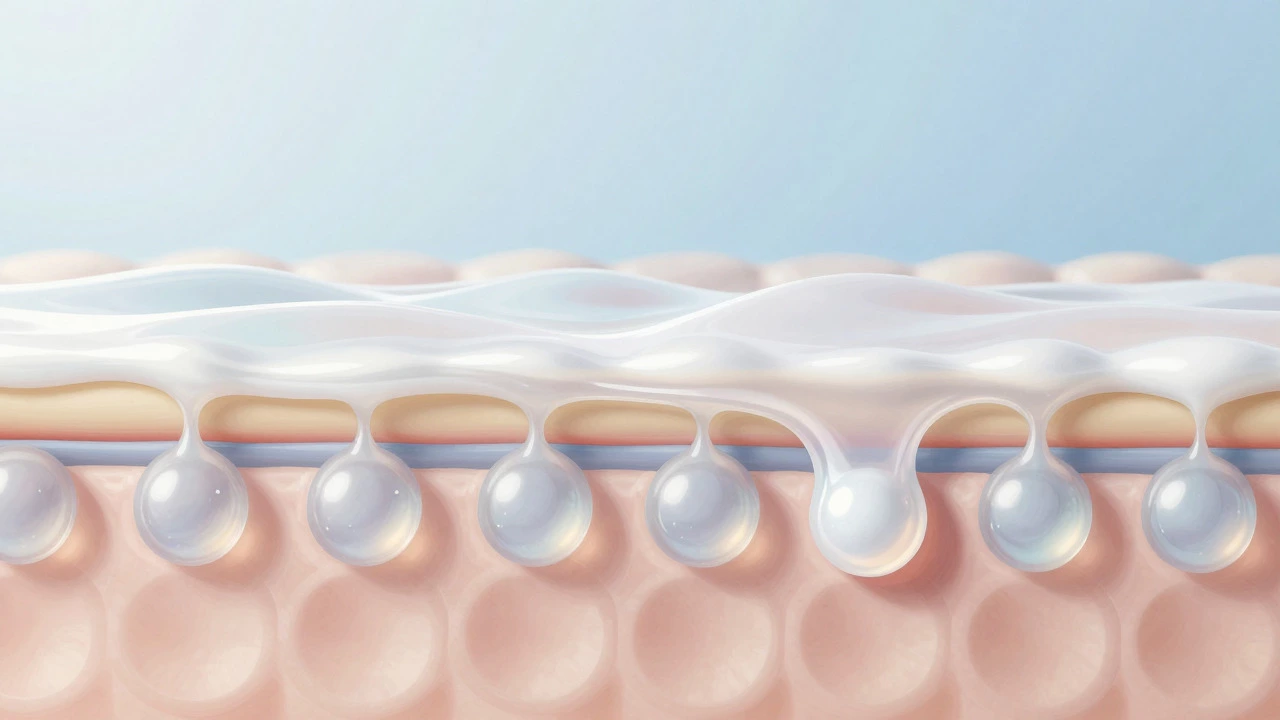
Why the wait? Moisturizers contain emulsifiers and oils. If you layer primer over wet moisturizer, the two products will mix chemically rather than physically. This causes “pilling”-those little rolled-up balls of product that ruin your complexion. By letting the moisturizer dry down, you create a stable platform for the primer to adhere to.
Choosing the Right Pairings
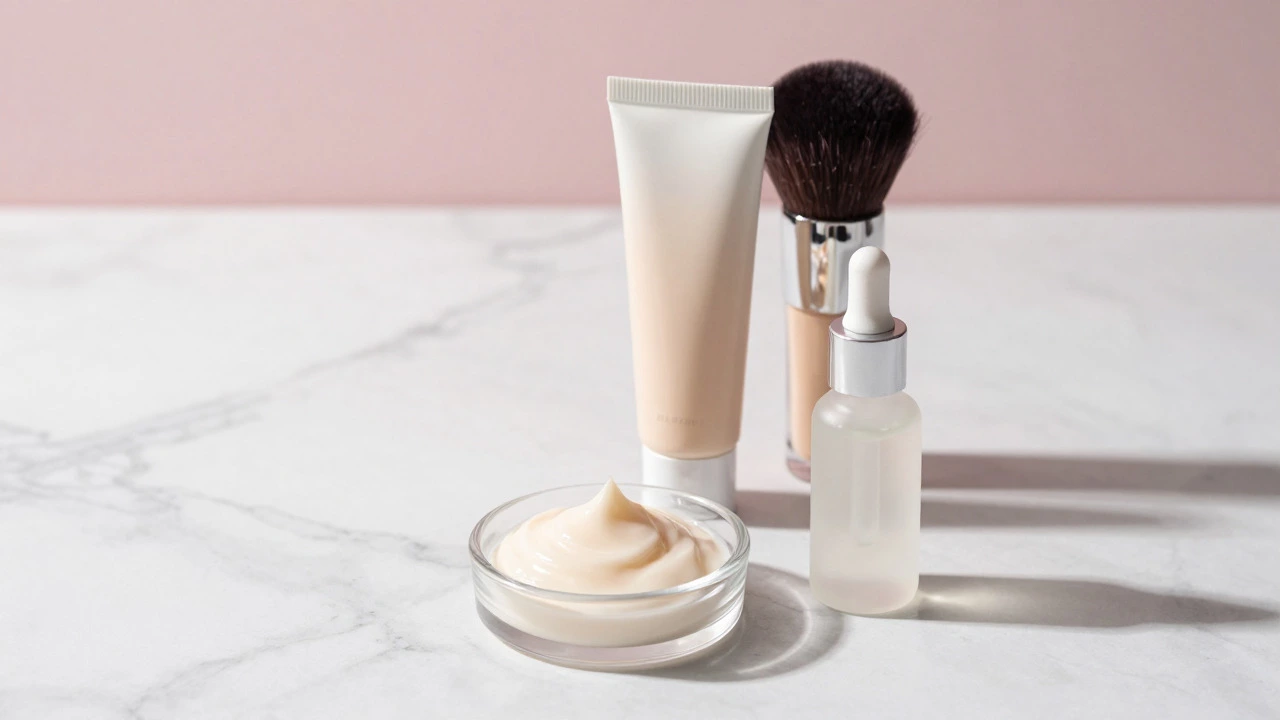
Not all moisturizers and primers play nice together. Compatibility is key. A heavy cream moisturizer paired with a lightweight, watery primer might separate. Conversely, a gel moisturizer with a thick, silicone-based primer usually works well. Here is how to match them based on your skin type:
| Skin Type | Moisturizer Texture | Primer Type | Why It Works |
|---|---|---|---|
| Oily/Acne-Prone | Gel or Water-Based | Matteifying/Silicone | Controls shine without adding heaviness; silicone blurs enlarged pores. |
| Dry/Dehydrated | Cream or Oil-Based | Hydrating/Illuminating | Locks in moisture; illuminating primers add glow without emphasizing flakes. |
| Combination | Balanced Lotion | Pore-Filling (T-Zone) | Targeted priming prevents oiliness in the center while keeping cheeks hydrated. |
| Mature | Rich Cream | Anti-Aging/Smoothing | Deep hydration plumps skin; smoothing primers reduce the appearance of fine lines. |
A pro tip: Avoid mixing water-based and silicone-based products if possible. Silicones repel water. If your moisturizer is heavily water-based and your primer is 100% dimethicone, they may not bond well, leading to separation later in the day. Stick to similar bases whenever you can.
When Can You Skip One?
In the rush of a morning commute, you might wonder if you can skip a step. The answer depends on your skin’s current state and the weather outside Brighton today-let’s say it’s humid and warm.
Can you skip moisturizer? Generally, no. Even oily skin needs hydration. Dehydrated oily skin produces *more* oil to compensate for lack of water. However, if you have a very rich, occlusive primer, it might provide enough barrier protection for a few hours. But long-term, skipping moisturizer leads to premature aging and irritation. Use a lightweight gel moisturizer instead of skipping entirely.
Can you skip primer? Yes, absolutely. If your moisturizer is already smoothing and your foundation is high-quality, primer is optional. Many modern foundations have built-in priming agents. If you’re wearing a light tinted moisturizer or BB cream, you likely don’t need a separate primer. Save the primer for days when you need extra longevity, like a wedding or a long office meeting.
Common Mistakes That Ruin Your Base
Even with the right order, small errors can sabotage your look. Here are the pitfalls to avoid:
- Using Too Much Product: A quarter-sized dollop of moisturizer is too much for most faces. Use a dime-sized amount. For primer, a pea-sized amount is plenty. Overloading your skin creates a slippery surface where makeup cannot grip.
- Applying Sunscreen After Primer: Sunscreen belongs in the skincare phase, after moisturizer and before primer. If you put sunscreen on top of primer, you risk pilling and uneven coverage. Some primers have SPF, but dermatologists recommend a dedicated broad-spectrum sunscreen for adequate protection.
- Ignoring Neck and Décolletage: Don’t stop at your jawline. Apply moisturizer and primer to your neck and chest. Foundation often extends down here, and without prep, it will look obvious and cakey.
- Reapplying Wrongly: If your makeup breaks down during the day, don’t just slap more foundation on top. Blot away excess oil, reapply a tiny bit of moisturizer if needed, then touch up with concealer or powder. Adding primer mid-day is not recommended as it can cause separation.
Troubleshooting Specific Issues
Are you experiencing specific problems with your makeup staying power? Here’s how to diagnose the issue based on your prep routine:
Problem: Makeup pills or rolls up. Cause: Likely incompatible ingredients (silicone vs. water) or rushing the wait time between moisturizer and primer. Fix: Wait 10 minutes after moisturizing. Switch to a primer with a similar base to your moisturizer.
Problem: Foundation looks patchy or dry. Cause: Insufficient hydration or using a matte primer on dry skin. Fix: Add a hydrating serum before moisturizer. Switch to a dewy or hydrating primer.
Problem: Makeup slides off by lunchtime. Cause: Too much oil production breaking down the base, or skipping primer on oily zones. Fix: Use an oil-control moisturizer and a mattifying primer specifically on the T-zone. Set with translucent powder.
Can I mix my moisturizer and primer together?
It’s generally not recommended. Mixing them dilutes the effectiveness of both products. The primer loses its ability to create a smooth barrier, and the moisturizer doesn’t get properly sealed in. Apply them separately for best results.
Do I need primer if I use a tinted moisturizer?
Usually, no. Tinted moisturizers are designed to provide light coverage and hydration in one step. They often contain ingredients that help them adhere to skin. Only use primer if you find the tinted moisturizer isn’t lasting long enough or if you have specific concerns like large pores that need blurring.
What is the correct order for sunscreen, moisturizer, and primer?
The correct order is: Cleanser → Serum → Moisturizer → Sunscreen → Primer → Makeup. Sunscreen is part of your skincare routine and must go on before any cosmetic products. Primer goes on last in the prep phase to create a smooth base for foundation.
How long should I wait after applying moisturizer before putting on primer?
You should wait about 5 to 10 minutes. This allows the moisturizer to fully absorb into the skin. If your skin still feels wet or sticky, wait longer. Applying primer over damp skin can lead to pilling and poor makeup adherence.
Is primer necessary for mature skin?
Primer can be very beneficial for mature skin, but choose wisely. Look for hydrating or anti-aging primers that contain peptides or hyaluronic acid. Avoid heavy, silicone-only primers which can settle into fine lines. The goal is to plump and smooth, not mask.